
I have to do this every spring or summer. I often raise 30-40, or sometimes more, chickens, mostly meat birds and some 3-6 new layers.
As soon as my meat birds are ready to be processed (especially around 7-9 weeks), I move my layers into my main layer flock.
For this, I lock new chickens in my small, old cage, place it in the main flock area for a few days, and then leave them open to everyone in their common coop.

It’s always wise to raise chicks with the same age bird flock. If not, the big chickens always dominate and peck the smaller and weaker ones.
So, if you need to introduce new chickens to the existing flock, check the following ways and continue with what best works for you!
1. Understand the Pecking Order (Before You Do Anything)
You must have learned about the pecking order in the pyramid structure, but it’s not always linear. It can be anything, such as a cluster, spiral, circle, or loop. Maybe mini groups and sibling groups.
I have lots of roosters and hens in the middle, with hens above and below them.
The rooster would call them, protect them all, and solve the disputes. Those hens, single spinsters, don’t tolerate the roosters; they stay lower in the hen hierarchy.
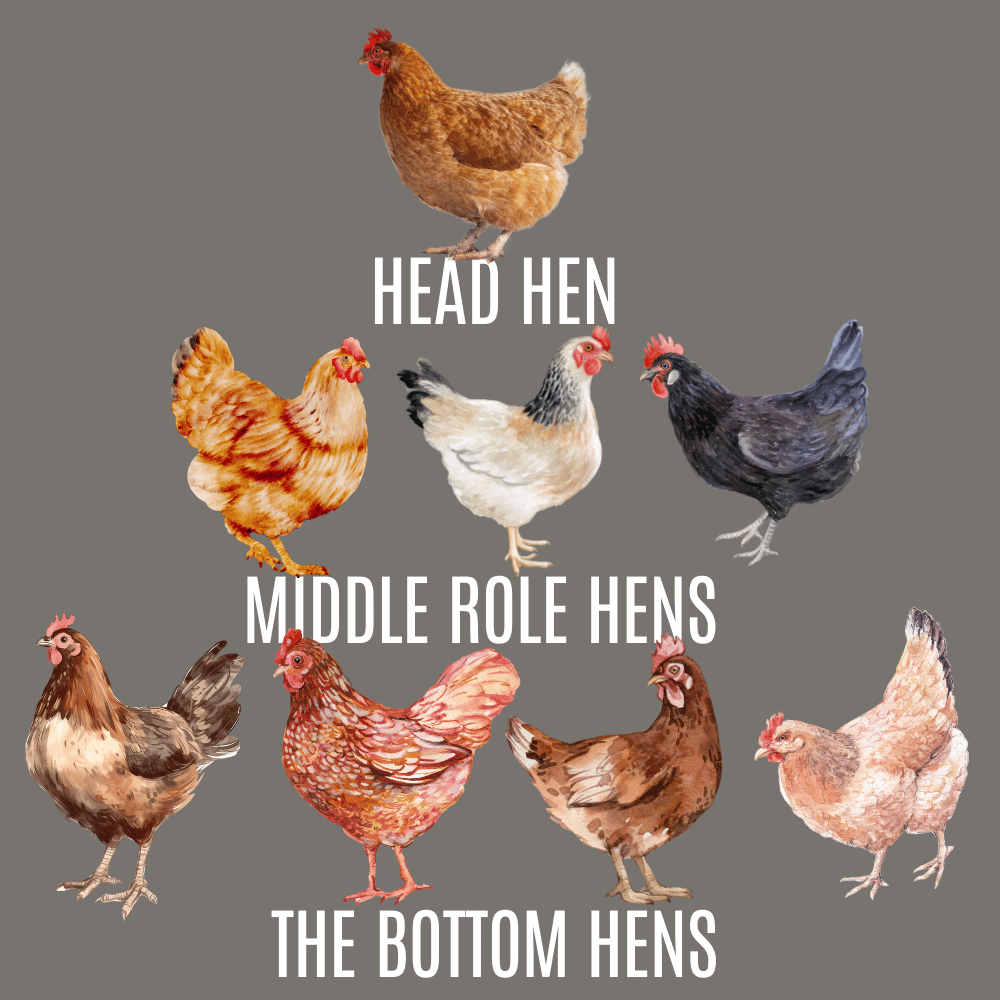
You may also witness some submissive mid-hens near the bottom of the pecking order, but not dominate, but still settle a new violent hen that may scare the whole flock.
Some little hens also stare at her and make her scoot for free. They aren’t alpha but have enough sass that they don’t expect from any roosters or hens.
They learn to crow before laying eggs.
Also, you need to understand that the highest in the order roost in the middle and remain protected from danger. But the lowest perch in the end is exposed to predators, so they always need to sleep with one eye open.
Also, chickens that don’t get pushed away from their food are at the top.
But when they are under molts, the pecking order may get into total chaos, which needs to be settled soon.
2. Keep New Chickens Separate First (Non-Negotiable Step)
When you’re about to introduce your chickens to the already excited flock, you must be careful about the health of newcomers.
The new birds may already be stressed from transportation and migration, and may become susceptible to disease or may already be carrying a few.
So, instead of mixing straight, find a safe and comfortable place only for them for a few weeks. Maybe 2-4 weeks.
This way, you can monitor if they have mites, lice and respiratory illness and prevent them from transmitting to the healthy flock.
3. Match Age and Size as Closely as Possible
When you add adult chickens to the flock, the chances are high that they are less likely to become victims to the aggressive chickens.
But when it comes to chicks and pullets, make sure they are at least 8 weeks old for baby chickens or fully feathered chickens. And pullets need to be nearly full-sized.
My big roosters didn’t spare growing up pullets and chased and pecked all day. The pullets only have the option to escape and hide from those big chickens.
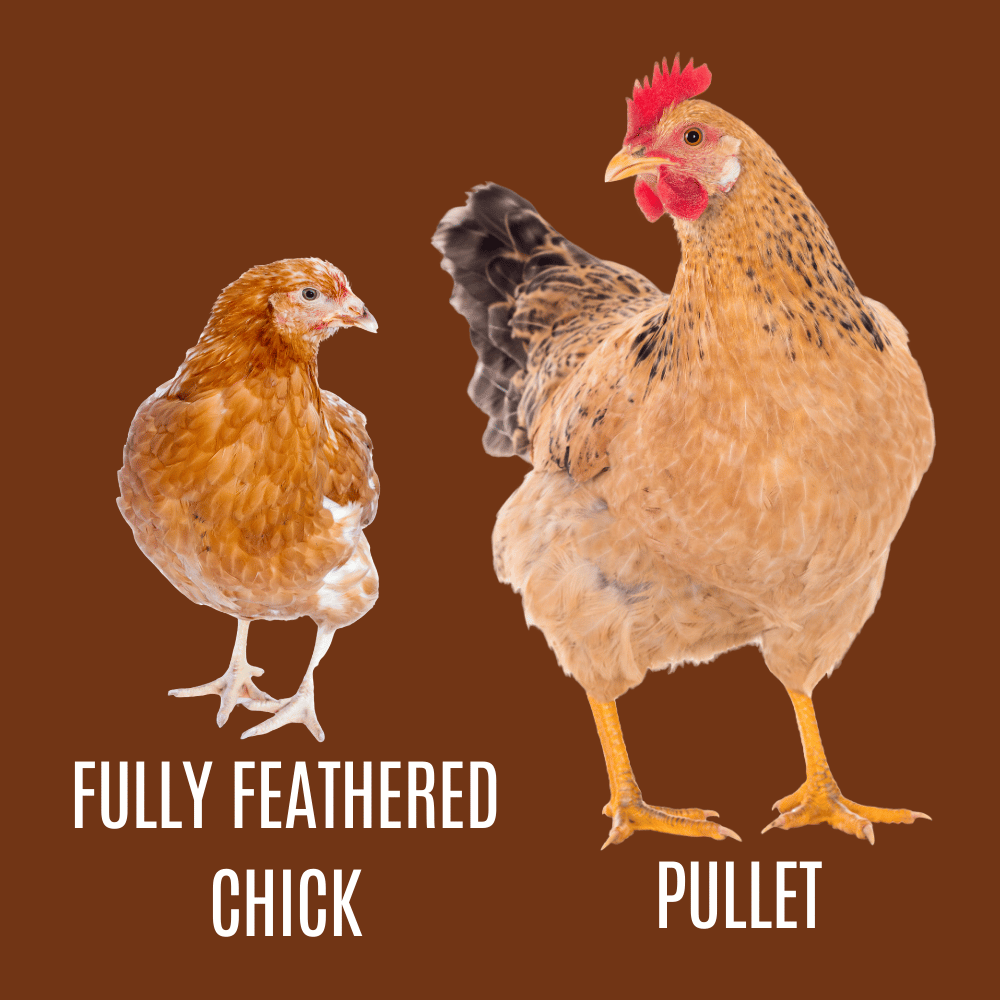
Also, don’t leave a single pullet with a rooster or roosters alone. Keep at least 2 or 3 pullets to make a company. The newly added pullets can perch and sleep together and feel comfortable during stressful times.
Pullets cannot do anything against roosters until they become moms.
So, my simple formula is to wait for 3 months for heritage chickens to be released into the fully grown flock in the coop and run.
It’s a nice idea to create a dynamic flock, but it doesn’t always work. When you put bantam chickens in the flock of the standard-sized chickens, they can get pecked to injury.
The miniature chickens are shy, docile, and weaker and less aggressive, and cannot counter the big birds, so they must tolerate their dominance.
4. Use the “See but Don’t Touch” Method
You may want to build a system that allows the established flock and newly added chickens to coexist without disturbance.
This allows chickens to see each other, but they cannot touch or peck each other. It’s a natural way in which birds introduce themselves.
For this, you need to build a separate coop inside the old one and put a new coop next to the old one. The dog crates and chicken tractors can also be good options.
To separate their space, keep a fence there with wire partitions.
When they see their neighbors frequently, they can form a pecking order using visual cues. This act can run for a couple of weeks before you assemble them.
5. Introduce at Night (The Calm Chicken Hack)
Why?
Chickens are calmer and passive after dark, as they cannot see. The aggressive and most timid chickens sleep in the same corner of the coop or in the same roost.
So, introducing new chickens to the flock is safer. Wait until night, and the chickens climb up the perch.
Gently put the chickens on the roosting bar and make sure they nestle with the existing flock. And keep the light turned off.
Next morning, monitor the flock’s behavior and check whether the chickens are surprised by the presence of new birds around the flock.
You should see whether new birds have access to water and food.
Have they been chased by roosters or hens? Are they hiding all the time?
Don’t hesitate to cut off the new birds from the old flock if you find any type of violence for a few weeks. It’s okay if they show up often and run with the flock.
6. Provide Multiple Feeders and Waterers
Chickens always compete for food and water, especially when there is one feeder and one waterer, and free-range chickens are around.
And placing the feeder and waterer at a single location only deprives the newcomers to the group. The established birds peck and push the new ones off the place.
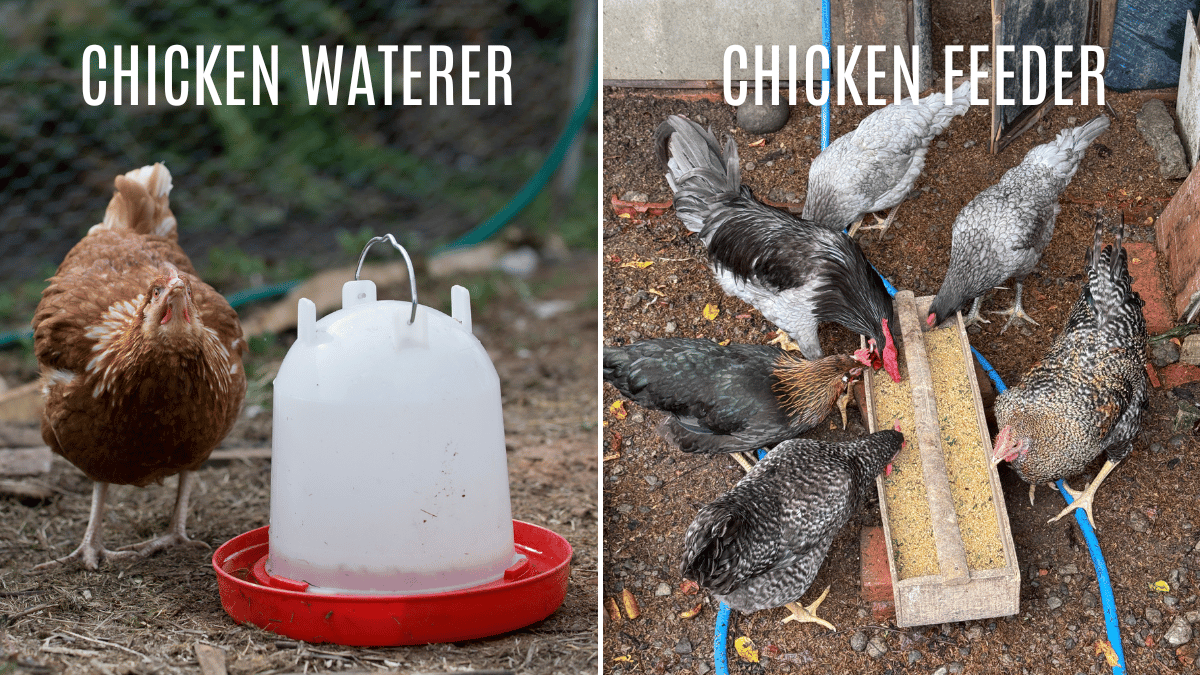
By the end of the day, you will see that new birds don’t get along with the flock in the coop. They are searching for leftovers around the feed area.
So, it’s the keeper’s duty to manage multiple feeders and waterers so that chickens don’t need to struggle for feed.
And make sure the new birds have a full belly. You can check their crops to confirm it. If you feel they haven’t eaten enough, give your chickens some extra feed.
7. Keep Chickens Busy
What is a more effective method than this now?
The caged chickens don’t find anything but boredom if there is nothing to do. They have an instinct to scratch dirt and peck.
If they have nothing to do in the enclosure, they start getting aggressive. Well, you can find several ways to stop chickens from pecking each other.
But what is easy and effective is to get them busy so that new birds in the flock can find some relief.
For this, you can throw some chicken toys or anything to peck (wooden boards, pieces of foam boards, plastic bottles). Chicken treats are also a good idea.
Give some cabbage, pumpkins, fruits, sprouts and fodders. I’m talking about free or low-cost treats.
To help them peck comfortably, you need to pierce the vegetables and fruits with an iron stick and stake it on the ground with feed above.
But don’t throw lots of treats around, as your chickens need to eat their main meal.
8. Cage the Aggressive Chickens
If you have an aggressive rooster or hen that doesn’t let the other chickens live around peacefully, cage it first in a place.
You can build a cage inside the coop or run where the main flock is.
This helps newcomers get used to the other chickens and make a smooth bond without losing any feathers. It also makes dominant chickens humble when they see new birds.
Keep the particular chicken in the cage for a couple of days and check if they have changed their tune. Otherwise, they need more days to spend alone in the cell.
Finally, you can release the caged chickens after a few days and monitor to find more ways to integrate new chickens into the old flock.
9. Have a Backup Plan
What if your strategies turn out to be unexpected?
So, you need a Plan B to deal with the worst-case scenario. If your new bird gets hurt, you need to find a safe place where you can put them.
Remove the injured chicken from the flock and allow them to take rest and heal the wound.
You can put them in the cage with enough food and water for a few days.
10. Provide Ample Roosts
As they are birds, chickens never get tired of climbing and perching on the tall structure. This helps them to avoid the dirt on the ground and find an isolated place to rest for a while.
Provide vertical and roosting space to help younger chickens escape the reach of bossy, big birds.
At night, perching can be more beneficial as old hens don’t mind new birds sitting and sleeping next to them. So, find the best chicken roost ideas.
Besides, you can add other enrichments, such as hideouts for new birds, as they may be shy and less confident.
Final Thoughts
When it comes to introduce new chickens to an existing flock, it should not be very complicated. Whether they are freshly feathered youngsters or a mature hens that need to retire in a few days after they start crowing, you can easily add to the established flock.
And I think chicken order is also not that much mean, even when there are roosters around, as long as the birds are provided with resources.
This also depends on chicken breeds (aggressive breeds can cause problems) and the space they have. So, I recommend you take the methods slowly and smoothly.





Leave a Reply