
If you allow 50 standard-sized landscaping goats, they will clear a couple of acres in a few weeks. They will eat various plants from weeds to reachable trees.
They feast on grass, foliage, bark, and turn the verdure, herbage, and vegetation into bare land, or at least skeletons with bare branches.
Whether you want to clear the land for gardening or for future pasture for sheep and other livestock, goats provide a sustainable, eco-friendly solution that requires no spare parts.
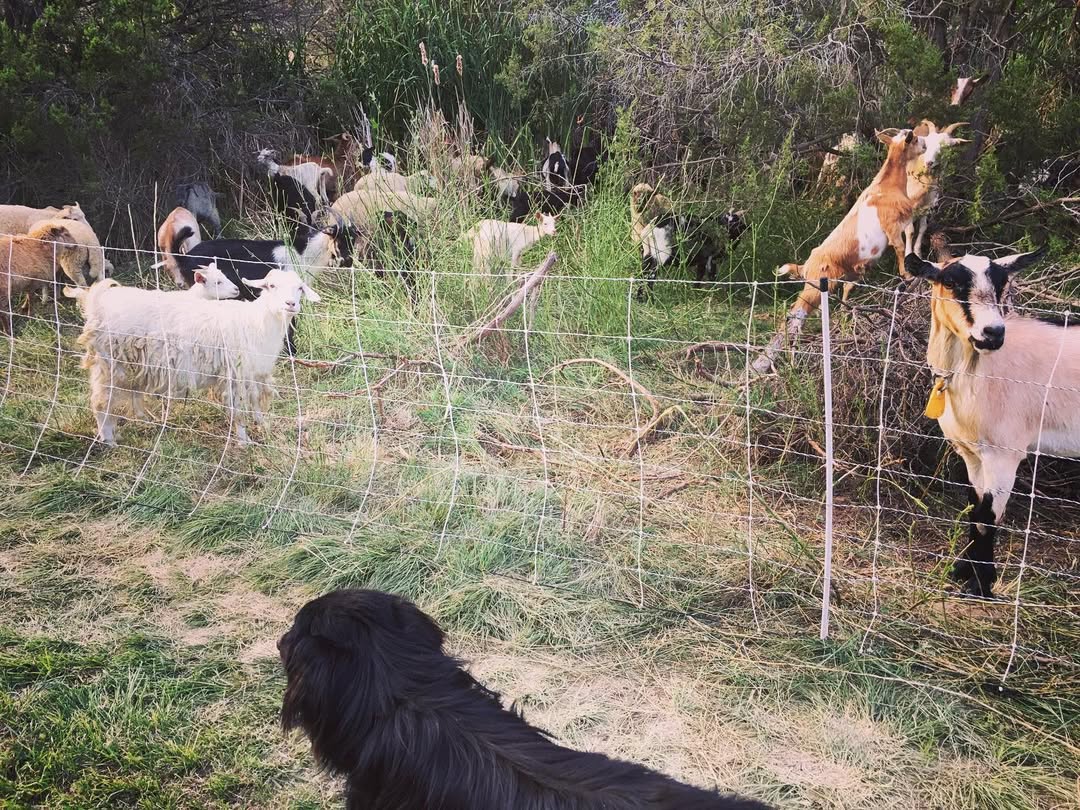
Why Goats are Ideal for Land Clearing
When I planned to raise goats on my homestead, I began slowly clearing one acre of land that was densely wooded and overgrown with brush.
I removed more than 30 ailanthus trees a few years ago, then created a way to selectively clear the trees and the understory.
While removing invasive species, I burnt all worth its weight in firewood, piling up the debris. Then I had a neighbor who ran a land-clearing goat business and used my property for an initial test.
The result was impressive, and then I brought some goats to the mini like forest. They helped remove all the understory debris.
As they moved through the woods, I had to wait until they exhausted an area. Then, my job was to drop trees that need selective clearing to promote healthy silvopasturing.
Goats ate and repeated the cleanup process. I started with three goats (2 large and one mini).
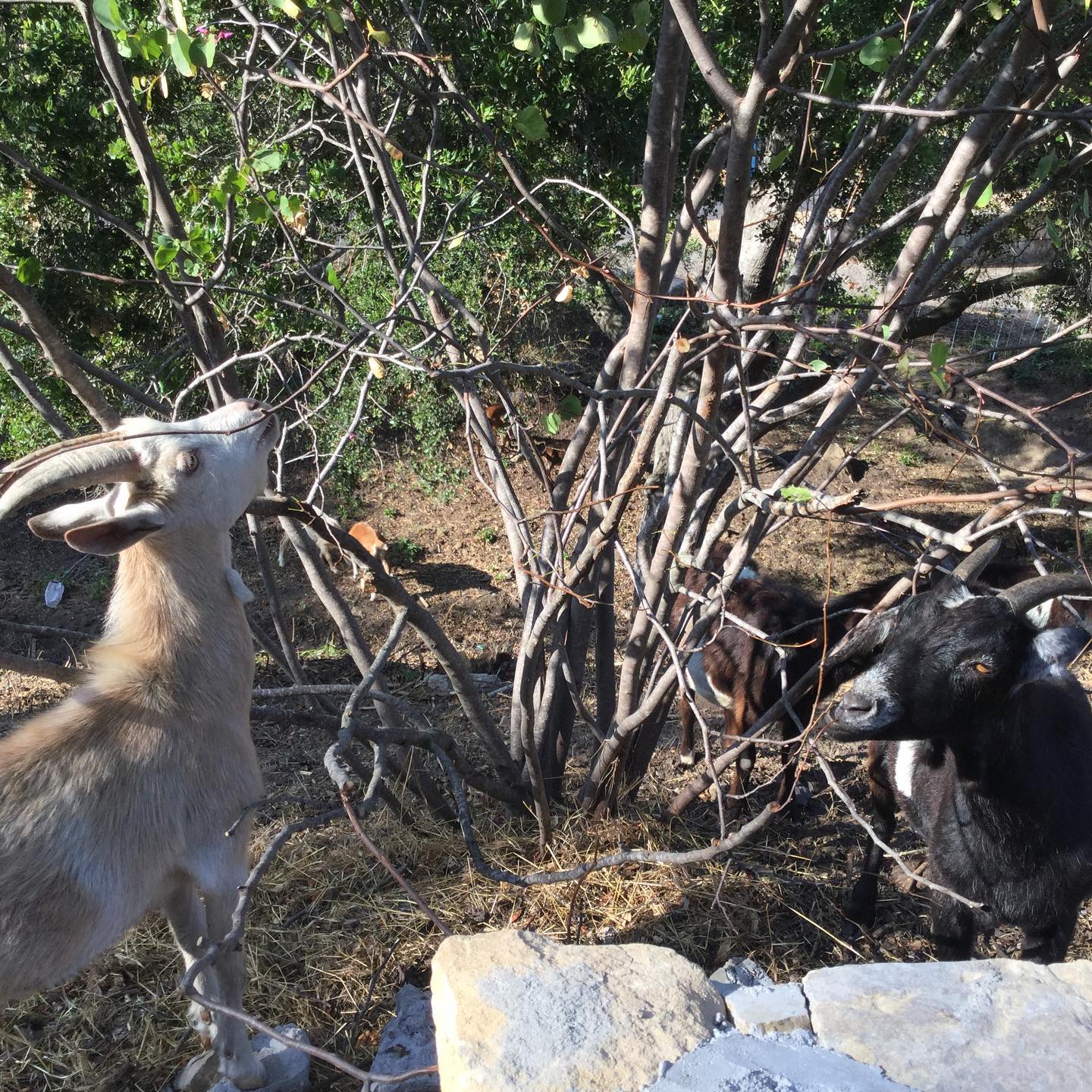
While sheep are excellent grazers, goats are superior browsers. They go down the field and search for woody plants, vines, grass, and weeds.
You can expect your herds to clear vegetation such as briars, blackberries, poison ivy, kudzu, shrubs, and saplings.
Saplings? They’ll eat saplings depending on how hungry they are and what else is available around there. They’re pickier eaters than their reputation suggests.
They have very nimble lips, so they easily work on thorny bushes like roses.
Though they primarily browse the pasture, they also graze on the ground.
With that, these animals also clear a lot of other brush and thick undergrowth that is hard to mow by hand or clear with herbicides.
In addition to eliminating unwanted weeds, goats also help reduce the seed bank. Unlike cows and birds, they grind the seeds so they have very little viability.
Though it may feel overwhelming at first, four-legged landscapers can finish their job efficiently within a few days. On average, these herds eat about 20% of their body weight in green each day; if they weigh 100 lbs each, they can consume 100 lbs per animal.
Once the goats have completed browning the area, you will see everything under eight feet tall as leafless.
They’re easy on the land, whether steep or rocky terrain, and are much more comfortable on your pasture than sheep.
Besides, your livestock fertilize the land with fresh manure as they pasture. And they make little to no mud puddles with their tiny feet and light weight.
They also eat very rough forage without complaint. The machine or any other tools don’t give a satisfying feeling, unlike watching goats naturally clear the untidy land.
Things to Consider Before Choosing Goats for Clearing Land
Land Size and Terrain
How big an area do you want goats to clear the land? An acre, 5 acres, 20 acres, or 50 acres?
The size of the land determines the goat breeds you need on your property. The small-sized landscape may not have an abundance of forage, so small-sized goats like African Dwarfs can be enough for it.
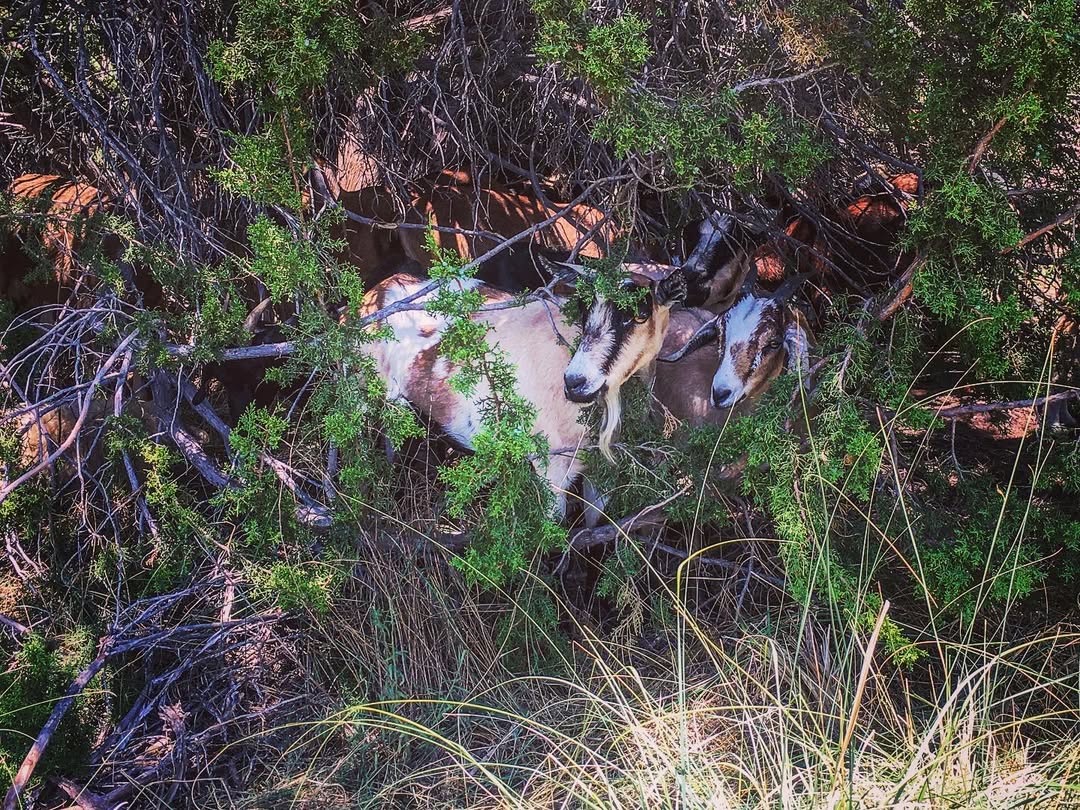
If it’s a big property or jungle and time-consuming, you want a herd of large breeds like Spanish goats.
Though goats are excellent for pasturing on the rough terrain, make sure it does not contain toxic plants.
Vegetation Type
| Preferred Vegetation Types | Favorites |
|---|---|
| Brambles and Briars | Blackberry, Raspberry |
| Trees and Shrubs | Mulberry, Willow, Sumac, Honeysuckle, Oak, Maple, Poplar, Eastern Red Cedar (Juniper) |
| Weeds and Forbs | Poison Ivy, Ragweed, Giant Ragweed, Thistle, Amaranth, Dandelion, Pigweed |
| Legumes and Cover Crops | Alfalfa, Red and White Clover, Field Peas, Vetch |
Climate Tolerance
Goats hail from Africa, but they can tolerate both hot and cold climates well.
Though they can tolerate extreme conditions, they’re fine outside pasturing at around 90℉ in summer and -20℉.
Fence Requirements
When goats pasture, they eat and then walk and continue it until you know that your animals are over in an area where you don’t want them to eat your other plants. Or they’re already in the neighbor’s yard, and you don’t want your goats to escape to others’ property.
So, you need a fence to prevent herds from trespassing onto the undesirable landscape. If it’s already a property boundary, you can build a permanent fence.
But if it’s only a pasture area inside the homestead, you can put some portable fencing out there. I like electric netting fences powered by a solar system.
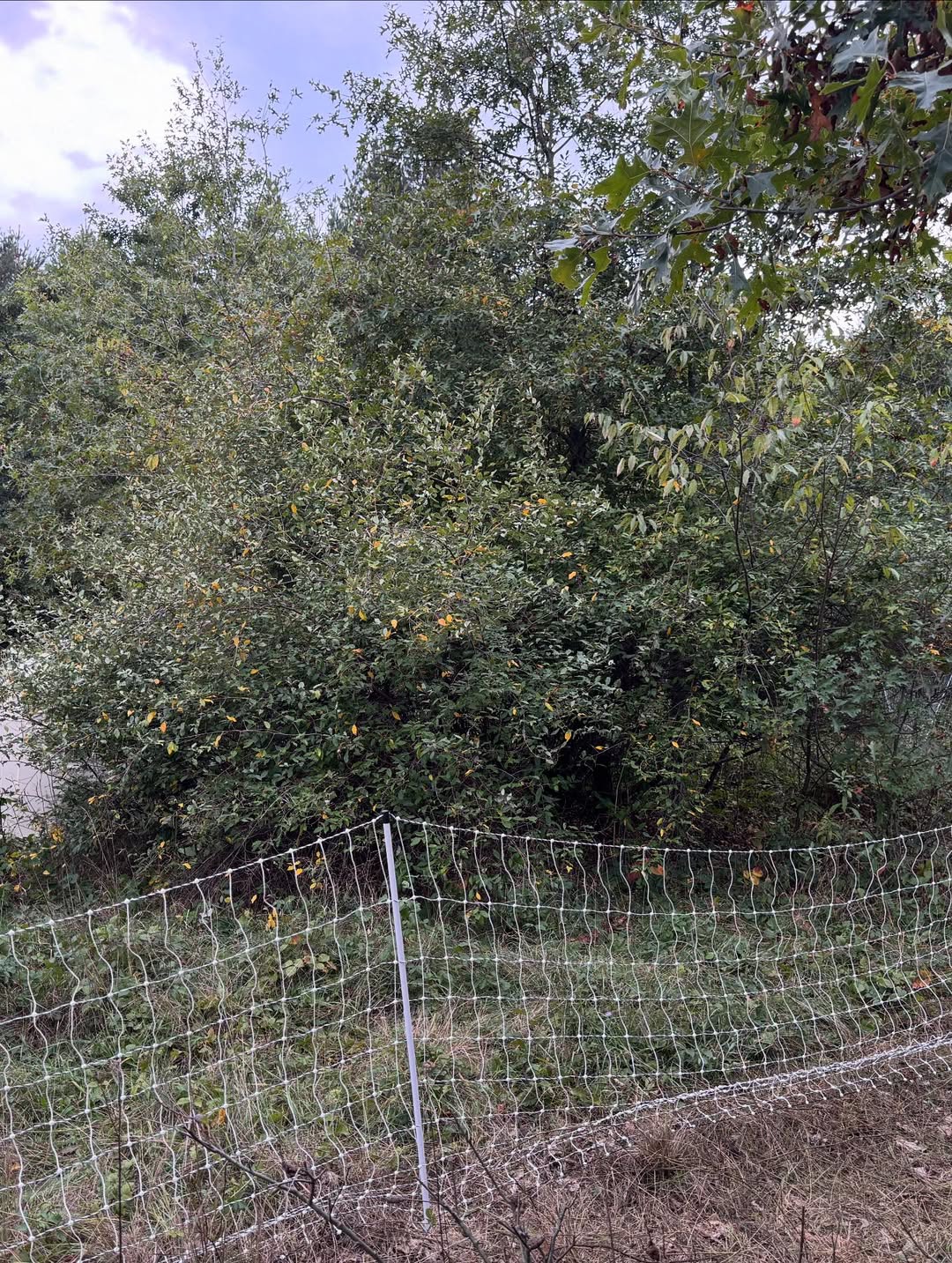
Herd Size vs Acreage
A general rule is that 10 goats take a month to clear an acre, so 1 goat will need about a year to clear the same area.
But that all depends on the goat size, the vegetation type, quality, and density.
Multi-purpose Goals (Milk, Meat, Fibers, Pets)
While owning goats, you don’t only consider how excellent they are at clearing the landscape. You may also want to know other benefits of raising them. So, you can choose the best out of them based on meat, dairy, or pet breeds.
If you want to raise herds for profit, meat goats can be the best choice. But if you raise them for yourself, dual-purpose breeds can be beneficial.
Besides, small-sized breeds can be great for pets.
15 Best Goat Breeds for Land Clearing
1. Spanish Goat
Spanish goats are a heritage breed and hardy (parasite-resistant), as well as a feral-type herd. They’re exceptional browsers that can eat invasive plants and clear brush from pastures.
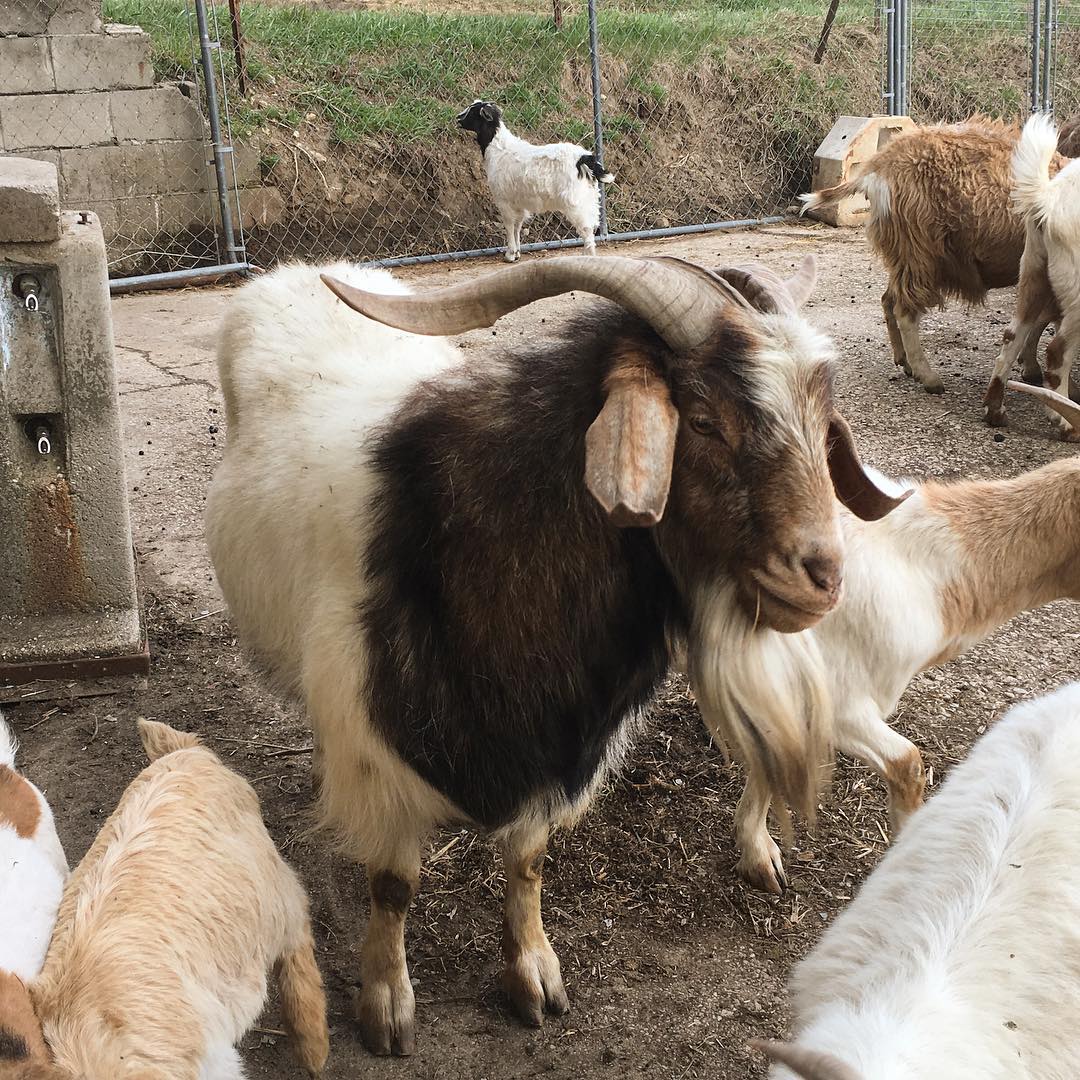
As fuel breaks and bike trails are often prone to wildfires, these goats are bred specifically for this purpose.
Besides, they are raised for meat and cashmere production. They can thrive on rough, neglected land and under adverse agroclimatic conditions with minimal feed and maintenance.
Spanish goats would sit near the house, waiting for the owner to feed them. They also go down the pasture and fill themselves up.
These are mid-sized goats that reach 20 inches in height, with compact bodies, and weigh 100-250 lbs per animal. So, you can keep them in a large acreage.
2. Kiko Goat
This New Zealand goat breed is bred for their hardiness and efficiency in meat production. They are known for their strong resistance to parasites and rapid growth and weight gain.
Bucks can get 250-350 lbs, while does weigh 100-150 lbs.
The weaners have faster weight recovery. On average, goats at weaning gain 10 lbs more than other breeds.
Besides, kiko goats make great mothers that produce twins and raise them along. They make a low-maintenance herd with few worms (can’t do with this).
Also, they tend to need little veterinary assistance and leg and foot care. They develop hoof rot and barber pole worm infestations.
These goats are excellent weed and brush eaters that can help manage vegetation on your property. The herds are active, cold-hardy, and live on sparse forage.
Kiko goats are active, hardy, and offer more resistance to cold, sparse forage, hoof rot, and barber pole worm infestations.
3. Boer Goat
This is one of the most popular meat goats worldwide among homesteaders, farmers, and ranchers. They are a large breed, with mature males gaining 240-300 lbs and females weighing 200-225 lbs.
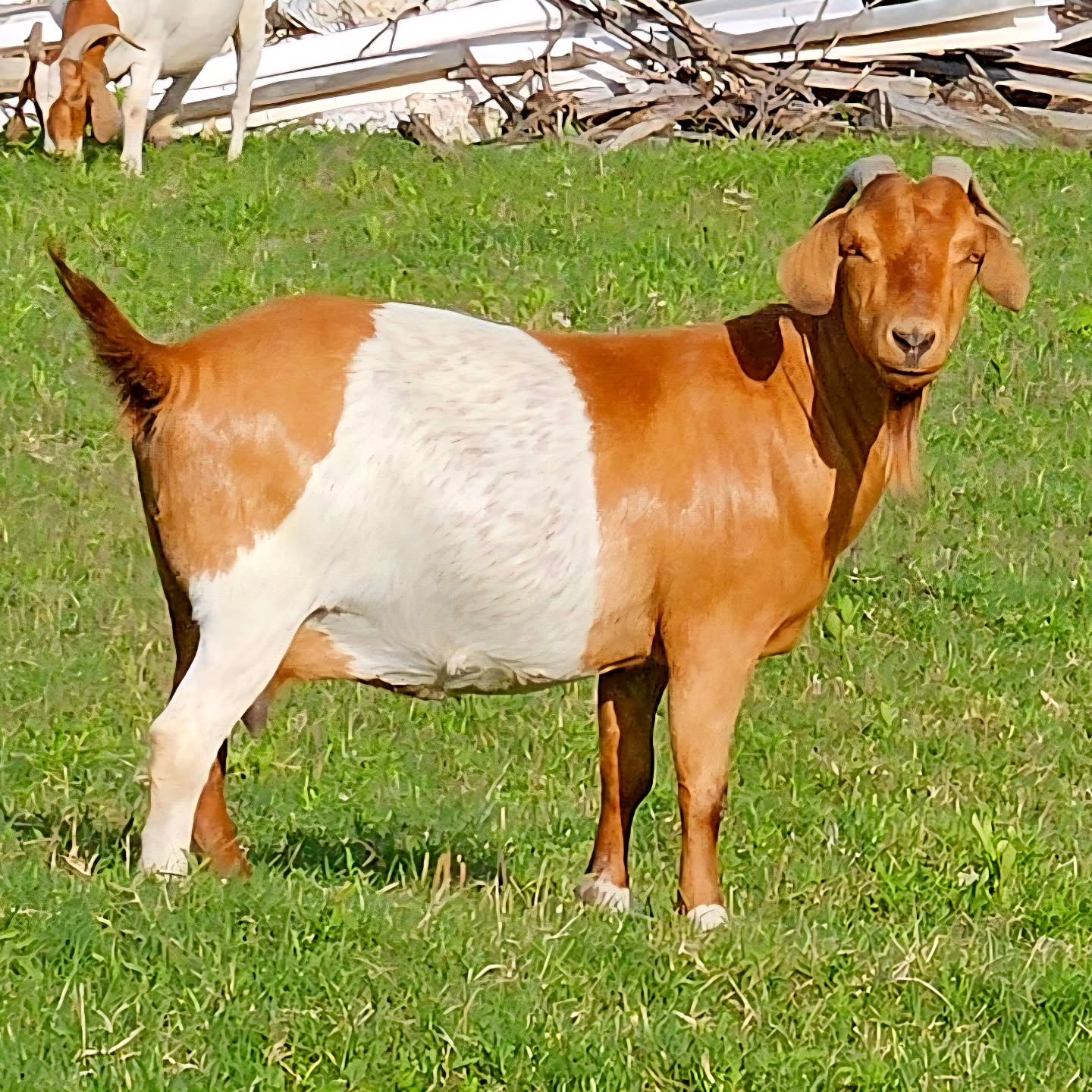
Boer goats are heavy eaters, meaning they clear land quickly.
They can eat trees bare if you allow them on the pasture, given their climbing and standing ability in the tree.
But you need to take care of their feed well and maintain good fencing while letting them on the vegetation. They are ideal for mixed brush and pasture.
4. Myotonic Goat
Myotonic goats are also a good choice for meat production, brush clearing, and pet goats. They’re quiet, calm, and super friendly and easy to manage for beginners.
With their strong foraging instincts, they make efficient use of feed in winter. But you must admit that they are picky eaters.
Also known as Tennessee meat goat, they are medium-sized animals that reach 17-25 inches in height. You can expect them to weigh between 60 and 175 lbs.
Due to their small size, Myotonics make great herds for small acreage. Even if you want to raise them in the paddock, 7-10 goats will be fine for about 1/4 acre.
But you need to provide them with rotational grazing every week. It’s easy to keep them under the fence, as theyare gentle on the landscape and the fence.
5. Savanna Goat
Savanna goats are often mistaken for Boers, but Savannas are the more innovative and more sustainable choice. Originating in South Africa, they are a heritage breed that thrives in hot, dry, humid, and rainy climates without complaint.
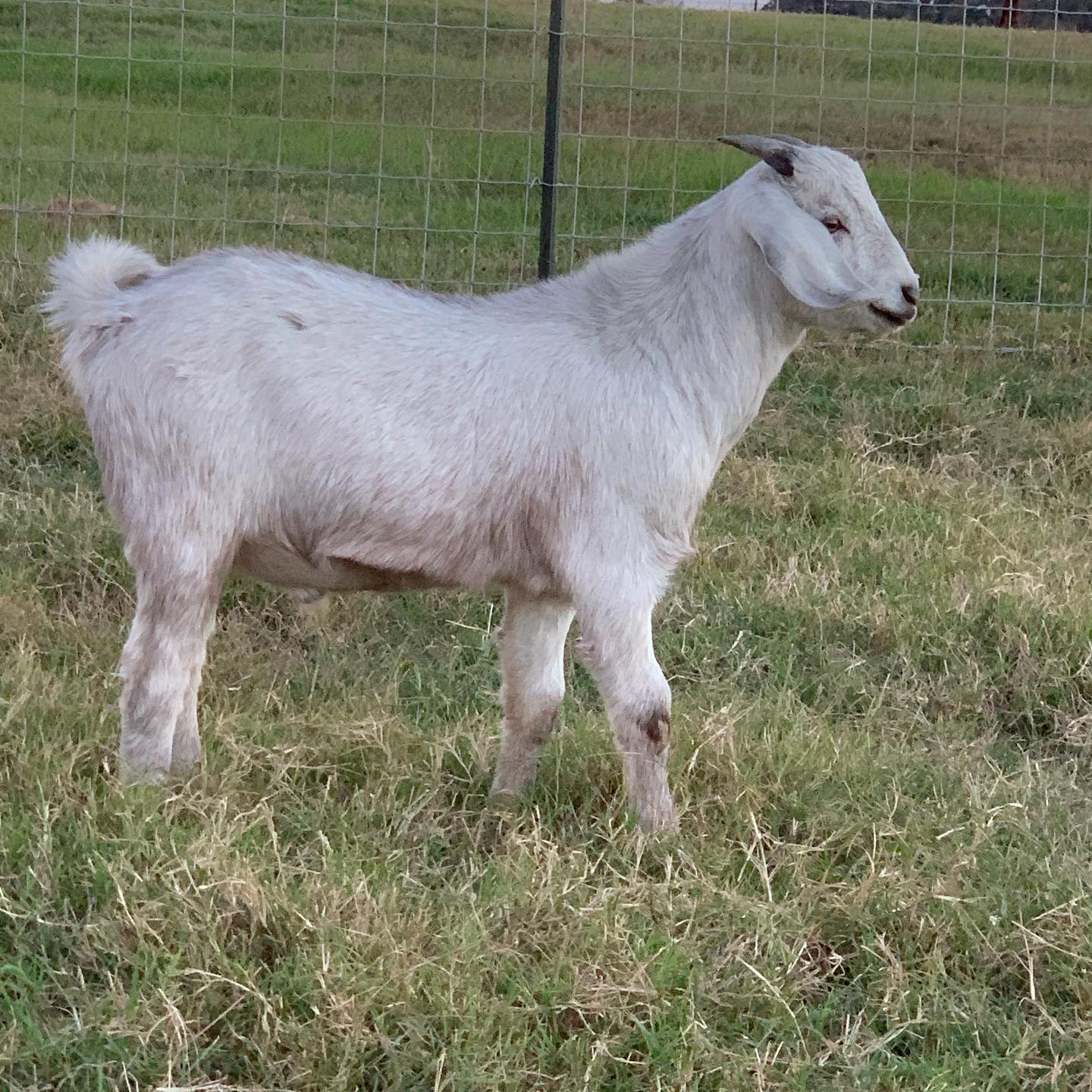
They have a motherly nature and a higher fertility rate with usual twin and triplet births.
Actually, Savana goats are a medium- to large-sized, muscular breed, with bucks weighing 200-250 lbs and does reaching 120-200 lbs.
Besides, they’re aggressive browsers, making them great for reducing invasive plants.
6. Nubian Goat
Also known as the Anglo-Nubian goat, the Nubian is a British breed bred mainly for milk.
These dairy goats have higher butterfat content in their milk than that of Nigerian Dwarf and Pygmy goats, with more than 5%. This helps induce the milk flavor and enrich the cheese-making.
Besides, you can raise Nubian goats for meat and clear brush and vegetation around your homestead.
Adult males gain about 175 lbs, while females gain 135 lbs. Thanks to their height (30-35 inches), these goats can easily reach tall shrubs.
You may have heard them as loud, but they are friendly enough to maintain easily.
7. Alpine Goat
As the name suggests, Alpine goats hail from the mountains in France. Due to their hardiness, they can tolerate a wide range of climates, especially cold or snowy ones.
They are medium- to large-herd bucks growing 32-40 inches and does reaching around 30 inches in height. Also, you can expect them to weigh anywhere between 135 lbs and 170 lbs.
Due to their origin, Alpines make strong climbers and handle slopes and uneven terrain very well. So, they are more efficient at clearing land of the taller plants than other breeds.
I find them balanced browsers and grazers.
Actually, I forgot to mention that they are heavy dairy goats. Their milk is used to make butter, cheese, soap, and ice cream. So, the breed is suitable for both homestead and commercial purposes.
8. LaMancha Goat
Though the name sounds like Spanish, LaMancha was developed in the United States (and is the only American goat breed).
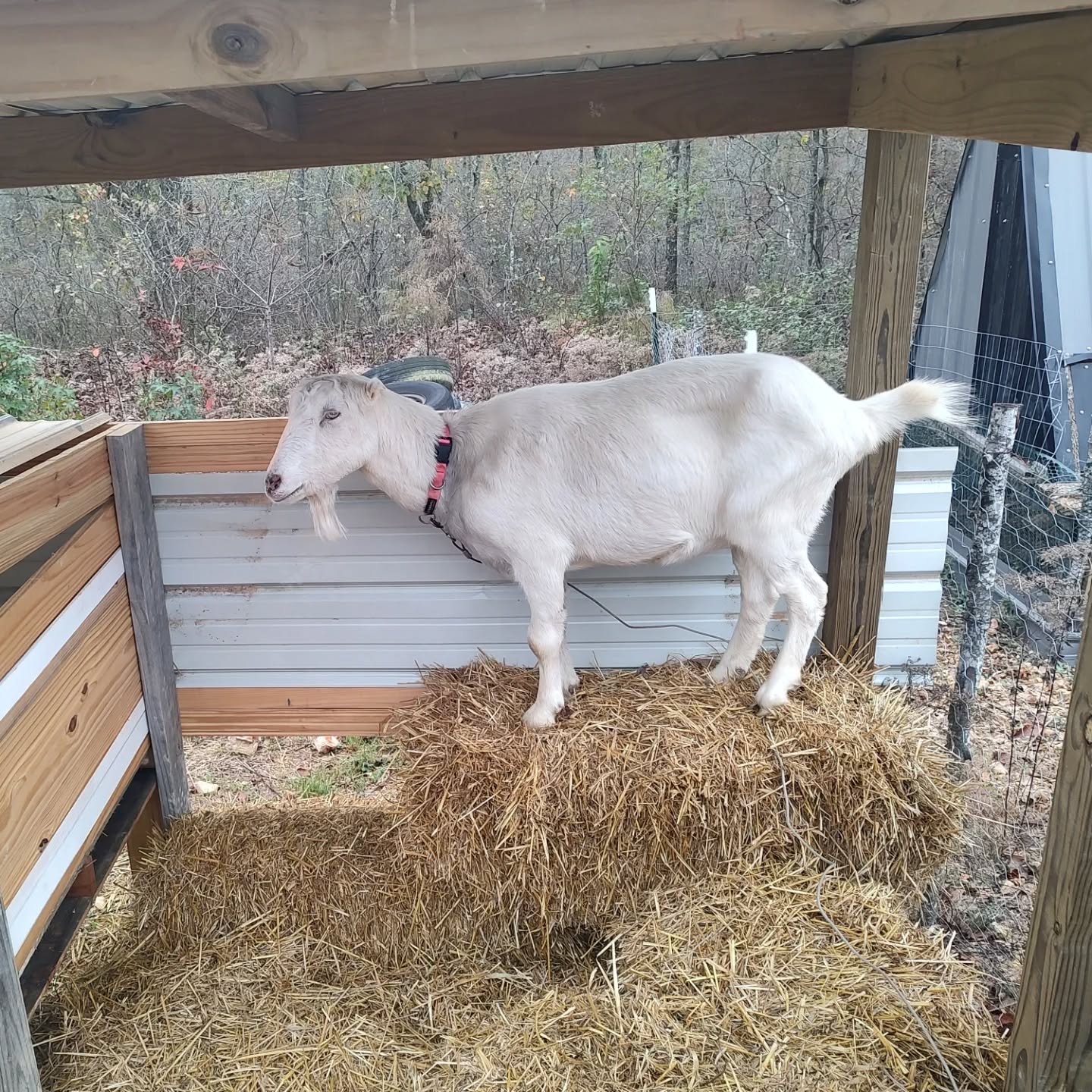
They are calm and cooperative with their owners. These are medium-sized goats, standing 28-30 inches tall and weighing 130-160 lbs.
LaManchas are bred for dairy purposes and land clearing. They can eat brush, vines, and weeds in the pasture.
Because of their docile nature, they are easy to handle and milk, making them ideal for family homesteads.
But these goats are very notorious for testing the lower third of a fence and don’t miss a chance to sneak through the gaps near the ground. So, you must secure the ground line and maintain proper tension between the fencing lines and gaps.
9. Oberhasli Goat
Oberhasli are Swiss dairy goats with an alert appearance, but they are gentle.
They are medium-sized herds. Males grow to around 34 inches, while females grow to 32 inches, with weights of 150 lbs and 120 lbs, respectively.
Does make good mothers, producing one kid in the first breeding and 4 per breeding thereafter.
Anyway, Oberhasli active foragers that thrive in wooded areas.
Though they have good parasite resistance, you should monitor for infection during damp or humid weather. Also, they require a strong fencing system as they are escape artists.
10. Nigerian Dwarf Goat
I love these little cuties for their exhibition ability, high-butterfat milk, and landscape management.
Nigerian Dwarfs are only around 22 inches and weigh 40 – 80 lbs, so they are best for small land clearing.
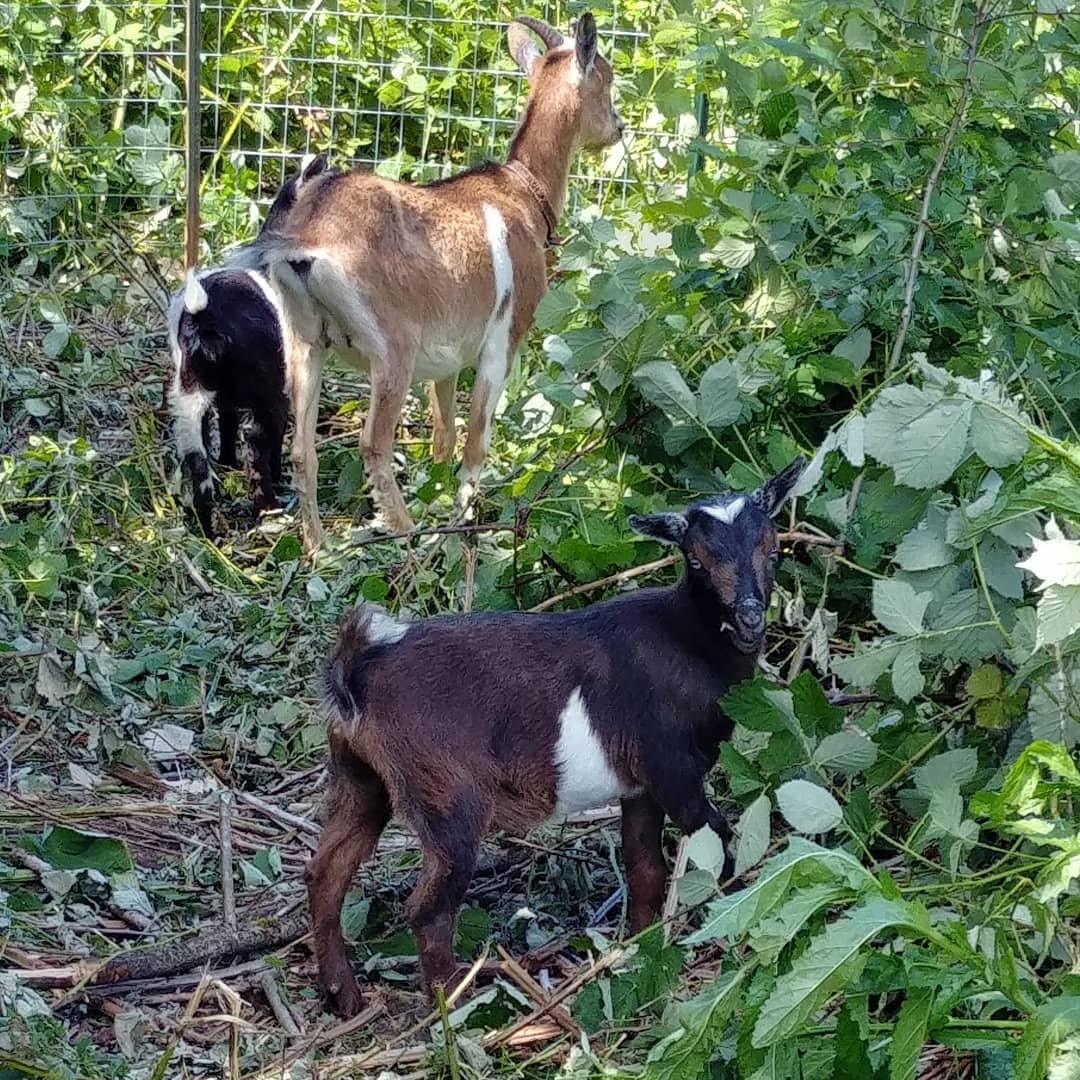
They eat weeds efficiently and can reduce brush and manage overgrown areas.
Besides, dwarf goats are calm, gentle, adorable, and people-loving, making great pets. So, they are easy to handle in the barn and can be herded in the pasture. You can easily set up fencing for them.
11. Pygmy Goat
Pygmy goats are miniature herds that are only 16-25 inches tall and 40-90 lbs in weight.
Thanks to their small size, Pygmy goats make great pets and can clear low land. Actually, they are brush goats that eat weeds, vines, and seedlings, so you can expect them to control undergrowth.
They can reach smaller, lower places that most larger breeds, like Alpines, cannot. But they’re not suitable for tall brush.
The goats sound like Spanish nannies and attract with their compact, stocky, and sturdy appearance. Also, they are friendly and easy to handle.
As they’re pet goats, you may not want many on your homestead. So, you can stack them with long chains and allow them on the field without a fence.
12. Angora Goat
Angora goats thrive well on steep hillsides, along streams, and near fences. They are 36-48 inches in height. While males grow around 180-225 lbs, females weigh 70-110 lbs.
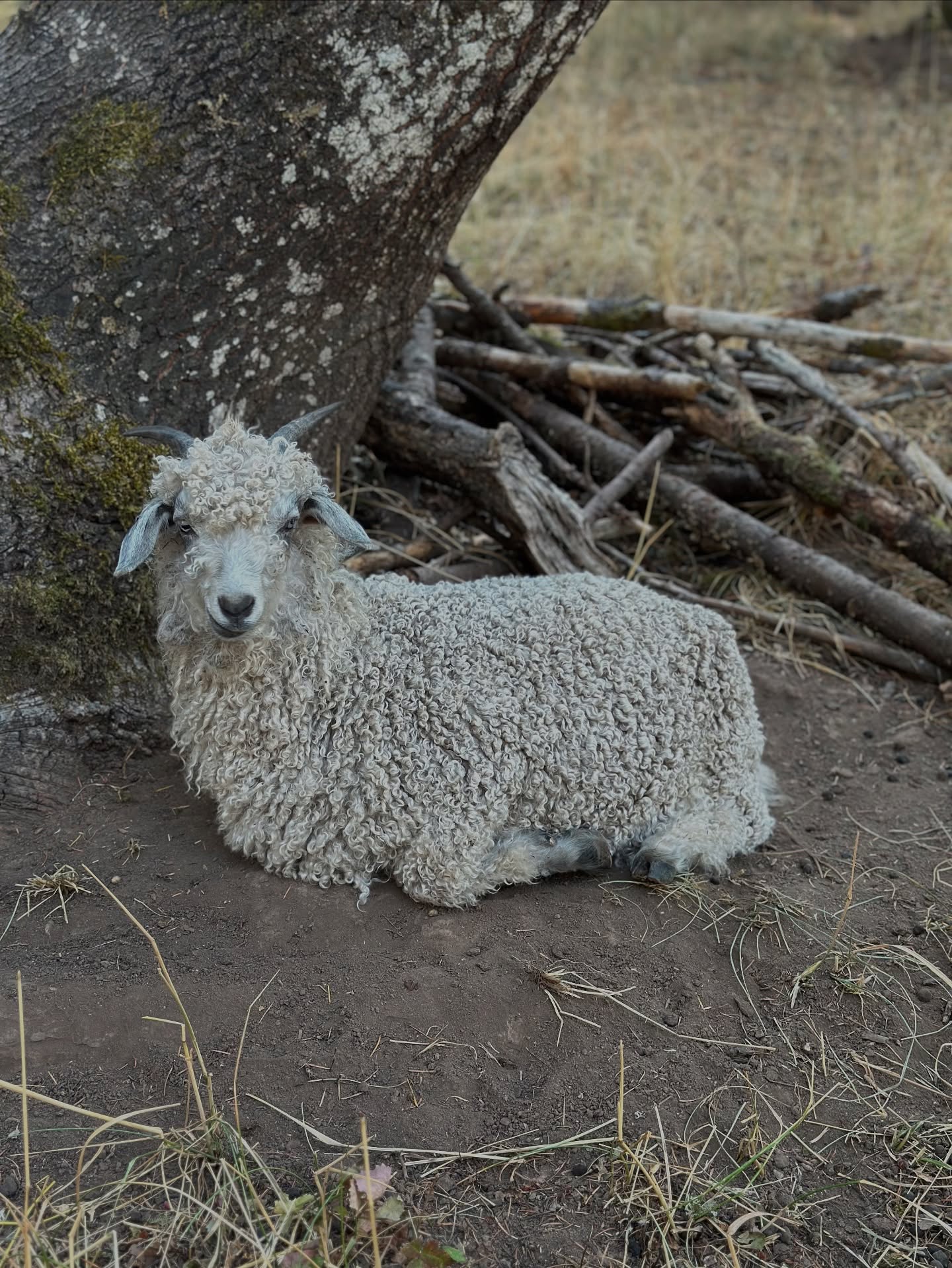
They’re bred mainly for producing fiber, but they can manage your land filled with brush. In fact, they are best for light to moderate vegetation.
But before you pasture them on the field, you need to remove burdock, stick-tights, or any other burrs. They need extra care for their coats.
The seeds from the mentioned weeds turn a fleece into a tangled mess, only to add to your workload.
So, you need to allow your goats to pasture on these plants after shearing them in summer. Also, don’t forget to set up a 4-inch piece of barbed wire there.
13. Arapawa Goat
Arapawa is a rare goat breed from New Zealand. They are medium-sized goats with bucks weighing around 125 lbs and does gaining up to 80 lbs.
If you raise a family homestead, these make excellent herds for you. They’re non-aggressive to children and produce both meat and milk.
Besides, they make good brush-clearing and weed-clearing goats. But you need to build robust fences for them as they squeeze through the gaps and sometimes jump over the netting.
Also, they don’t appreciate wet weather and don’t pasture at that time.
14. Cashmere Goat
Chashmere goats efficiently graze on grass-legume pastures to produce meat and fiber. But more than that, they are great browsers that thrive in the rough terrain.
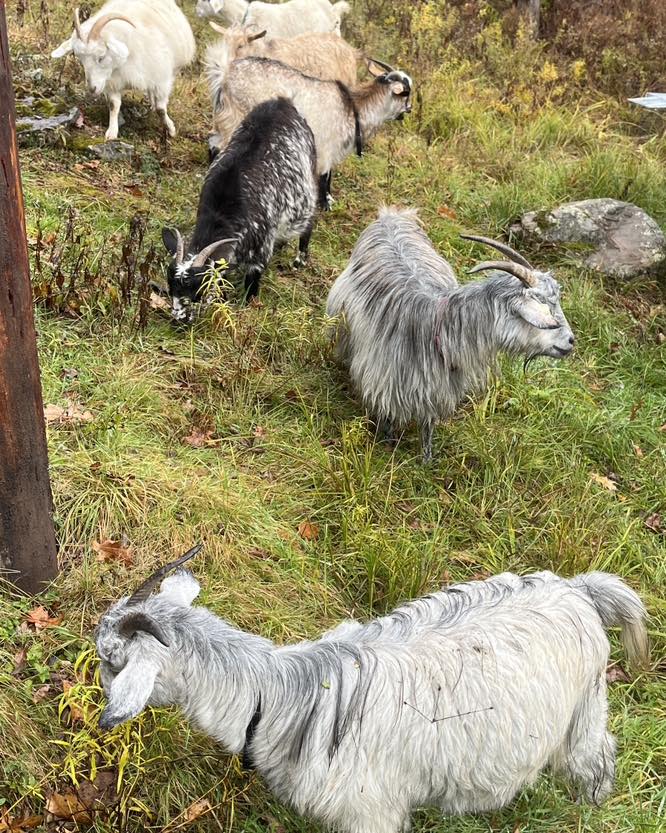
They do well on unimproved, untidy pasture and abandoned farmland, which horses and sheep don’t appreciate.
You can use them to improve unused land, clear undergrowth in woods, manage woodlands, riverbanks, and roadsides. These cold-hardy herds are small to medium-sized goats. Adult bucks get 60-130 lbs, while does weigh 50-100 lbs.
15. Crossbred / Hybrid Goats
Unlike purebred goats, crossbred or hybrid goats are developed for better disease resistance, yield, and performance.
They are hardy and adaptable to harsh conditions. If you want to crossbreed goats solely for clearing land, consider the following recommendation.
- Tall Brush: Boer X Alpine/Nubian
- Weeds/Details: Pygmy/Nigerian X Boer
- Tough Plants: Kiko X Spanish
Final Thoughts
If you are looking for low-maintenance meat goats for land clearing, keep Kiko and Spanish goats, but avoid Boers.
Dairy goats and fiber goats also clear brush and vegetation, doubling income.
Anyway, you need to provide shade, water, and a fence in spring and summer while clearing the terrain. Also, keep in mind that they don’t like rain and wet pasture.



Leave a Reply