
Are you feeding your cattle year-round but still complaining about their underyield or maybe undergrowth?
This time, perhaps, you need to reconsider your herd feed.
So, I have curated a list of grasses and forages for their feed, which are high in nutrients, palatable, available year-round, and support healthy digestion, growth, and milk production.
Warm-Season Grasses
These do well in hot climates and are best for tropical and summer regions. They are also perfect for hay production.
Warm-season types are slow to green up in the spring but tolerate summer heat and turn brown as fall approaches.
Bermuda Grass
Though mostly used on lawns, Bermuda grasses are drought- and heat-tolerant and grow in months such as June, July, and August.
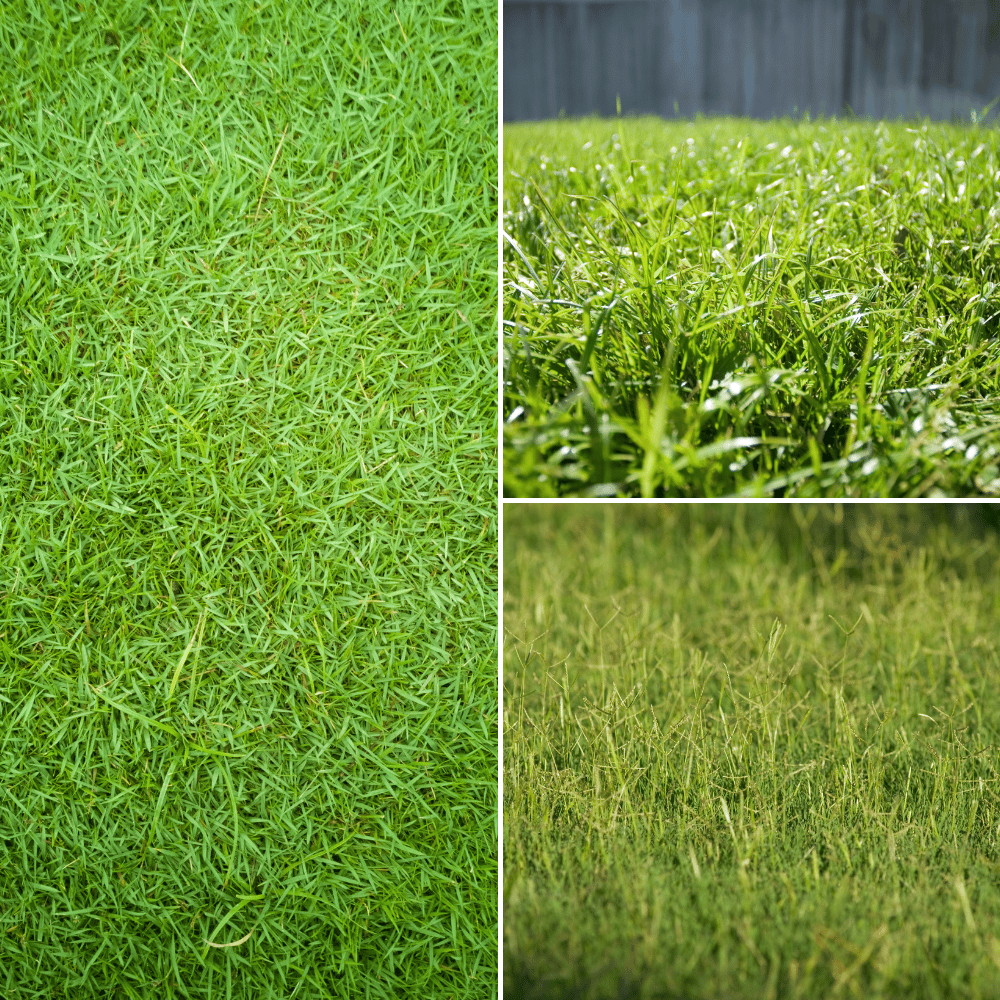
It’s a short grass that grows up to 24 inches tall, depending on the soil. You can graze your cattle when it’s 6 to 8 inches and give it a rest when it’s lower than 3 to 4 inches.
Also, you can bale Bermuda every 30 days starting in June.
Best uses: forages, hay
Napier Grass (Elephant Grass)
Also known as elephant grass or king grass, Napier is an improved fodder grass with high protein.
Though it best grows in high-rainfall regions, it also thrives in drought-prone areas and in dry places.
But avoid areas that are waterlogged.
You can also grow it with the fodder trees near the boundary. I suggest intercropping it with crops, including legumes and other forages, if you have limited space.
Plant Napier (cuttings, slips, or whole stems) from the end of February to the end of August. After 50-60 days of planting, you can harvest the grass.
Make sure the grass is between 3 and 4 feet tall.
Best uses: fodder, saliage, hay
Guinea Grass
Do you know Guineas grass tolerates wildfire and drought?
If you have lots of livestock and want long-term foraging grass, guineas can be a solution. You can graze your animals consistently, but you need to fertilize them regularly.
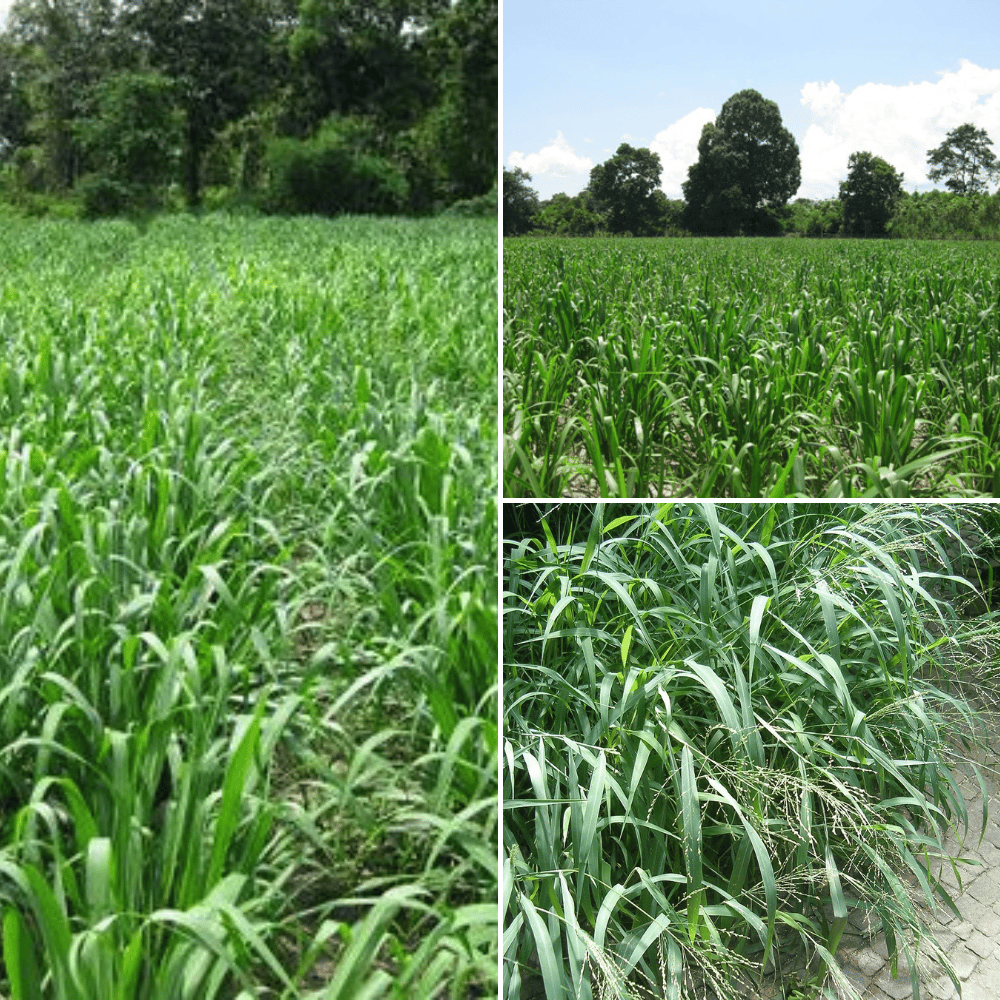
It is a fast-growing, leafy grass that can be highly palatable to dairy livestock.
Mostly, farmers cut and carry this grass and feed their animals in the enclosed system.
Thanks to their shade tolerance, Guinea grass can grow alongside trees, which is popular in agroforestry.
Best uses: pasture, silage, and hay
Rhodes Grass
Rhodes are annual or perennial grasses and produce palatable graze for livestock. It is a fire-tolerant and high salt-tolerant grass.
You can also sow it with other grasses and legumes.
After 4-6 months of sowing, you can let your animals graze the grass. It supports both rotational and continuous pasture.
If you want to harvest Rhodes for hay, mow the grass before flowering. You can harvest it every 25-50 days, for a total of 6 harvests per year.
Best uses: pasture and hay
Bahiagrass
Nahiagrass is a low-maintenance pasture grass that performs well on poor soil. In fact, they like sandy soil and are very hardy to shade, saline, and drought conditions.
This grass also helps control soil erosion. It’s easy to establish and has high persistence, making it a pasture or hay grass.
But I feel its hay is not as good as Bermuda or mixed warm-season grass hay.
When it’s ready to harvest, you need to cut the grass at the boot prior to heading stage. Then, you can cut it once every 30 to 35 days thereafter for hay.
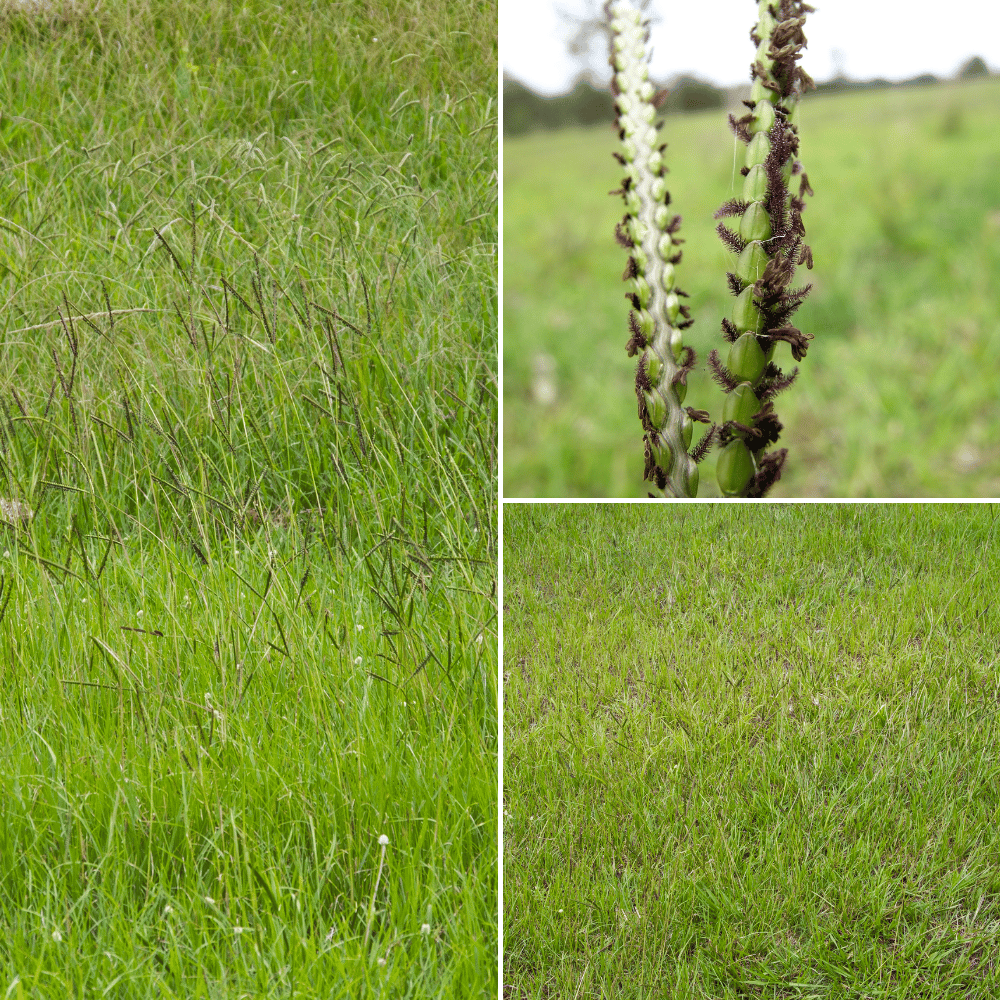
The nutrients remain high in the grass even after maturity, but it is no longer productive. So, you have to expect
Best uses: pasture and hay
Sorghum-Sudangrass Hybrid
This hybrid is a high-yield annual forage, which stands 5-12 feet tall with wide leaves.
They are like corns, with less leaf area and a waxier leaf surface, and have more secondary roots, which help them tolerate drought.
Also, this hybrid grass needs fertile soil and an additional nitrogen supplement for optimal growth.
Best uses: pasture, hay, and silage
Besides, you can also grow buffel grass, panicum species, kikuyu grass, dallisgrass, pearl millet, and setaria grass.
Cool-Season Grasses
These grasses thrive in mild to cold temperatures and are best for temperate and winter areas. Cool-season grasses provide highly digestible forage for your cattle.
They yield best at temperatures between 60 and 75 degrees Fahrenheit.
In the United States, cool grasses grow best in New England, Northern California, the Upper Midwest, the Pacific Northwest, and the High Plains.
Cool-season grasses green up in the spring and stop growing in the fall. They go dormant when the temperature reaches over 90 degrees Fahrenheit.
Perennial Ryegrass
Unlike annuals, perennial ryegrass is a shiny, dark-green bunchgrass that grows 2-4 feet tall.
While forage types have wide, coarse leaves, turf types are low-growing grasses with narrower, finer leaves.
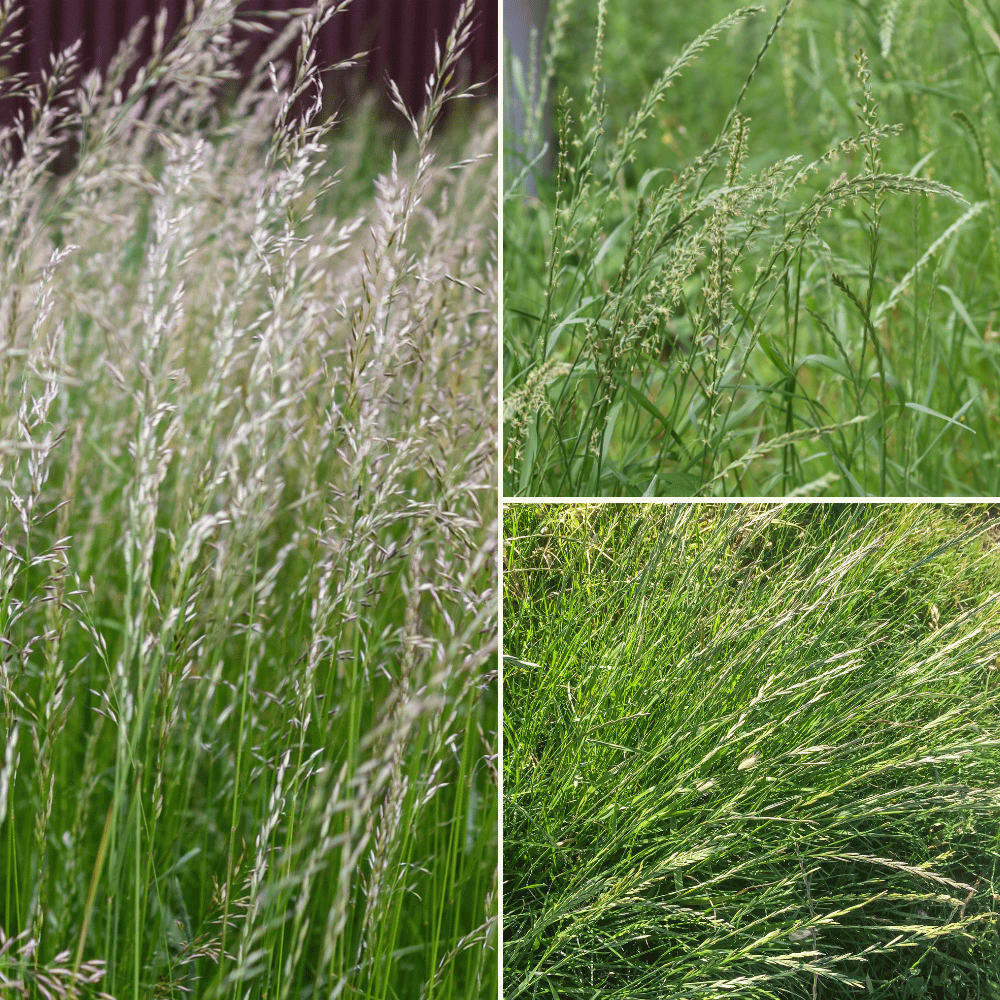
You can sow it with many pasture seed mixes. They grow best with red clover in Michigan, Minnesota, and Wisconsin.
If you’re grown in the fertile soil, they can give a high grass yield for the livestock. Also, the snow cover helps them stand for 3 years after the first planting.
Best uses: pasture and hay
Orchardgrass
You can tell Orchidgrass by its bluish green color, like a tall fescue.
It produces high yields with the cuttings in the summer. You can expect to harvest it in May.
Orchidgrass makes shade-tolerant and long-lived forage (up to 5 years) and performs well in mixed pastures such as alfalfa and red clover.
It’s palatable to livestock, so it’s in high demand as hay for horses, cattle, and many other livestock. Farmers feed their sheep and goats for weight gain and milk production.
Best uses: pasture and hay
Tall Fescue
Tall fescues are deep-rooted bunch grasses, which grow mostly during fall, late winter, and spring.
You can see them growing in the creek bottoms in places like New Georgia, but their yield is not quite good in the hillsides and ridges.
When it’s time to graze or mow the spring growth, I recommend you leave at least 3-4 inches of stubble.
The fescues are best for beef cattle, providing fall and winter feed. Thanks to their tough root system, they can resist most pests and recover fast after overgrazing.
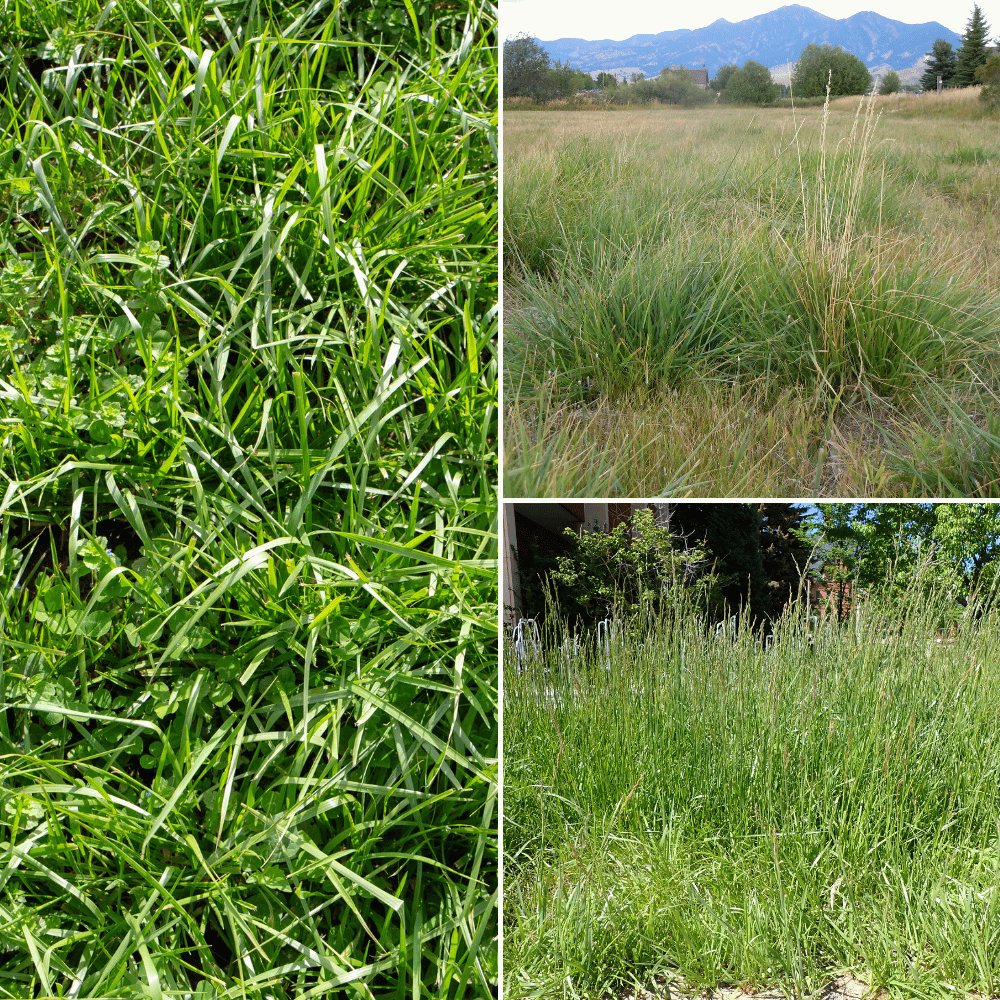
You can also grow fescue with white clover, red clover, and alfalfa.
Besides, it also does well with the grasses such as perennial ryegrass, brome grass, and orchardgrass.
Best uses: pasture and hay
Kentucky Bluegrass
This is a perennial, sod-forming grass with green to dark green leaves with boat-shaped tips. It grows 1-3 feet and lives for a long time.
You can harvest it from the first week of May.
Though it yields less, it’s highly palatable. It has better tolerance to frequent grazing than other grasses. But I suggest you work with rotational grazing.
Best uses: pasture
Timothy Grass
You can sow timothy grass for quality hay, but it also provides limited, controlled forage and pasture.
Timothy is a grass with 2-3 feet in height and flat leaf blades. It also creates large clumps.
Expect this grass to have a growth period in late spring and fall. You can harvest it from mid-May to the end of the month.
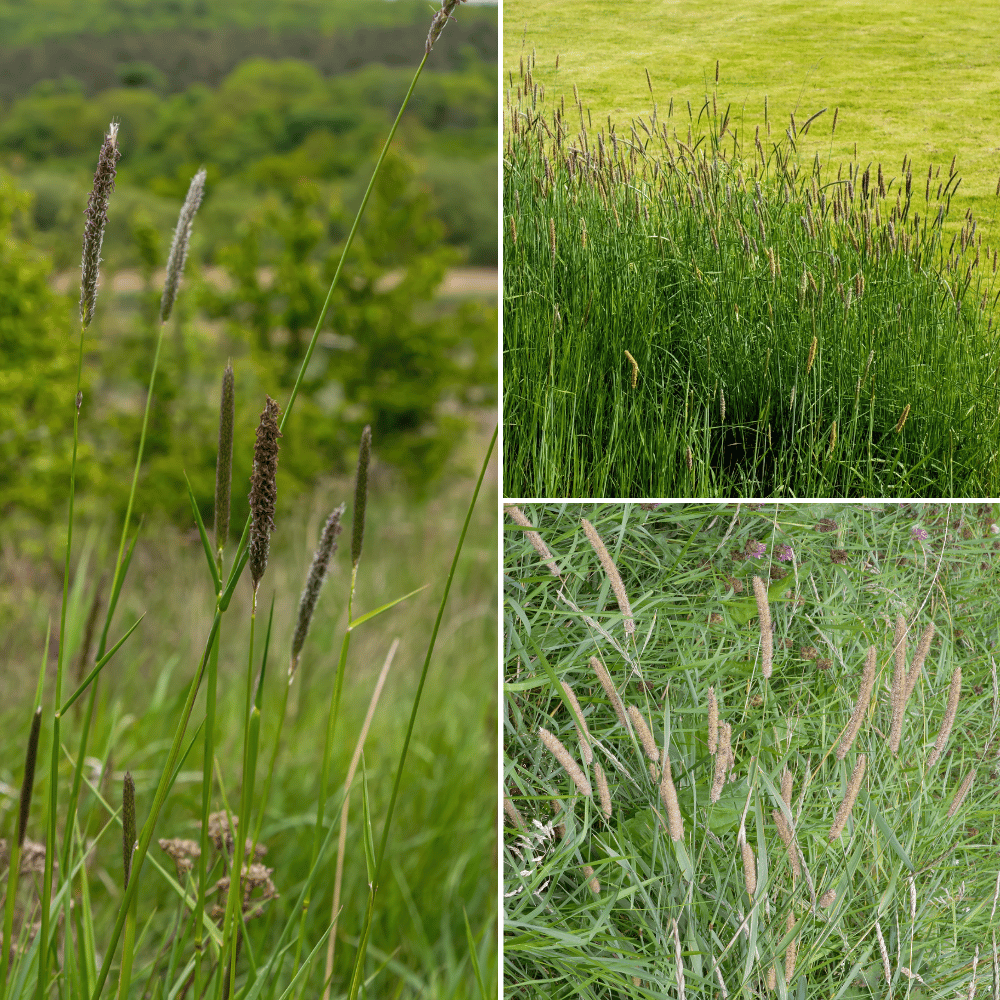
This medium- to late-maturing grass performs well with redtop and legume mixtures, except alfalfa.
Best uses: limited pasture and high-quality hay
Besides, you can also have other cool-season grasses such as brome grass, Kentucky bluegrass, reed canarygrass, crested wheatgrass, orchard bluegrass, and meadow fescue.
Final Thoughts
If you have a multi-acre farmhouse or homestead, I suggest you establish a diverse pasture system. Your cattle and livestock will enjoy their forage and hay year-round without running out of feed.
Also, you can mix the grasses and legumes for cold areas.
As your livestock breed, you may require more pasture, so you need to find alternative forage options.


Leave a Reply