
Though they are not as prolific as chickens and ducks, I still prefer geese for their large chunks of meat and their alertness.
They are big ducks with a cool personality, and require a lawn-sized area near the pond.
Though all look amazing, white goose breeds are more striking and cute, which can make your homestead or farm self-sufficient and a showstopper.

1. Embden Goose
Originating in Germany, the Embden is one of the oldest goose breeds.
You can tell these geese by their yellow-to-orange bills with white tips, orange legs, and blue eyes. Their heads are a bit smaller than those of other breeds.
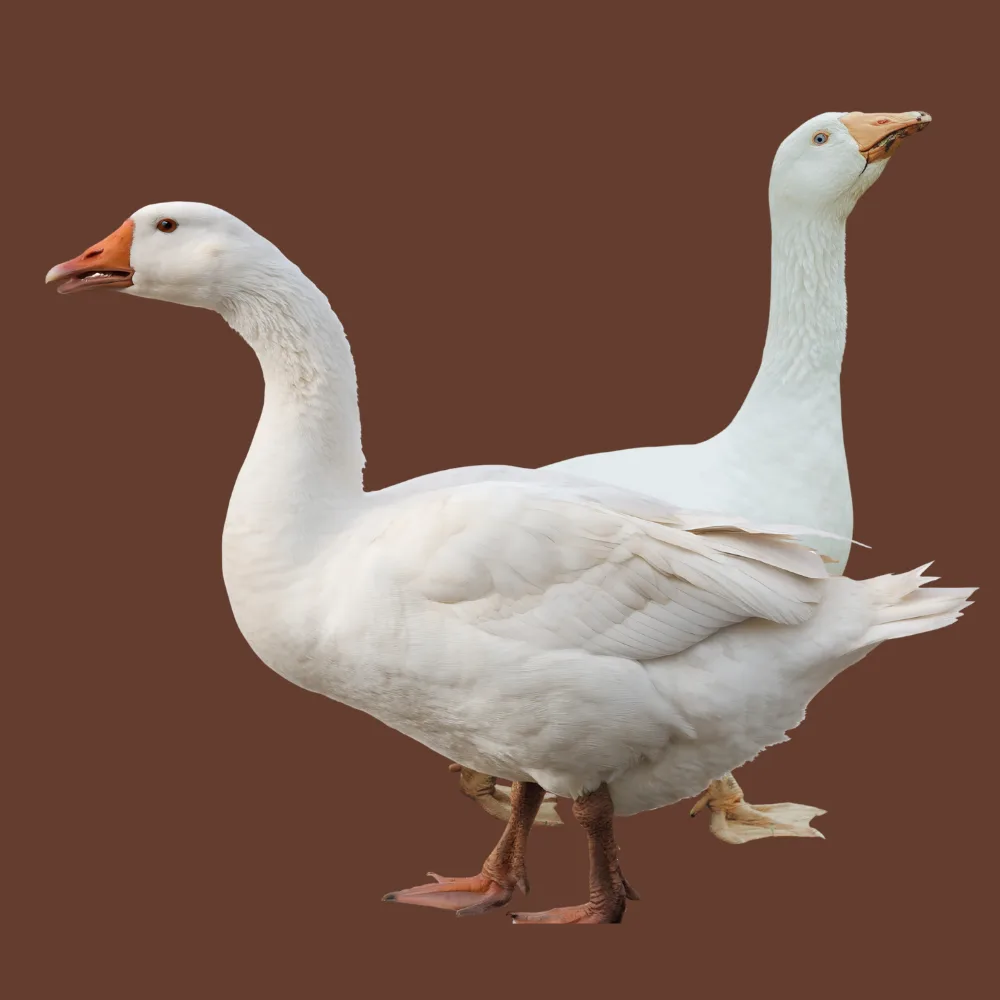
Also known as Bremens, Embdens are the tallest breed, reaching 3.3 feet. They are also heavy white birds with mature ganders weighing 26 lbs.
So, they are raised for commercial meat production.
Though they appear stout, they are very active and remain quiet, which can be good for urban homesteaders or farm owners.
These geese lay 50-60 eggs per year and sit on their eggs to hatch new goslings.
If you want to have good utility geese, you can allow the crossbreeding between Embden and Toulouse geese or other large geese.
2. Toulouse (White Variety)
Though Toulouse geese are popular for their gray plumage, they are also white. They have a large head, a long, broad, and deep body, blue eyes, and orange or pinkish legs.
They have two types, including production and dewlaps. While production toulouse lays 25 to 40 eggs, while dewlaps gives 20-35 eggs per year.
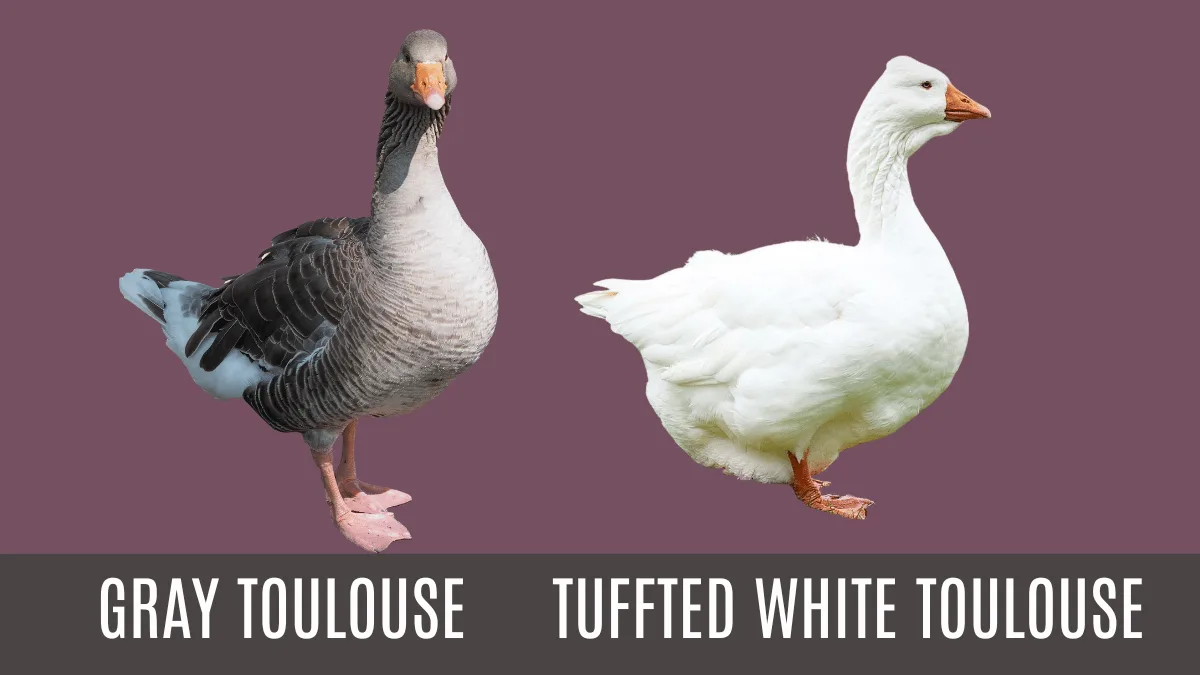
Also, production types weigh 18-20 lbs and make great homestead birds, as well as being good for small farms. But dewlaps are larger, weighing 20-26 lbs, and raised for commercial meat production.
Anyway, Toulouse meat is known for fat, and you must have heard of foie gras. You can also keep them for goose down.
These geese are docile and make home bodies that stay around their food and shelter. But their soft feathers take longer to dry, so they don’t do well in rainy areas.
3. American Buff (Light/White Variant)
First, I want to clarify the color range and lighter strain of American Buff. They have lovely apricot-fawn plumage. Their colored feathers include a black back, creamy white sides, and an almost white belly.
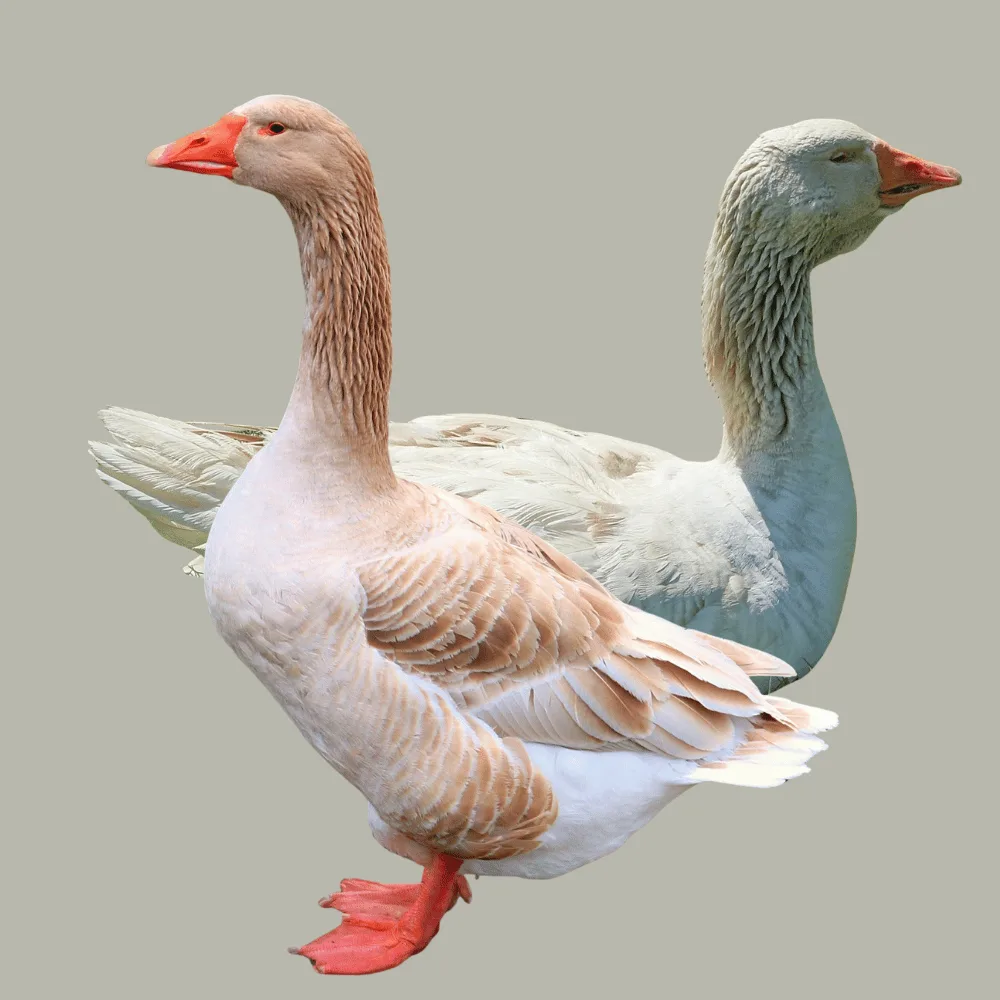
You can also witness brown eyes, orange to reddish-orange beaks, and feet. When they start laying, their legs turn pink.
I think they are medium-weight geese with mature ganders getting 18 lbs and mature geese 16 lbs.
The geese can lay 10-25 large eggs per year. They are broody, make good mothers, and raise their goslings.
So, you can expect American Buff to be a dual-purpose breed for meat and eggs. I like them to be medium- to large-sized roasting birds.
Their colored plumage doesn’t show dirt and soil as visibly as white birds’ do. But you can easily dress them out as clean as possible due to their light-colored feathers.
At the same time, they are calm and docile, making good pets. They are very curious, so you need to keep them under the fence to prevent them from wandering.
4. Pilgrim Goose
Pilgrims are known for their auto-sexing trait, which means you can tell them by their color on the same day of hatching. While males are white, females are grey.
When you look closely, mature ganders have blue eyes, a few grey markings on their rump, wings, and tail, and females boast olive-grey plumage with brown eyes.
They are very productive with one gander keeping 3-5 geese. The females can also lay 35-45 eggs per year.
These geese grow fast, and you can expect them to be 10 lbs in about 10 weeks. The mature birds can weigh between 13 and 14 lbs.
Okay, they are full and plump, keel-less-breasted, and make medium-sized roast birds.
Anyway, pilgrims are quiet, sweet-natured, docile, and easy to work with. They are great foragers that can weed around the homestead and remove the slugs and bugs.
The females hatch their own eggs (and maybe others’ too) and make good parents.
5. Cotton Patch Goose
Cotton Patch geese are slimmer than other domestic goose breeds.
You can tell them by their pink bills and feet. They have a sleek, upright posture and blue eyes.
While male geese have got white plumage with some dove gray feathers on their back and tail, female geese boast gray and white feathers or saddleback feathers.
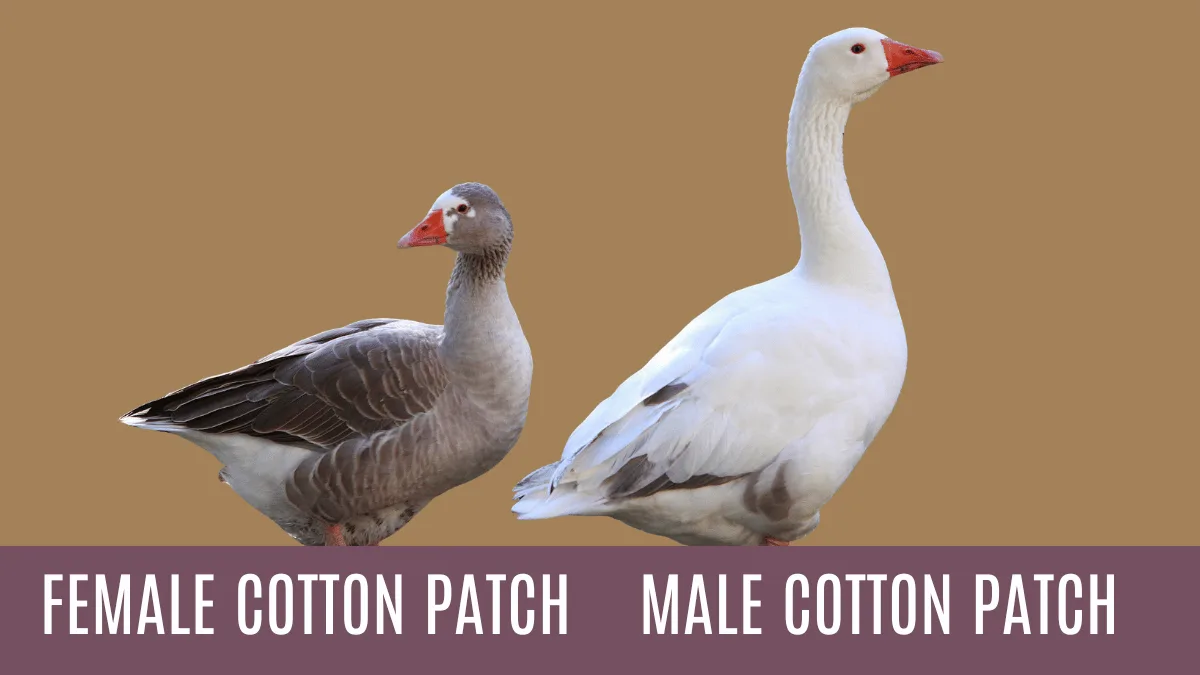
They are medium-sized heritage geese with adult ganders weighing 9-12 lbs, and geese getting 8-10 lbs.
These birds are very hardy and tolerate heat in the Southeast United States.
Unlike other breeds, they can fly well and easily escape 5-6-foot fences. Though this may help with predators, it may make it hard for owners to keep them in captivity.
Anyway, you are friendly and excellent foragers.
You can expect these geese to lay 4-7 eggs per clutch. This breed is not very popular in commercial or domestic settings, so it needs serious conservation breeders.
The geese lay large white eggs, with about 4-7 eggs per clutch. In the past, a good goose could lay up to 90 large eggs a year. The eggs are tasty, and their meat is flavorful.
6. Roman Goose (White Roman)
Do you know Roman geese are known for their white tuft of feathers, or crest, on their heads?
They are sacred to Goddess Juno and have a long history dating back to ancient times. You can tell them by their small, round, and compact bodies with full and well-rounded breasts and well-proportioned broad backs.
Roman geese are either solid white or spotted white.
These are lightweight, smaller geese, with mature ganders weighing 12 lbs and geese growing to around 10 lbs.
A single gander can handle 2-4 geese of a flock for breeding. And geese lay 25-35 eggs per year and make good parents that raise their goslings.
Besides, Roman geese are robust, calm, and gentle, making them dual-purpose birds as well as backyard pets on small farms.
7. Chinese Goose (White Type)
Chinese geese are known for their visible basal knob on the upper beak.
You can also identify them by their small bodies and long, elongated necks.
I find them the most graceful of the goose breeds, which look beautiful and elegant on land and water. Sometimes, they are also compared to Swan Geese.
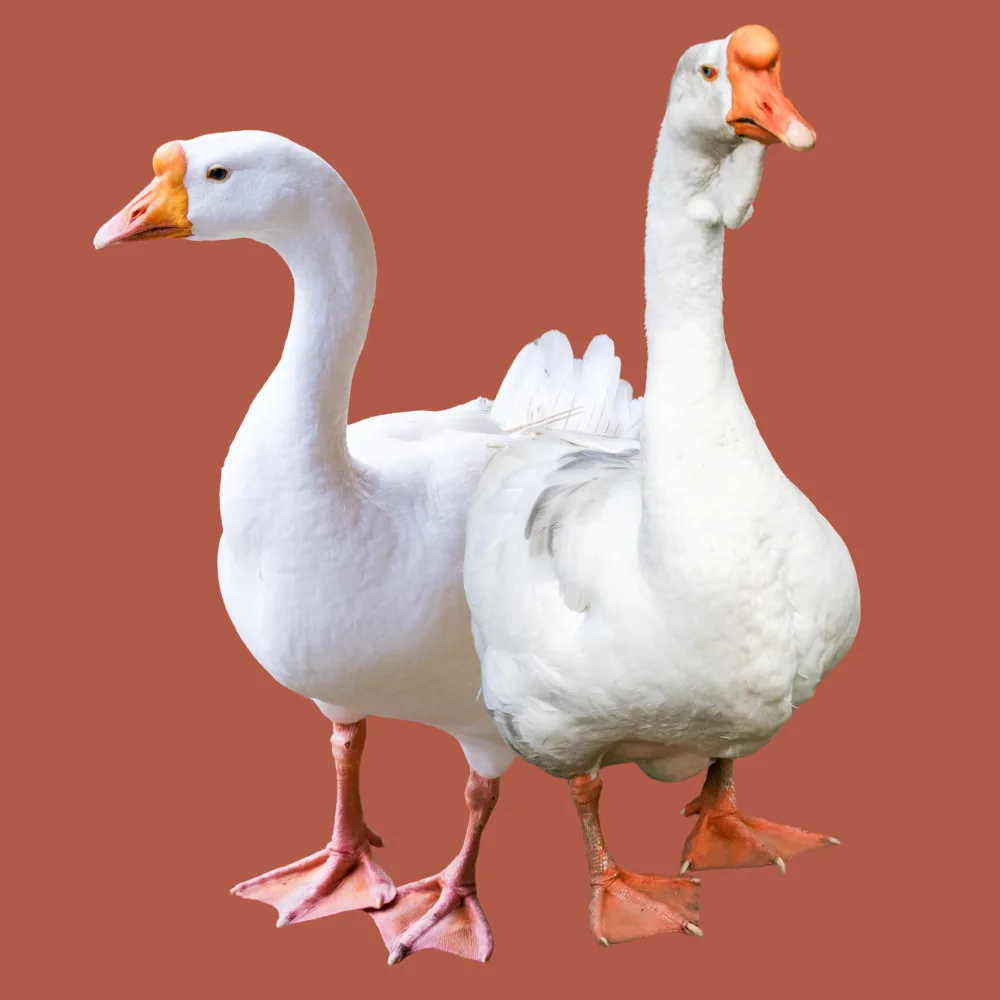
They have pure white bodies with bright orange bills, knobs, and feet.
Thanks to their utility, they are among the most practical goose breeds, very fertile and productive, and easier to breed after maturity.
4-6 geese are kept with a single gander.
These birds can weigh anywhere between 5.5 and 14 lbs and produce less greasy meat.
Besides, Chinese geese are the most prolific goose breed, laying 50-100 eggs per year and producing almost twice as many goslings as other breeds.
Everything is good until they are vocal, but it helps alert and guard the livestock around.
Also, they cannot tolerate cold temperatures as they may freeze when the temperature is below 20-25 degrees Fahrenheit.
Final Thoughts
White is a symbol of purity, innocence, simplicity, new beginnings, and many others, which makes sense when you start homesteading or adopt a simple lifestyle.
And raising one of the white goose breeds is a luxury, which not only adds charm to your home or farm but also provides you with sustainable food.
Though many geese are not originally white, their different variants can provide you with many options for stock.







Leave a Reply