
While single-colored ducks may seem common, the blend or multi-plumage patterns can be a showstopper and add more charm.
So, black-and-white duck breeds can be perfect for a hobby farm and birding. They are easy to identify and have striking looks and heritage value.
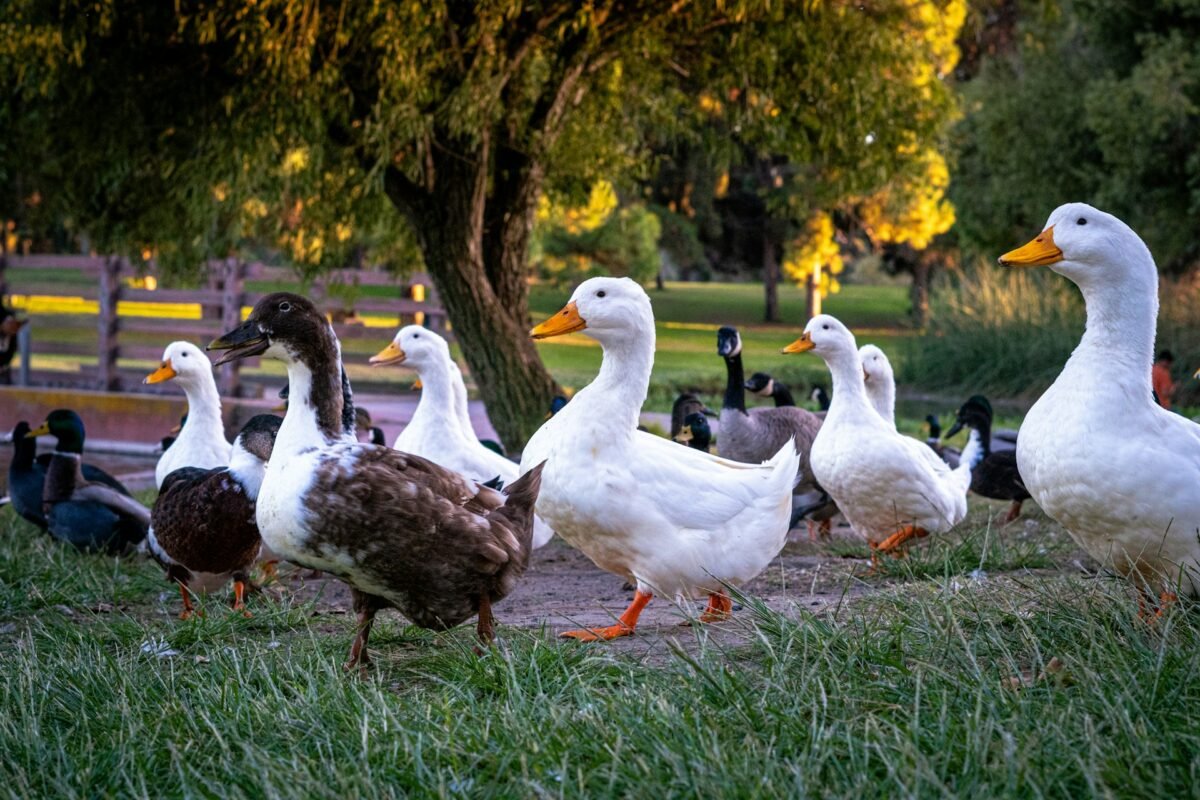
Before adding to your homestead or farm, learn about their adaptable climate, space, egg production ability, and temperament, and here are the popular and best options.
1. Ancona Duck
Aconas are medium-sized, hardy, adaptable, and all-purpose ducks.
They are good layers that produce white, cream, or blue eggs. Most often, Ancona ducks don’t go broody, but when they do, they make good mothers.
But I suggest you hatch their eggs in an incubator and raise ducklings in brooders.
These ducks also grow rapidly and are ready for harvest in 7-8 weeks. You can expect them to weigh 6-6.5 lbs on average.
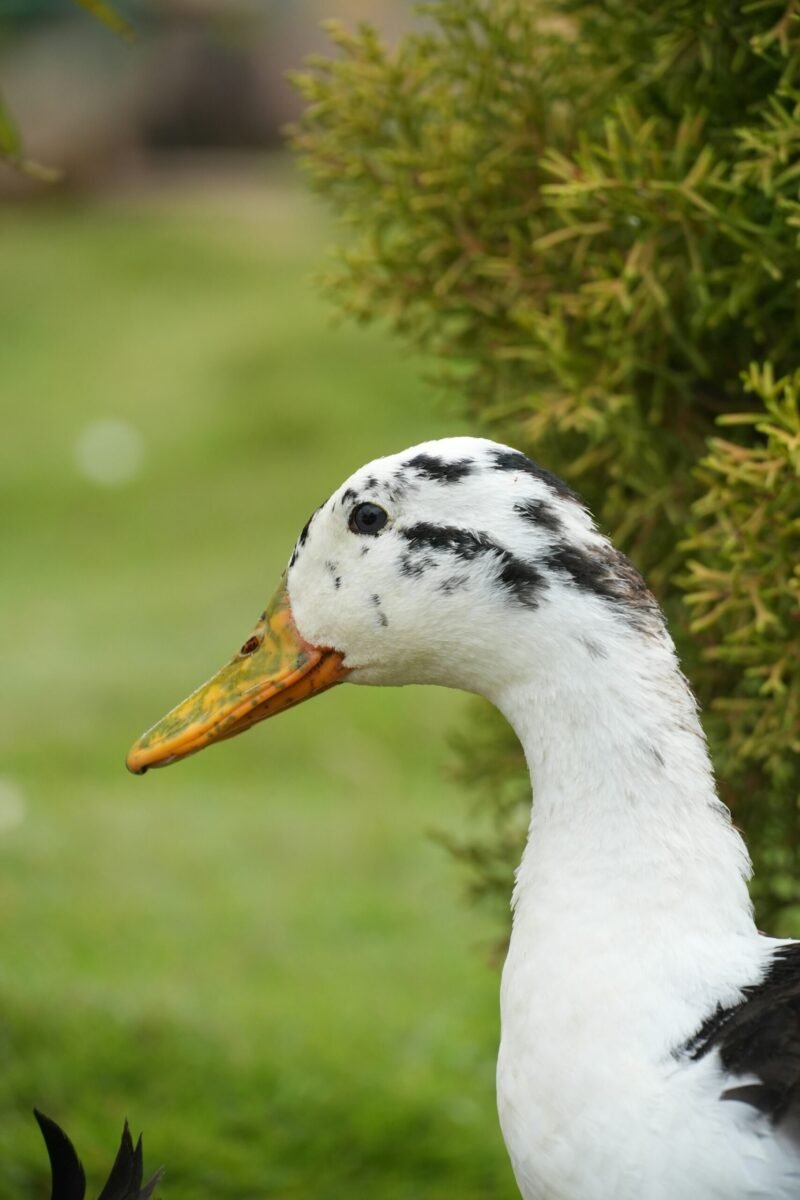
You can tell Anconas by their broken-colored plumage with irregular patches of black on a white background.
But don’t mistake these birds for Magpie ducks.
Ancona ducks boast yellow bills with black or dark green spots. Also, they have orange shanks, marked with black or brown.
Origin: United States
Weight: 6-8 lbs
Egg Production: 210-280 eggs
Characteristics: Good layers, hardy, non-flyer, excellent forager
2. Magpie Duck
You can see Magpies with distinctively marked plumage, especially white with a black cap on their head.
Besides, they have extended black patches on their shoulders and tails. When the bird grows older, their cap changes from white-flecked to completely white.
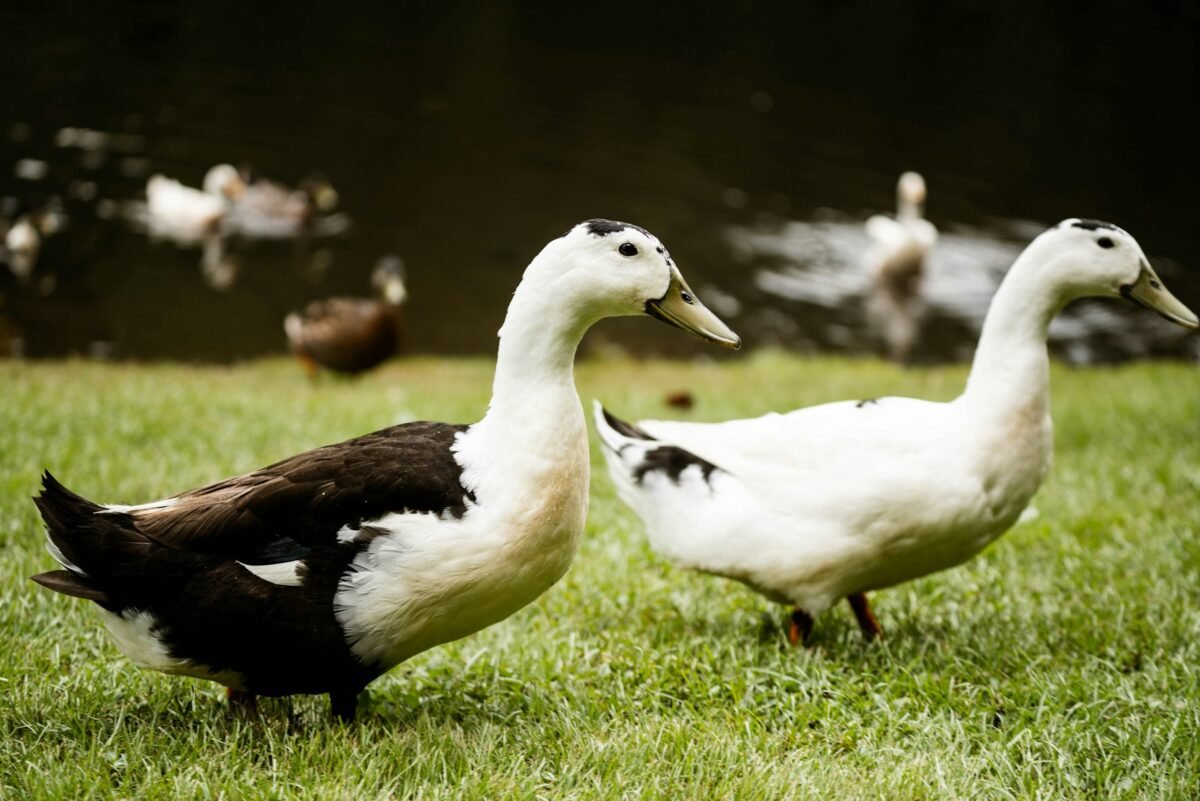
These birds boast long and curved necks, long bodies, broad heads and backs, and full breasts.
As they age, their bills turn from yellow to green. They also have mottled and orange legs.
They are dual-purpose birds with drakes weighing 5-7 lbs, ducks 4-6 lbs. These are good layers and produce greenish-blue, brown-speckled eggs.
Magpies also have similar broodiness to Anconas.
Origin: United Kingdom
Weight: 4-7 lbs
Egg Production: 220-290 eggs
Characteristics: Good layers, hardy, non-flyers, active foragers
3. Silver Appleyard (Black & White Variety)
Silver Appleyards are large ducks with a fat body.
They have greenish or yellow bills with a black tip, brown eyes, and greenish-black head and neck.
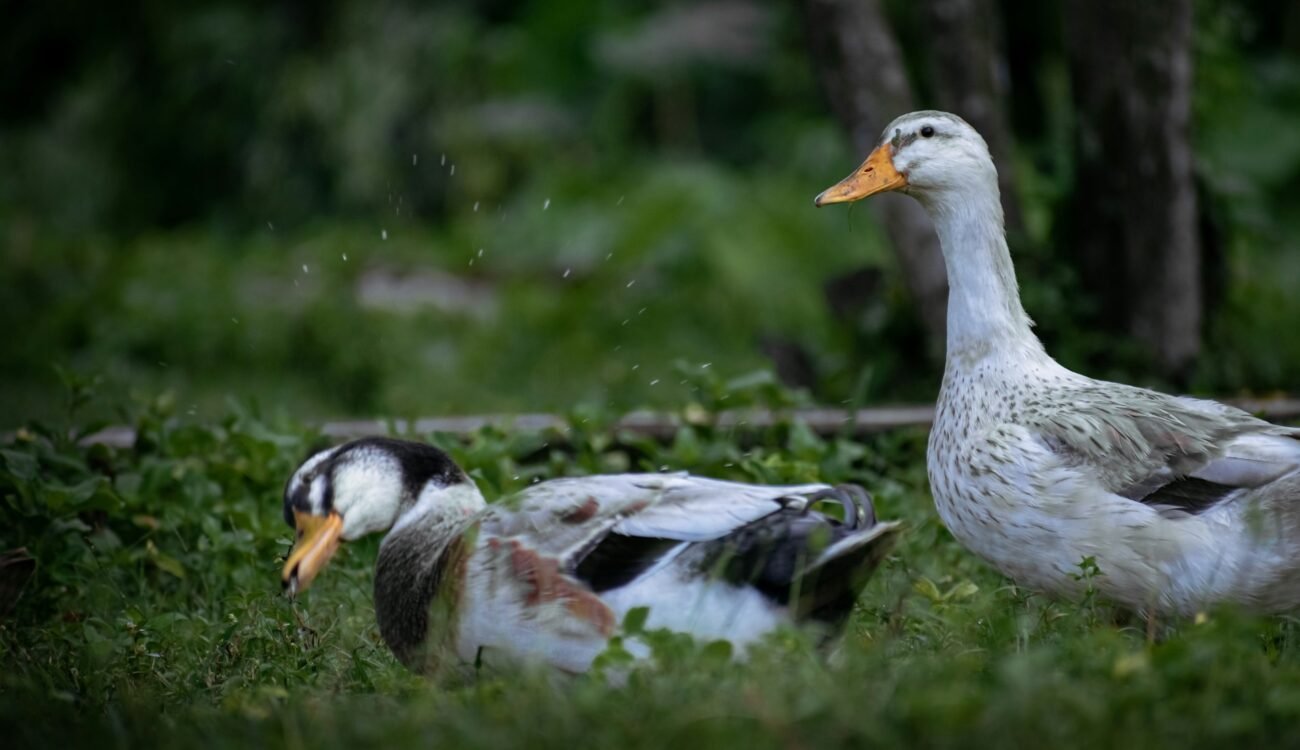
You can also see them with orange legs and feet with dark toes.
They are heavyweight, well-muscled birds that produce lean, flavorful meat.
Origin: United Kingdom
Weight: 8-9 lbs
Egg Production: 220-265 eggs
Characteristics: calm, docile, active foragers
4. Cayuga Duck (White-Marked Variant)
Cayugas are medium-sized ducks with a long, deep, elegant, and broad body. Though Cayugas are pure black ducks but they also grow a few white feathers.
You can tell these birds by their broad, full, and prominent breast and large and short thighs.
They grow faster and fatten, and you can harvest them within 8 weeks. I suggest you wait 12 weeks for the delicious meat.
I find their meat to be excellent in taste, tender, and of fine quality, but you need to struggle to clean their carcasses due to their dark feathering.
Most of their food comes from forage, so they do well on pasture. They are also flightless, so they make good livestock in urban or suburban settings.
They are decent layers and sit on their eggs.
It’s interesting that their eggs start out black, turn gray or greenish-blue, and finally become white.
Origin: United States
Weight: 7-8 lbs
Egg Production: 100-150 large eggs
Characteristics: Easy-to-handle, very hardy, adaptable, excellent foragers
5. Swedish Duck (Black Swedish)
Swedish ducks are known for their black plumage, with a white bib extending from under their bills to their chests and bellies.
You can also tell them by their black beaks and feet.
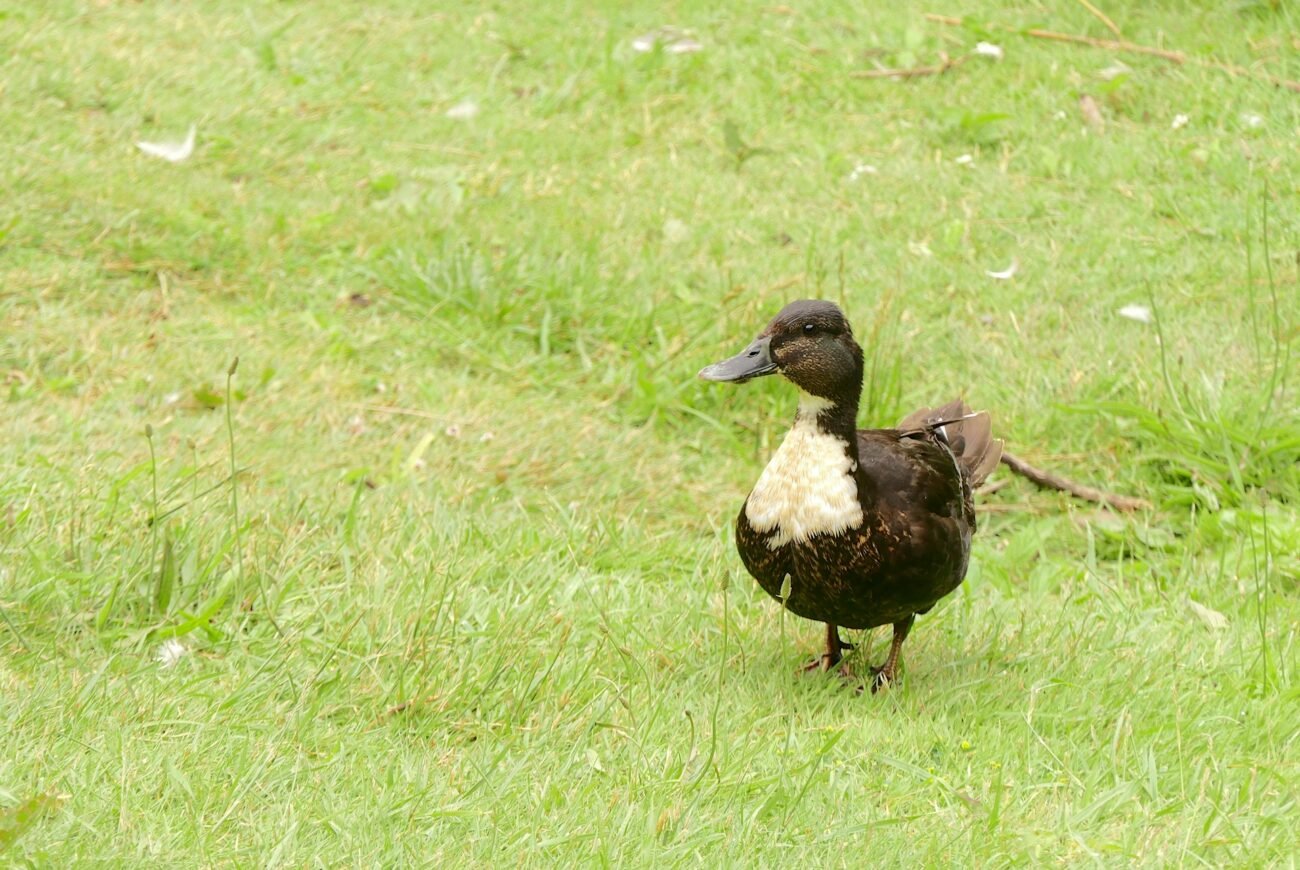
They are medium-sized ducks with a stocky body and are slow-to-mature birds, but they produce well-flavored meat.
I think they are decent layers that produce white, green, and blue eggs, as well as tinted eggs.
Origin: United States
Weight: 7-8 lbs
Egg Production: 100-150 eggs
Characteristics: Calm, friendly, docile, good foragers
6. Saxony Duck (Black-Marked Variety)
Saxony ducks are big birds with a compact body, prominent chest, yellow or orange bill, and orange or reddish legs and feet.
They are great layers that give large white eggs. The birds also sit on their eggs and hatch them into new ducklings.
As excellent foragers, they produce meat with more flavor and less fat.
Apart from meat, eggs, and pets, you can also raise Saxony for their feathers, which are used to make pillows.
These birds live in a group but don’t form pair-bonds, which is good for beginners.
Origin: Germany
Weight: 8-9 lbs
Egg Production: 190-240 eggs
Characteristics: Friendly, curious, foragers, broody
7. Rouen Duck (Pied / Black-White Patterns)
Though they are not good layers, you can still raise Rouen ducks for meat and exhibition.
They are a heavyweight domestic duck breed that produces lots of meat. They are used for roasting and have abundant, delicately flavored flesh.
You can notice their meat flavor is lighter than that of other domestic duck breeds.
These ducks are known for their large, blocky body and horizontal carriage with a deep keel.
They also have a round head, a medium-sized bill, and a back that arches from the shoulders to the tail.
Expect these ducks to grow more slowly and mature in 6-8 months. While drakes mature at 8 lbs, ducks mature at 7 lbs.
Origin: France
Weight: 9-10 lbs
Egg Production: 35-125 eggs
Characteristics: docile, easy to handle, adaptable, flightless, foragers, and free-range birds
8. Dutch Hookbill Duck
As the name suggests, Dutch hookbill ducks are known for their signature bills, which are slightly curved downward and look something like a sickle on the bird’s mouth.
They are light and have excellent flight ability when they are young.
But they mature very quickly within 16 weeks. With that, they make prolific layers, which produce blue, green, and white eggs.
They are a rare breed, but they can make meat and egg producers for small-scale farming.
Origin: Netherlands
Weight: 4.4 lbs
Egg Production: 100-225+ eggs
Characteristics: Social, foraging, excellent laying ability, flighty
9. Muscovy Duck (Black and White Variety)
Do you know Muscovy ducks that don’t belong to Mallard ducks?
They have black plumage with large white patches on their wings. They also have a wide and flat tail and long claws on their feet.
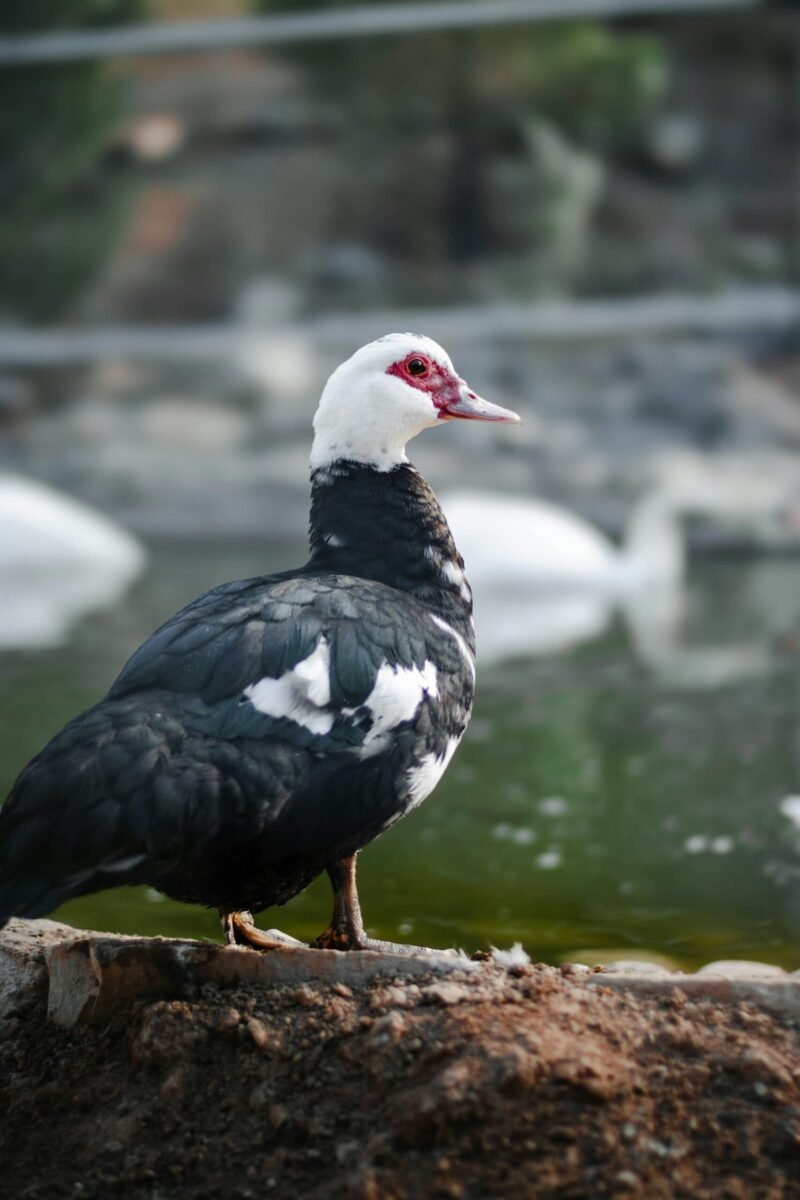
Ducks also boast robust feet with strong claws that help them grasp tree branches and roost.
Besides, they have bright red caruncles above their beak and around the eyes.
Muscovy ducks are heavyweight birds that yield a large amount of meat. While drakes weigh 10-15 lbs, ducks make 9-10 lbs on average.
But they don’t lay many eggs.
They don’t quake and only sound like a pant than a hiss. Also, they don’t need a pond as their oil glands are underdeveloped and don’t swim.
No noise and no pond make a good habitat for birds in urban and suburban areas.
Origin: Brazil
Weight: 9-15 lbs
Egg Production: 8-21 eggs per clutch
Characteristics: Friendly, hardy, quiet birds
10. Pekin Duck (Marked or Pied Lines)
Large Penkins are widely popular in America. They have A creamy white plumage with marks (black feathers which is often ignored), yellow bills, and orange shanks.
You can tell them by their long, wide, deep body with full breasts, which can carry lots of flesh and meat.
With a solid build and a large frame, these birds grow faster and reach 6 lbs in 7 weeks. I really like their high feed conversion ratio.
They are decent layers, but they don’t go broody, so you need an incubator to hatch their eggs.
Along with their demand in the commercial market for meat, let alone on the homestead, they are also growing in popularity as fancy and show birds.
Origin: China
Weight: 8-9 lbs
Egg Production: 150 eggs
Characteristics: Calm, non-broody, fancy, rapid growth
Final Thoughts
While choosing black and white duck breeds, you may find pure black and white birds, and sometimes partially.
I have included dual-purpose ducks and tri-purpose birds (including pet or show birds) to help you meet your homestead requirements.
Choose robust, active, foraging, non-flying, and strong-legged birds, which have either meat or eggs yielding or both.




Leave a Reply