
Though pigeons are no longer messengers with paper letters today, they’re still relevant for their multiple uses, including squab.
Thanks to their size and growth rate, they’re equally beneficial for the short term or the long run at a homestead or a small farm.
So, I have curated a list of domestic pigeon breeds for meat, pets, show, and utility.
1. King Pigeon
This pigeon pops up first in my mind whenever someone mentions squab and utility pigeon.
King pigeons are the result of crossbreeding among the Duchess, Homer, Maltese, and Runt breeds and were developed in the United States during the 1890s.
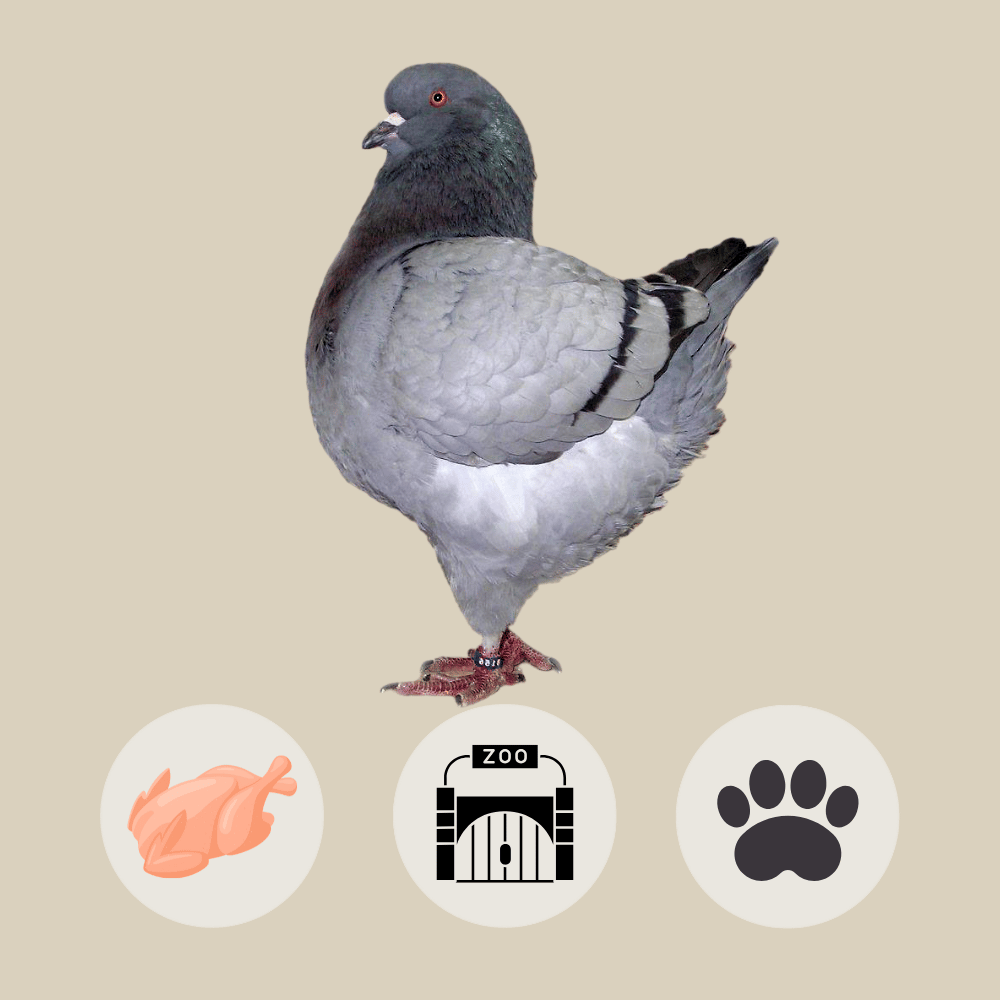
They are the largest pigeons with a robust and compact body, a round, deep-chested form, and short legs.
The mature birds are 30 to 37 oz, but you can cull them for squab at 28 to 34 oz.
Many owners keep them only as utility birds, but they also make good pets. They are sweet, intelligent, calm, and full of personality.
Don’t worry, they want to have permanent homes, and if not, they feel euthanasia.
Also, they come in various colors, such as white, red, yellow, black, dun, and brown, making them great showstoppers.
You can also witness barred patterns, blue bars, brown bars, silver bars, ash red bars, and ash yellow bars.
They can live for more than 15 years if you keep them as pets with good care and protection.
Primary use: Meat, pet, utility, and show
Size: 30-37 oz
Color: White, red, yellow, black, dun, and brown
Temperament: sweet, intelligent, calm, and charismatic
2. Homer Pigeon
Before telephones existed, homing pigeons were used commercially to deliver messages and for communication, especially for carrying letters on their legs.
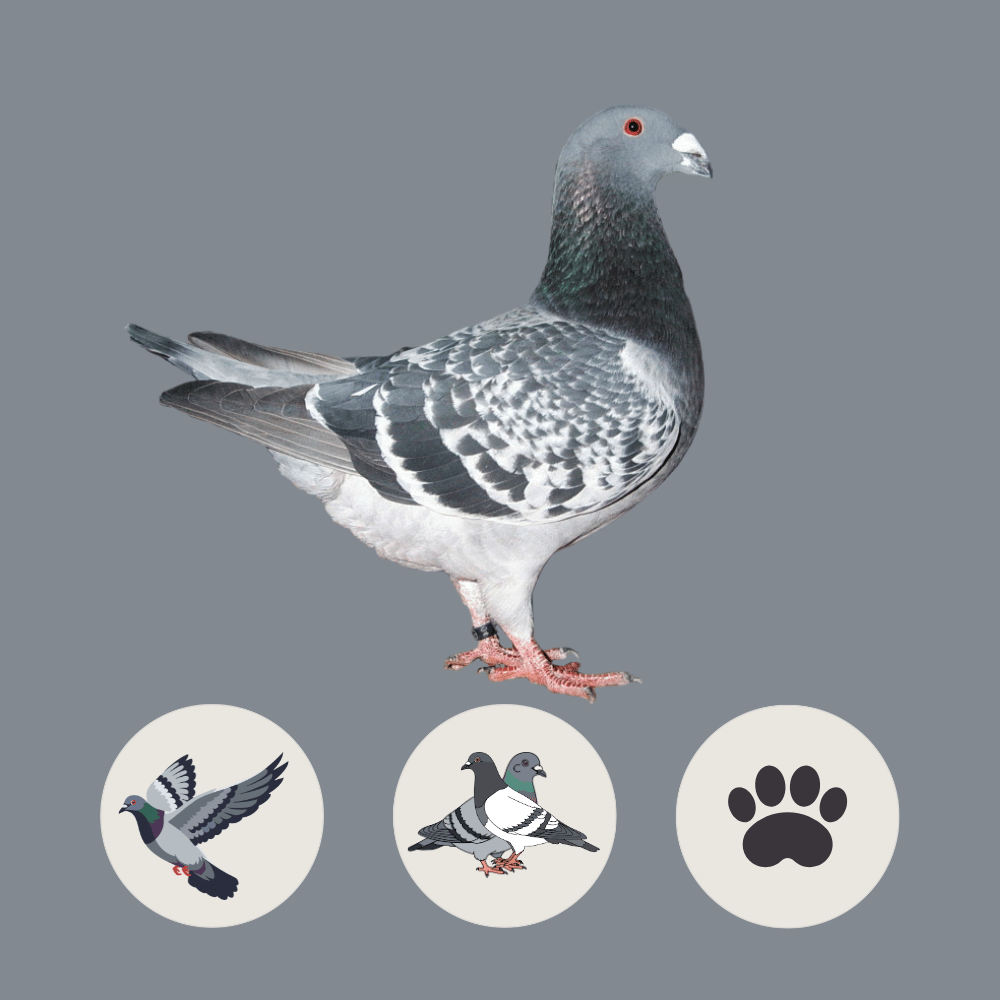
Small loads cannot affect their speed.
This tradition was popular since ancient times, so they are called mail pigeons or messengers. They’re smart, excellent navigators, and skillful at finding their way home over long distances, hence the name Homer.
They’re extremely independent and travel for several days (up to 10 days), dodging predators and other dangers.
Though they are enough to train, they can be as stubborn as mules on a homestead.
Thanks to their lightweight, hollow bones, homers are aggressive flyers; hence the name “racer homers,” which are used in sports.
You can tell them by their wild-type bluish-gray feathers with dark wing bars. Also, they have a tail band in white, black, red, and brown.
They weigh anywhere between 8.82 oz and 12.35 oz.
Hens can lay 1-2 eggs per clutch, and both parents incubate their eggs for 17-19 days.
If you raise them in captivity, they will live 10-15 years, whereas in the wild, they live 3-5 years.
And if you want homestead birds or some nice squabs, I suggest you get a pair of or some American Giant Homers. They are large, barrel-chested, and muscular.
They are blue, silver, black, brown, grizzle, mottled, ash-red, red, yellow, and other colors.
Primary use: Breeding, free-ranging, pets
Size: 8.82 oz -12.35 oz.
Color: White, black, red, grizzle, mottled, ash-red, red, yellow, brown, and others
Temperament: Social, gentle, and flighty (sometimes stubborn)
3. Carneau Pigeon
Originating in northern France and southern Belgium, Carneau pigeons are the result of crossbreeding between Red Mondain and country doves.
They’re medium-sized pigeons with large breasts and a slightly inclined downward posture. Males are 14.5 inches, while females mature to 14.3 inches.
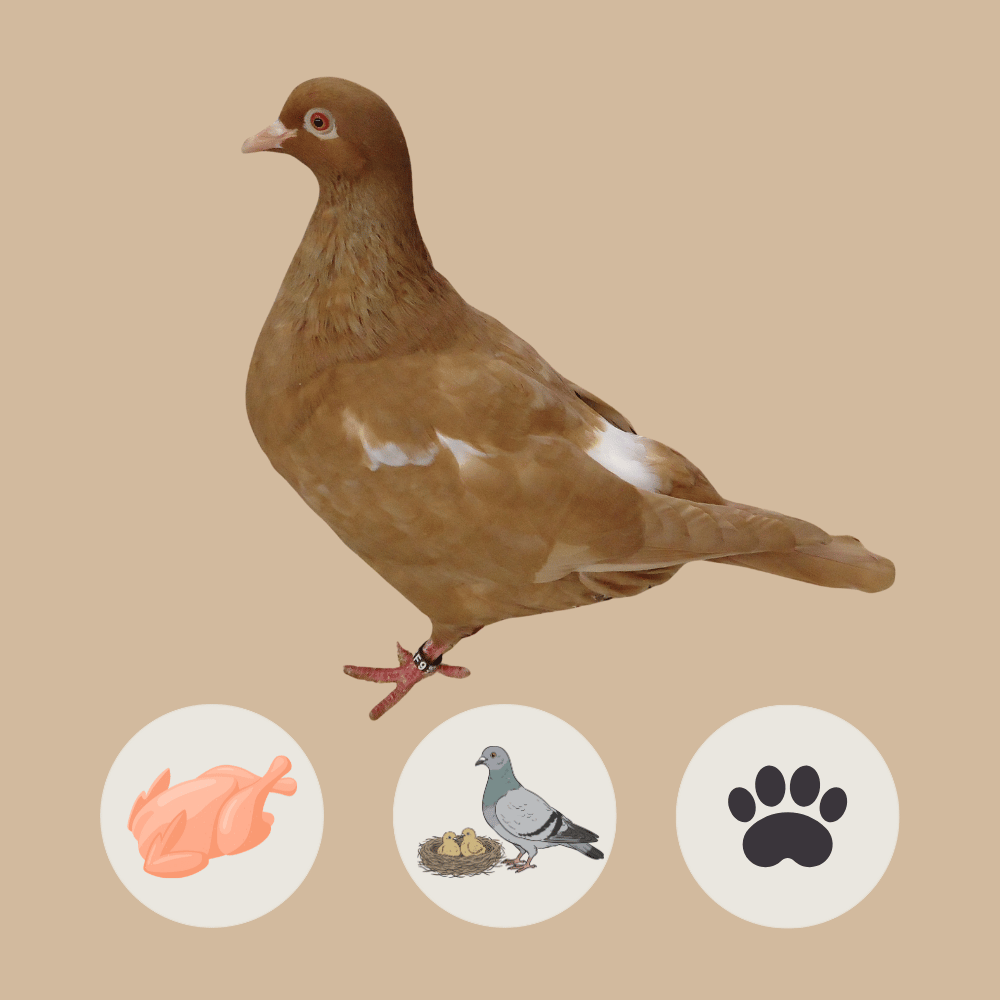
You can tell them by their solid, compact, broad, and wedge-shaped body.
These pigeons come in two varieties, including red and yellow in color, with or without white shoulder pads.
You can expect females to weigh 21 oz and males 24 oz, which makes good broiler pigeons.
They are excellent birds with a temperate personality, only second to King pigeons. They cannot fly as much as they used to due to their large size.
Primary use: Squab, pet, good parenting birds
Size: 21 oz- 24 oz
Color: Red and yellow
Temperament: good-natured and curious birds
4. Texan Pioneer Pigeon
Texan Pioneers are the result of a cross between French Mondain and King pigeon, and share several characteristics with Kings.
They were created in 1953 in Texas and received recognition in 1961.
These birds are auto-sex pigeons, which means you can recognize the young chicks by their color at the time of hatching, and gender only after a few weeks.
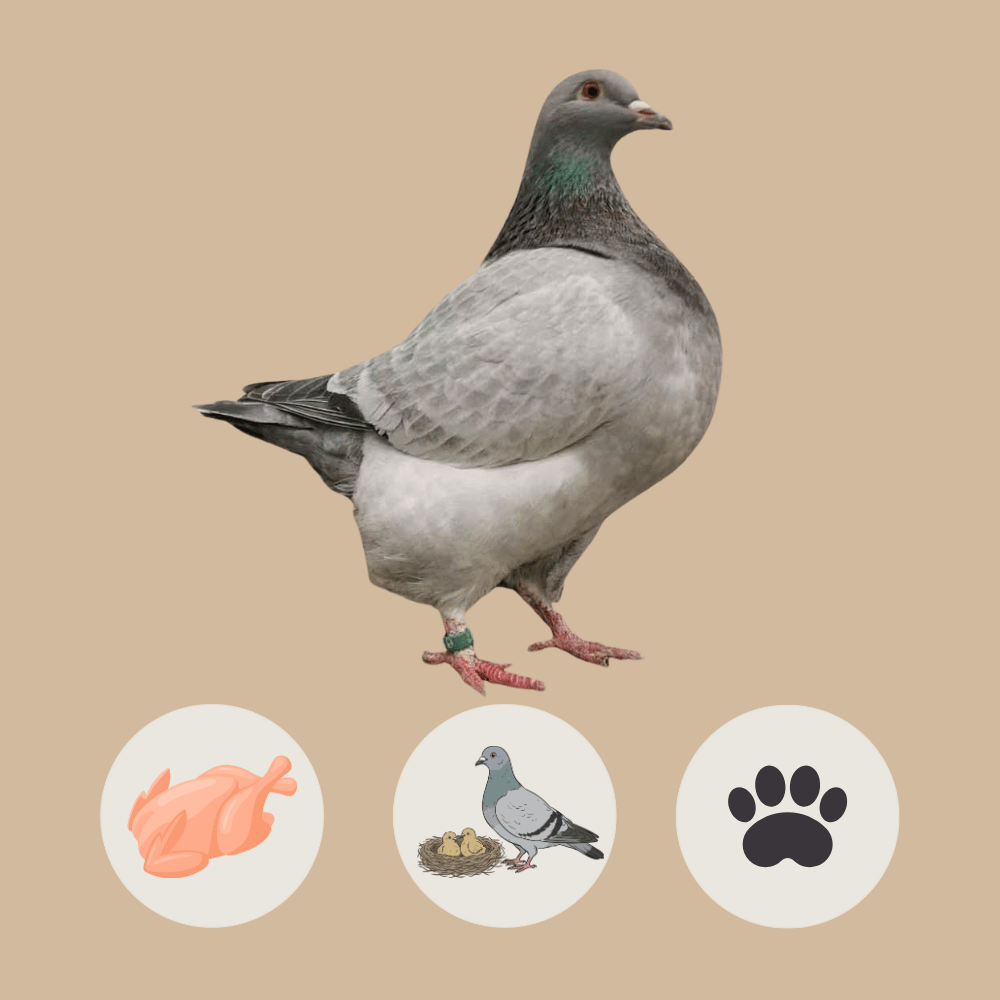
While males are fully white, females have a white body, a slightly red neck, and red wings.
You can tell Texan pioneers by their broad breast, short tail, and wings. They also have a straight back and tail line.
The mature birds weigh 28-34 oz in good health.
One thing I want to tell you is that these birds produce the maximum amount of squab because they have a small head and feet, which need to be removed during processing.
Expect to get 24 oz of squab per bird on average within 30 days. This means you get a high dress-out-live-weight ratio and plump meat.
Primary use: Squab, pet, good parenting birds
Size: 28-34 oz
Color: White, black, blue, ash-red, and recessive red
Temperament: Social, tame
5. Mondain Pigeon
Mondain Pigeons are a large, heavy-bodied European breed, with varieties including French Mondain, Swiss Mondain, Indian Mondain, and Italian Mondain.
Here, I want to talk about French pigeons, which are easily available and bred for meat, utility, and pets.
They are the offspring of a cross between Giant Runts and Montaubans and have a well-rounded, large, and broad body, with a boxy appearance.
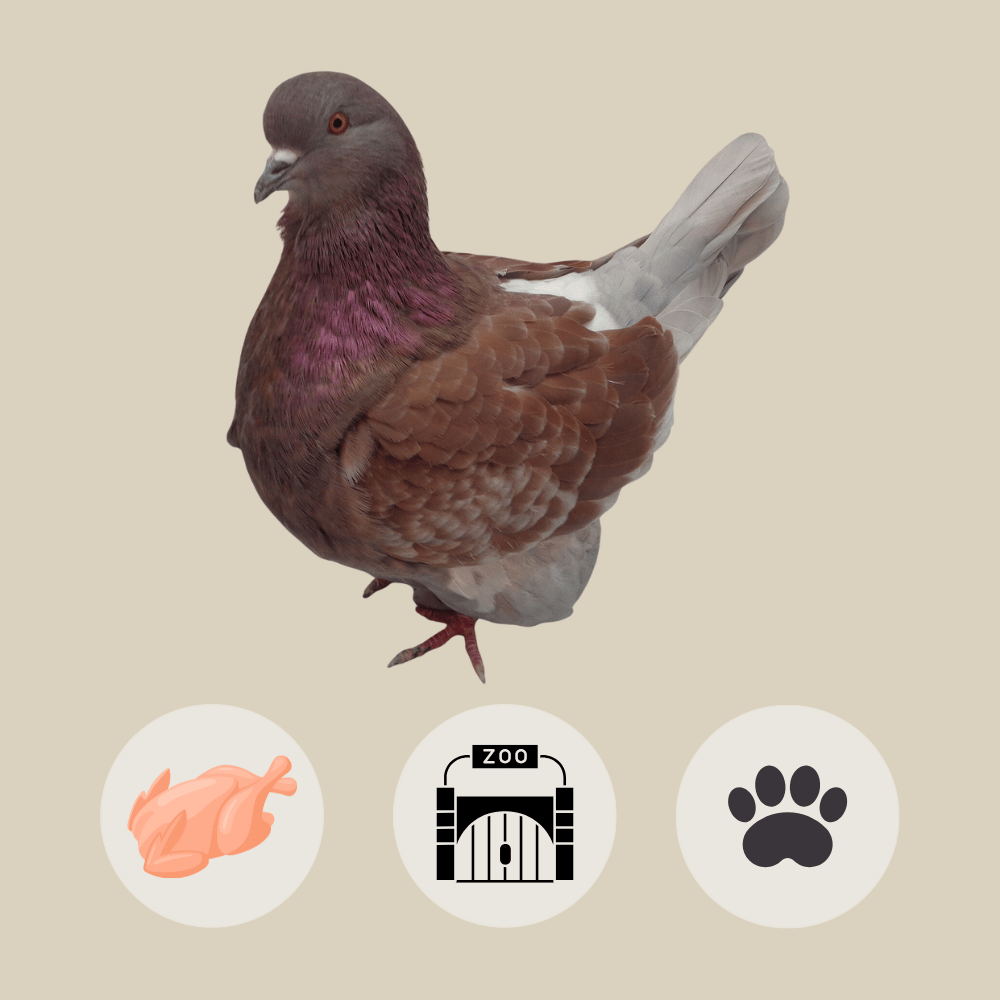
These are self colored birds with white, red, yellow, and black plumage. You can witness several patterns, including barred, grizzled, and chequered with colors such as blue, white, silver, brown, buff, and grey.
Due to their size, they love to be on the ground, unlike flighty breeds. While mature males weigh about 33 oz, females grow around 29 oz.
You can expect French pigeons to reach market squab live weight between 12 oz and 24 oz at 26-28 days.
If you raise them as pets, they can live 7-10 years with you.
Primary use: Squab, pet, show
Size: 29-33 oz
Color: White, red, yellow, and black
Temperament: Social, calm, ground-dwelling nature
6. Modena Pigeon
This Italian breed is a dual-purpose pigeon.
Modenas are strong and stocky in appearance. Their heads are small and round, and their legs are short and strong.
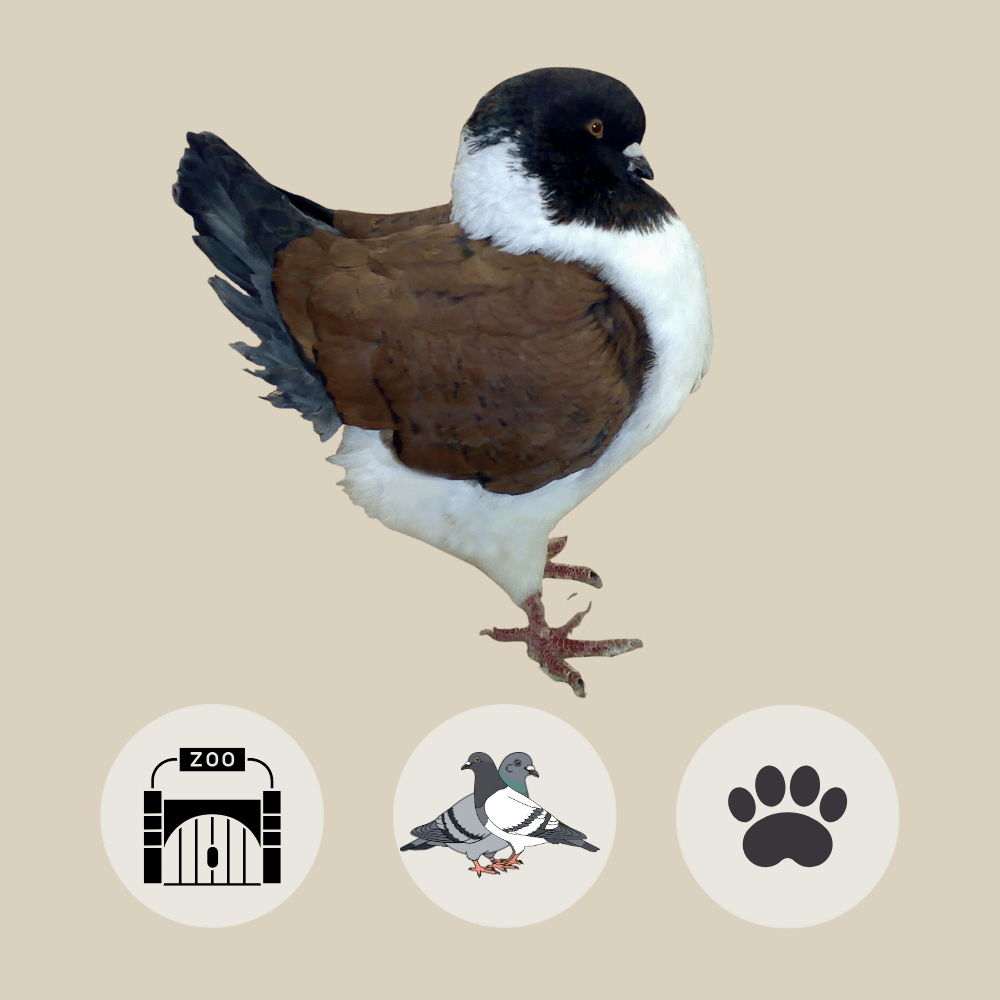
Besides, they have wide shoulders on a well-rounded body with a prominent chest. I find them really soft, round, and cute because of their proportionally curved bodies from top to bottom.
They have a compact body, measuring 9.5 inches tall, 7 inches long, and 5 inches wide. You can find them in two varieties, including Gazzi and Schiett.
While Gazzi birds have markings on their heads and on parts of their wings and tails, and the rest of their bodies are white, Schiettis are without markings.
These birds feed on their own badies, they can breed well for your sustainable homestead or farm.
Their low flight tendency makes Modenas great for backyards.
Primary use: Squab, pet, show
Size: 20-35 oz
Color: White, red, yellow, and black
Temperament: Docile, good parenting traits
7. Hungarian Giant House Pigeon
Hungarian Giant House pigeons are among the oldest pigeon breeds in Hungary and are known by various names, including Hungarian House, Turkish, Rural, and the nickname “Queen of Pigeons.”
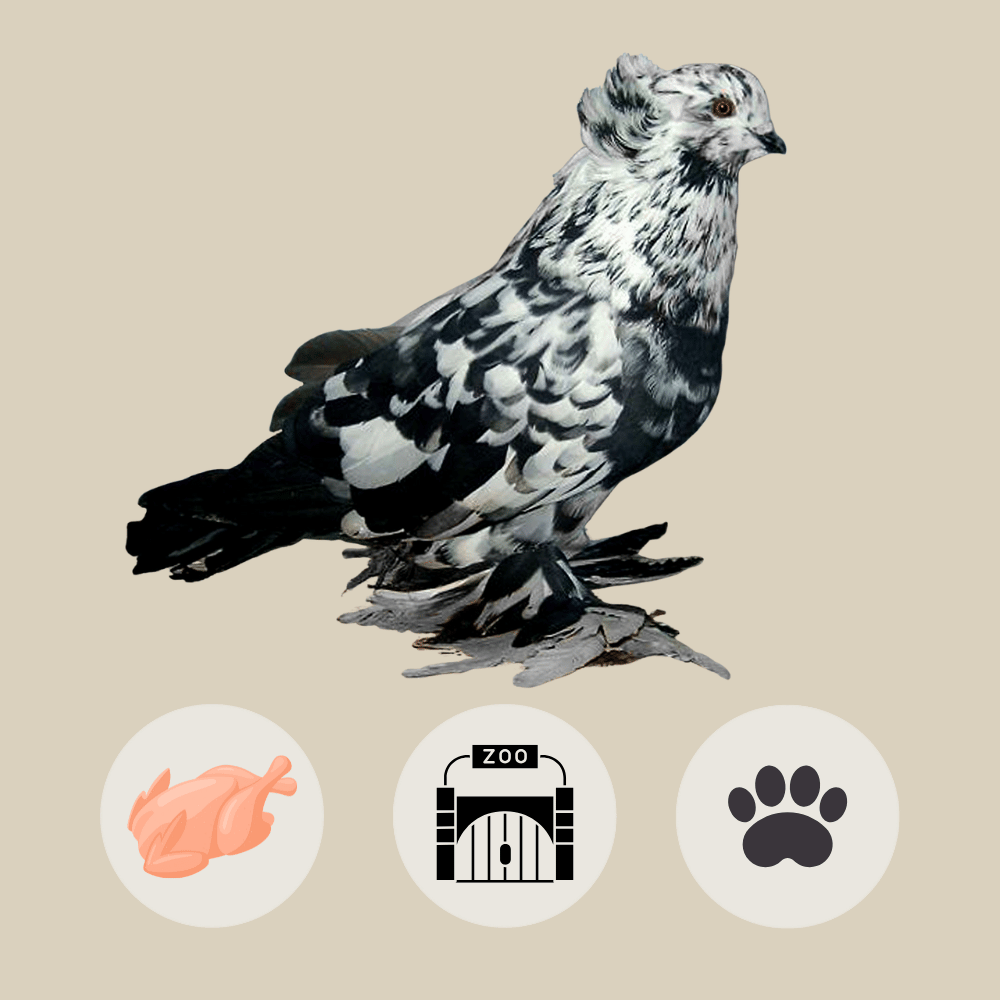
They are massive and weigh as much as bantam chickens. The mature males are 2.2 lbs, while females weigh 28 oz.
Also, these birds measure 17-19 inches in length and have a wingspan of up to 3 feet. When you see them, they look smaller than they are in reality, in a distinctly horizontal posture.
You can easily identify the Hungarian pigeons by their wide shell hood with a well-developed crest or comb. This makes them excellent show birds.
Besides, they are white, black, blue, yellow, and red with various wing bands.
They are smart and alert with decent flight ability. If you want to raise Hungerian pigeons for meat or squab, I recommend you get some flat-footed types.
Also, they require a bit of a larger, sturdier house because of their large size.
Primary use: Squab, pet, show
Size: 38 oz-2.2 lbs
Color: White, black, red, yellow, and blue
Temperament: calm, alert, and fairly flighty
Final Thoughts
Utility pigeons are large and cannot fly very high or over long distances, so they are at risk of predators. So you need to keep them in the loft.
On the other hand, flighty are slim and roam around the garden, field, and parking lots and come at your call. They make great foragers, free-range, and show birds.
They forage on the ground, walk and fly around the home, and become gregarious birds.




Leave a Reply