
Though heritage turkeys are smaller than hybrid or commercial turkeys and take a bit longer to reach market weight, they are worth raising for their rich taste.
They have leaner, drier, and darker meat with an intense, deeper flavor and a gamey taste.
If you want to raise some heritage turkey birds for your homestead or farm and year-round stock, the following breeds can be the best fit for your requirements.
1. Bourbon Red Turkey
Bourbon Red is the result of crossbreeding between Buff, Bronze, and White Holland turkeys. This breed was created by J. F. Barbee in the late 1800s and named after Bourbon County, Kentucky.
They look handsome with brownish to dark red plumage with white flight and tail feathers. Also, they are tall, high-breasted, and well-muscled turkeys.

While mature toms weigh 33 lbs, mature hens weigh about 18 lbs. But you can process them when toms are 23 lbs, and hens are around 14 lbs.
They mature in 28 weeks and lay 20-50 cream to light brown eggs per year, starting in the spring.
While raising, you may notice that these birds are docile, and make great foragers and good parents which raise their chicks.
Origin: United States
Weight: 18-33 lbs
Egg Production: 20-50 eggs per year
Ideal for: Meat and eggs
2. Narragansett Turkey
You can tell Narragansetts by their multi-colored plumage with black, gray, tan, and white feathers. Sometimes people mistake them for Bronze turkeys because of their identical appearance.
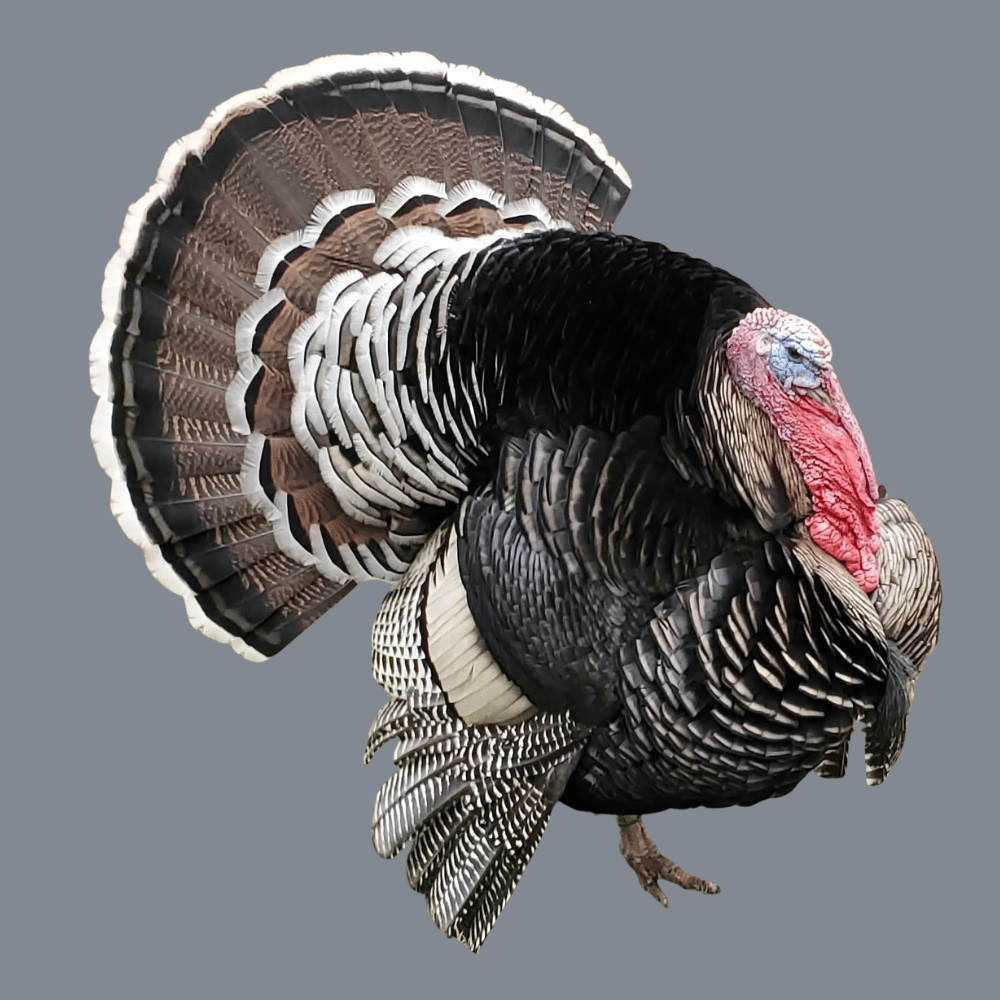
But when you closely see, Narragansetts have gray or dull black feathers, while Brozes have signature coppery coloring.
Named after Narragansett Bay in the 1830s, this early American breed was officially recognized in 1874.
They are calm and mature early. The hens are also great layers with a yield of 50-100 spotted, tinted, or brown eggs per year and show good maternal qualities.
You can expect mature toms weigh 28 lbs and hens 16 lbs, but they become ready for the butcher when they are 22 lbs and 12 lbs, respectively.
They run quickly on the ground and fly well. If you allow them to stay outdoors, they are likely to spend their nights perched in the trees.
Origin: United States
Weight: 16-28 lbs
Egg Production: 50-100 eggs per year
Ideal for: Meat and eggs
3. Bronze Turkey
These turkey birds best justify their name with coppery and bronze-colored metallic sheen.
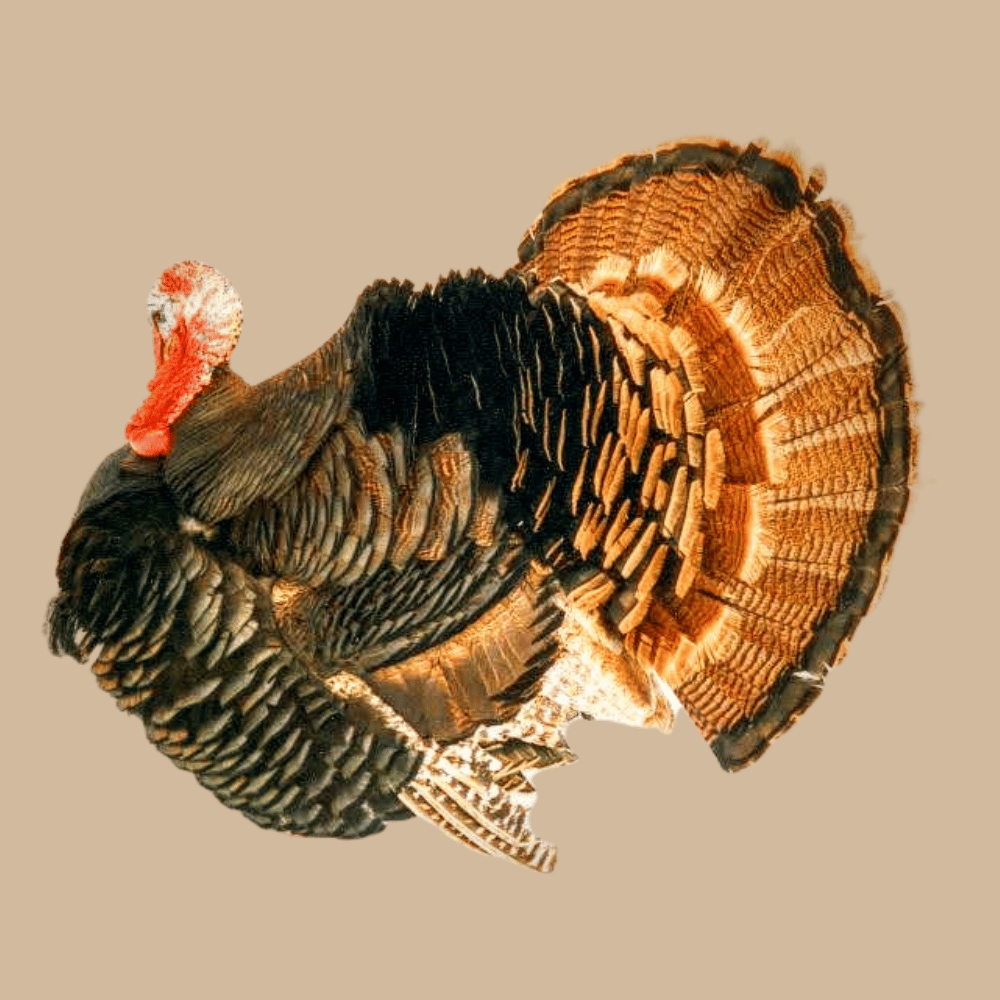
Bronze turkeys grew popular in the late eighteenth century and got standardized throughout the nineteenth century. I tell you, they are the ancestors of Broad-Breasted Bronze, commercial turkeys.
They have really strong heritage genetics.
They make broiler when toms are 25 lbs and hens 16 lbs. But toms can weigh 35-38 lbs. and hens 18-22 lbs when they each mature.
So, these birds make excellent table birds for the family, but need more space due to their size. Some toms stand 4 feet tall and expand their wings up to 6 feet.
Besides, they are decent layers with a yield of 20-50 cream-to-medium-brown speckled eggs per year.
As they’re too heavy, they cannot fly, but they are very active foragers that can roam around the homestead or backyard.
Also, they are friendly and make good pets.
Origin: United States
Weight: 18-38 lbs
Egg Production: 20-50 eggs per year
Ideal for: Meat, eggs, pets
4. Black Spanish Turkey
Also known as Norfolk Black or Black Turkey, the Black Spanish is the oldest British turkey breed.
They are known for calm disposition, rapid growth, and early maturity.
You can tell these birds by their lustrous, metallic black feathers, with a greenish sheen on top, and a dull black underside.
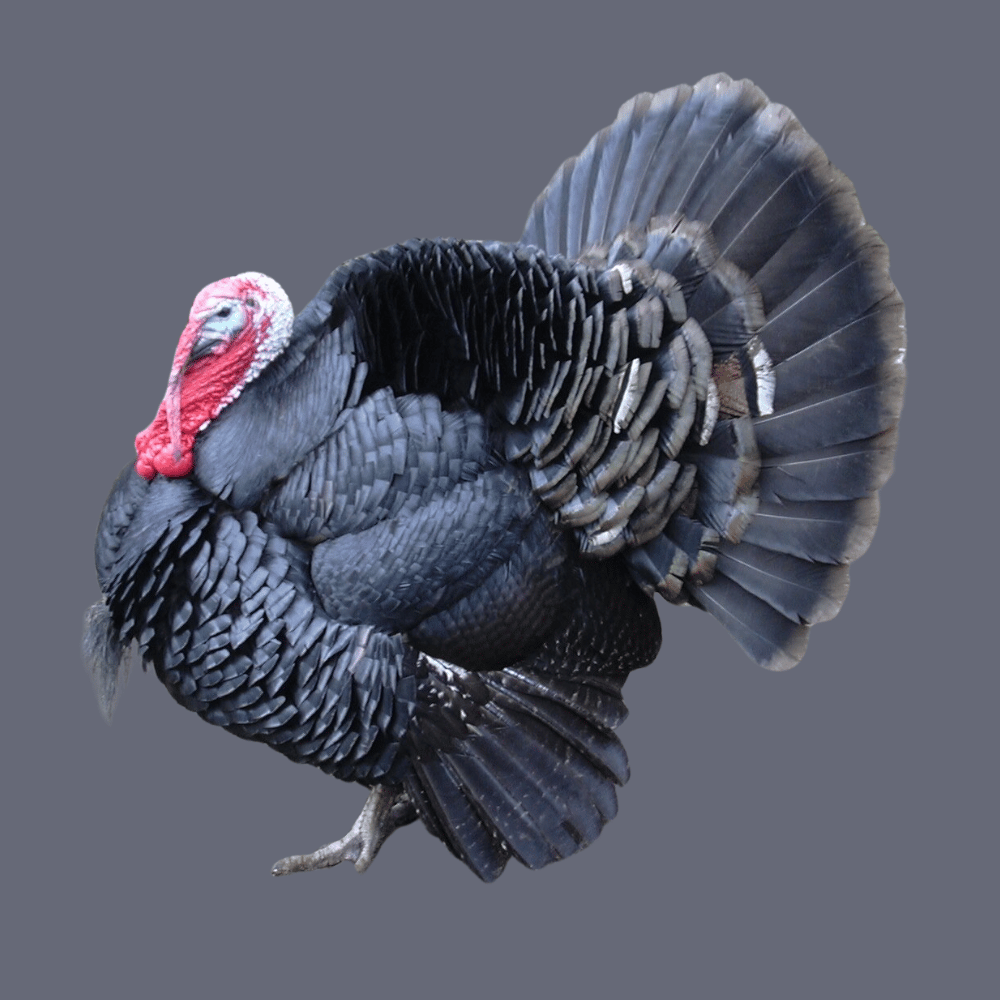
The young toms weigh 23 lbs, but can grow up to 27 lbs when they mature. Similarly, young hens are 14 lbs and expected to reach 18 lbs at maturity.
And hens lay 40-50 cream to mid-brown speckled eggs during season, but birds with Norfolk Black strains can give up to 65 eggs.
As they are smaller than other heritage turkey breeds, they can fly and perch in the trees. So, you have to train them to come to their coop before nightfall.
Origin: Europe
Weight: 18-27 lbs
Egg Production: 40-65 eggs per year.
Ideal for: Meat and eggs
5. Slate Turkey (Blue Slate)
This turkey breed has unique slate-blue feathers, and you can witness dark steel grey plumage all over the bird. Sometimes, these light-colored birds are called lavender turkeys.
Actually, they grow through three color phases: first, blue with black specks on the feathers, then solid black, and finally solid bluish gray.
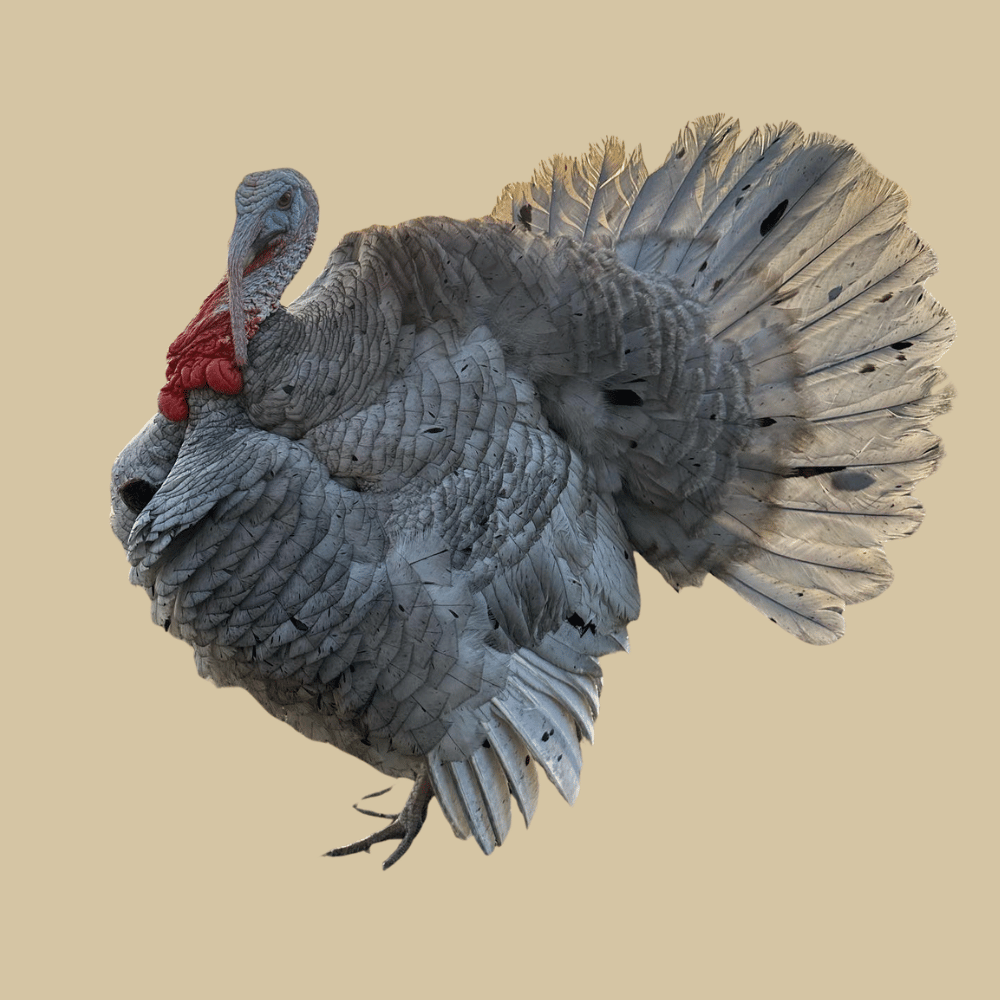
They make a good alternative to Bourbon Red turkeys for table birds. The young tom and hen weigh 23 lbs and 14 lbs, respectively.
When they mature, toms can be 33 lbs and hens 18 lbs.
But Slate turkeys are more than table birds and make good pets and show birds. They are placid or docile, but sometimes aggressive and territorial. But that depends on the keepers what kind of behavior they want.
Though they cannot fly, they are pretty, friendly, and easy to raise turkeys.
Besides, they give spotted cream or light brown colored eggs every spring and summer. But they’re not prolific layers, though.
Origin: Not Known
Weight: 18-33 lbs
Egg Production: 40-50 eggs per year
Ideal for: Mixed poultry flocks, meat, pet, and show
6. Royal Palm Turkey
Royal Palms are small-sized turkeys, which weigh only 10 lbs for young females and 16 lbs for young males. When they mature, hens are 12 lbs and toms 20-22 lbs.
So they’re not raised mainly for meat, but they make pet and show birds on a homestead and small farm.
You can tell these birds by their white plumage with metallic black edging on the feathers. They have a black saddle and a white tail with a band of black and an edge of white on each feather.
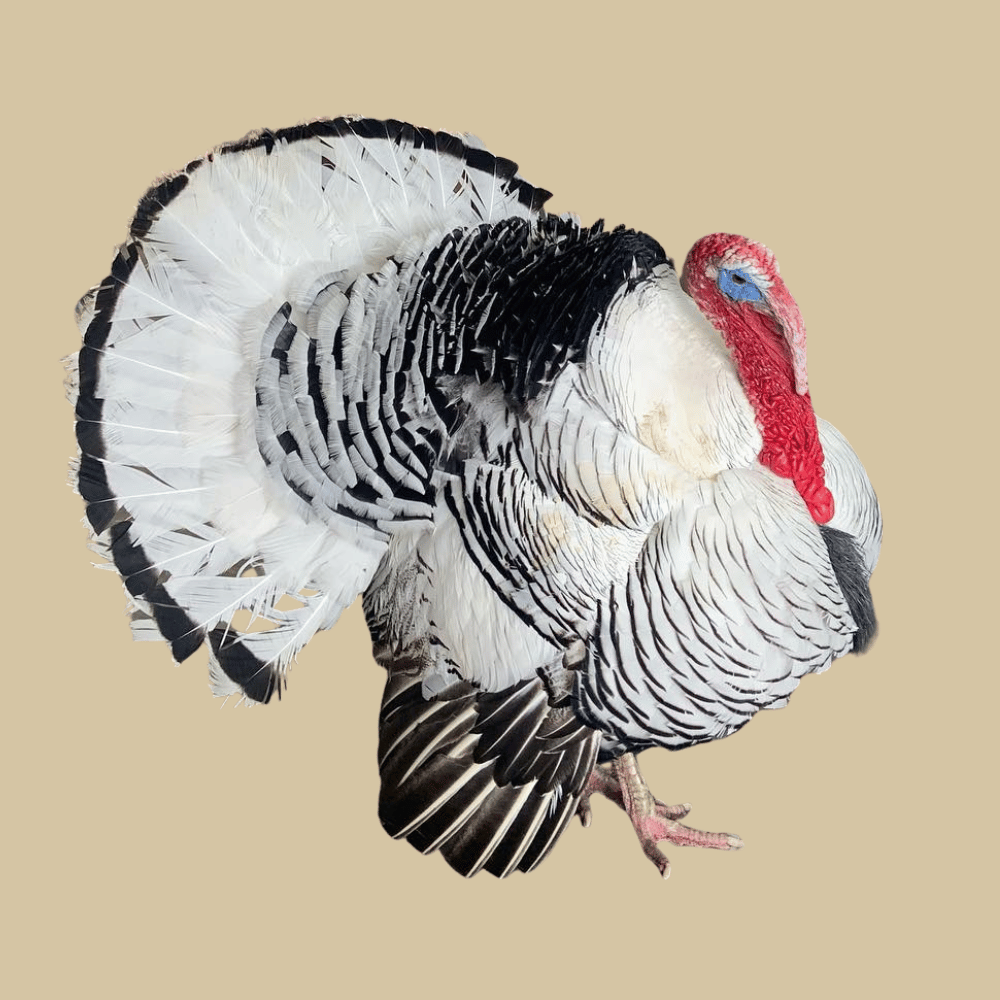
These turkeys were created from a crossbreeding of Black, Narragansett, Bronze, and wild turkeys in the 1920s.
Anyway, Royal Palms are thrifty, excellent foragers, and good flyers because of their smaller size. So, you need to keep them in the confined pen or run and coop.
If not, they can wander too far and get lost in the nearby woods as they love roosting in the trees. They also make calm and curious birds.
Though they are poor layers with only a yield of less than 20 pale cream-to-medium-brown spotted eggs, they sit on their eggs and raise their poults well.
Royal Palms may not be good for commercial purposes, but they make good homestead birds with little meat and good companionship.
Origin: United States
Weight: 12-22 lbs
Egg Production: Less than 20 eggs per year
Ideal for: Meat and ornamental purposes
7. White Holland Turkey
Once, White Holland turkeys were the only commercial white breed from the 1900s to the 1950s. But they are among the rarest and most difficult to verify as true breed, and have been close to extinction.
You can only see them rarely at poultry shows and some other places.
White Holland has wide breasts and short legs with snow-white plumage and a red to bluish head.
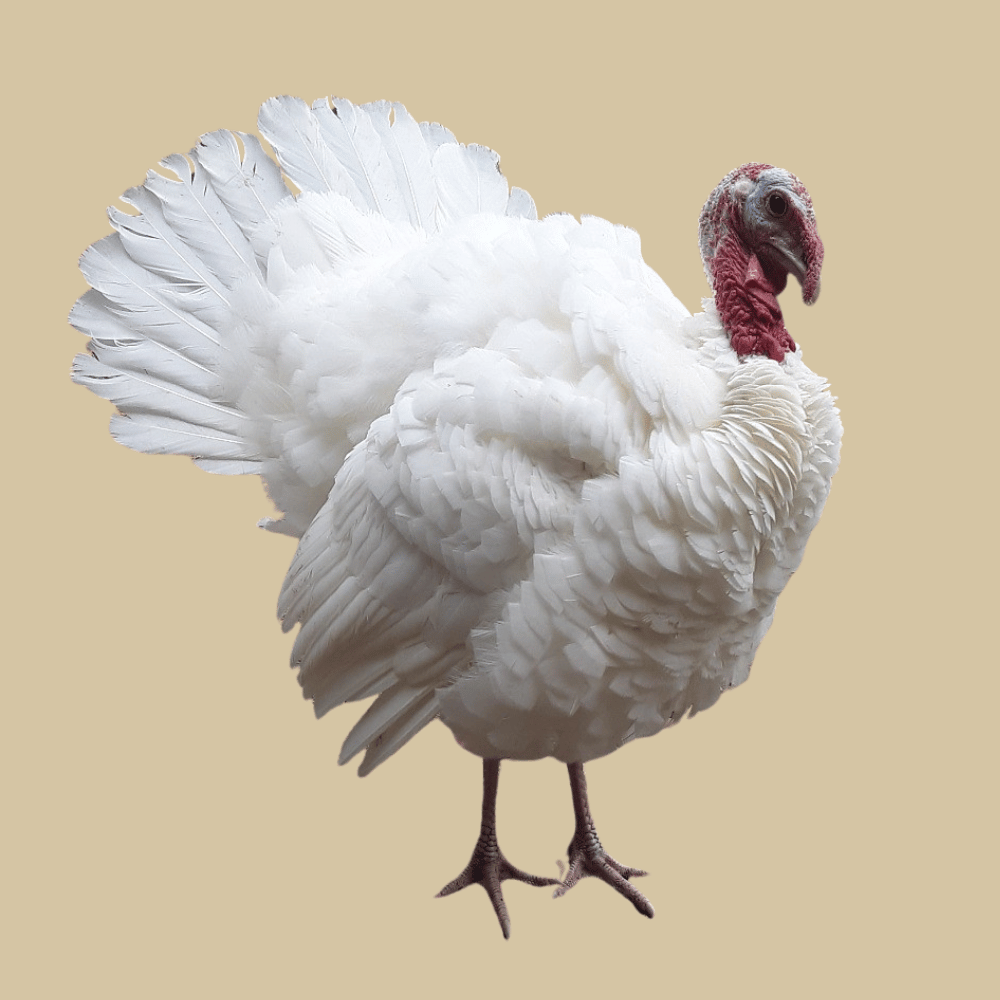
When they are young, toms are 25 lbs and hens 16 lbs. After maturity, they turn 33 lbs for toms and 18 lbs for hens.
So, they produce nice carcasses and many mistake White Hollands for Broad-breasted White, but White Hollands are smaller.
Besides, hens give 40-60 large pale cream to mid-brown, speckled eggs per year. They also sit on their eggs and make good mothers.
Like other turkeys, the White Hollands are docile and active foragers. They require room to exercise as well as free range system.
Don’t worry, they tolerate most climates, and they are cold-hardy as well.
Origin: Europe
Weight: 18-33 lbs
Egg Production: 40-60 large eggs
Ideal for: Preservation, show, and meat
Final Thoughts
Heritage turkeys are technically only one breed with different color varieties. Now, I haven’t found much connection between the feathers and temperament.
So, I recommend you find a breeding pair of turkeys that you like to hatch and raise their offspring.
Like physical traits, personality characteristics are also transferred.



Leave a Reply