
My grandpa raised pigeons and let them out of their coop every day. And they spent the whole day, the grain dryers eating free food, and returned to their coop for the night.
Then I remember my grandma would make soup from them for my cousins and me whenever we visited.
This inspired me to try a few pairs as soon as I owned my homestead. If you want to have sustainable food for your home, raising pigeons for meat is a great option.
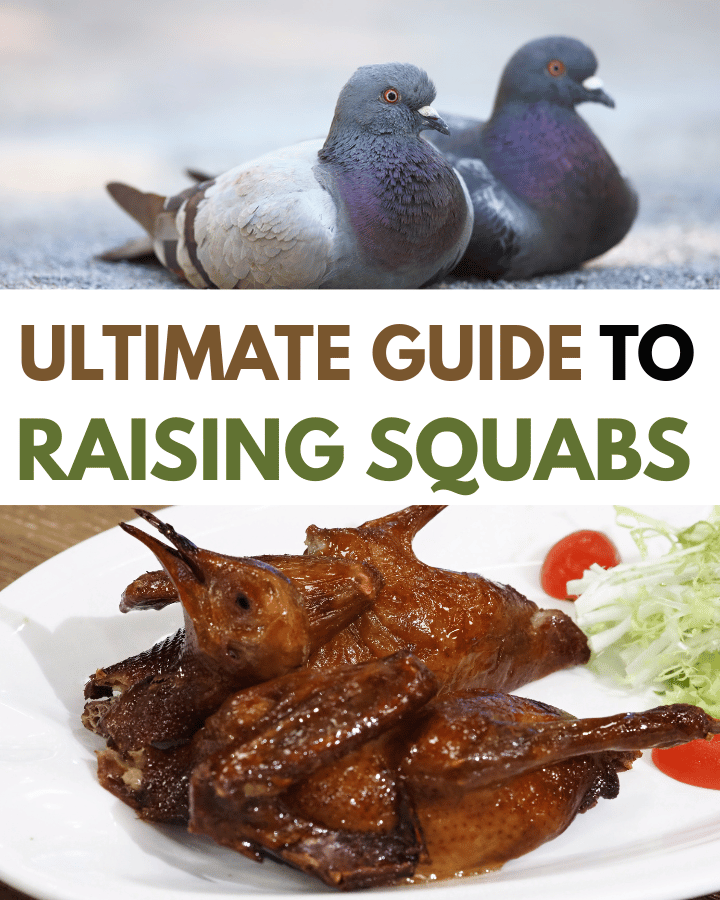
Why Raise Pigeons for Meat?
I know there is no need for birds to deliver a message. But pigeons make great utility birds for homesteads and small farms.
1. Delicious and nutritional squab
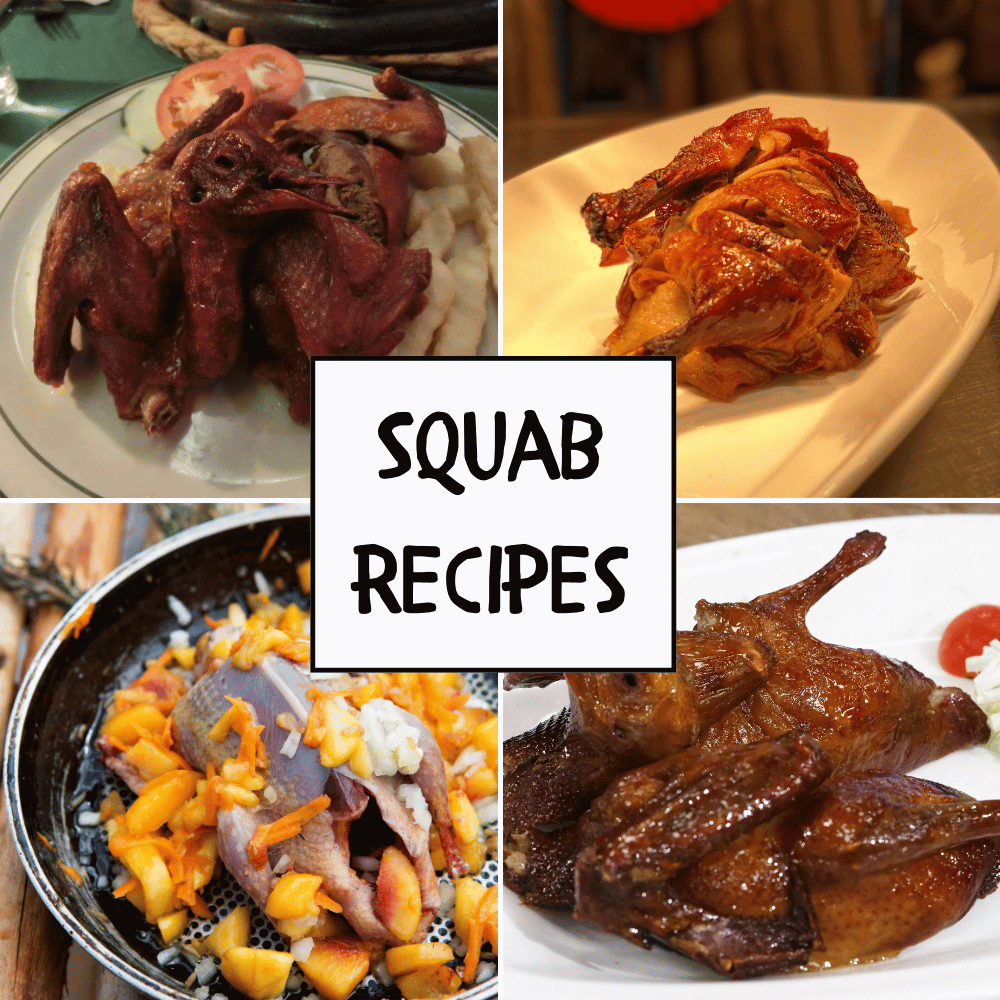
Squab is a dark meat, moist and tender, that tastes like a combination of duck and chicken, but with a slightly gamier flavor.
Also, it is prone to overcooking, so I often roll it in mustard and breadcrumbs and broil it until slightly pink.
Pigeon meat contains rich protein (Beta-14 protelinates), is easy to digest, and is recommended for children and the elderly to recover from wellness.
2. Faster growth and harvest
They grow quickly and eat feed early when young.
They can be ready to make squab around 4 weeks. Keep in mind that they take 25-28 days or 26-30 days to mature and to be full-sized birds.
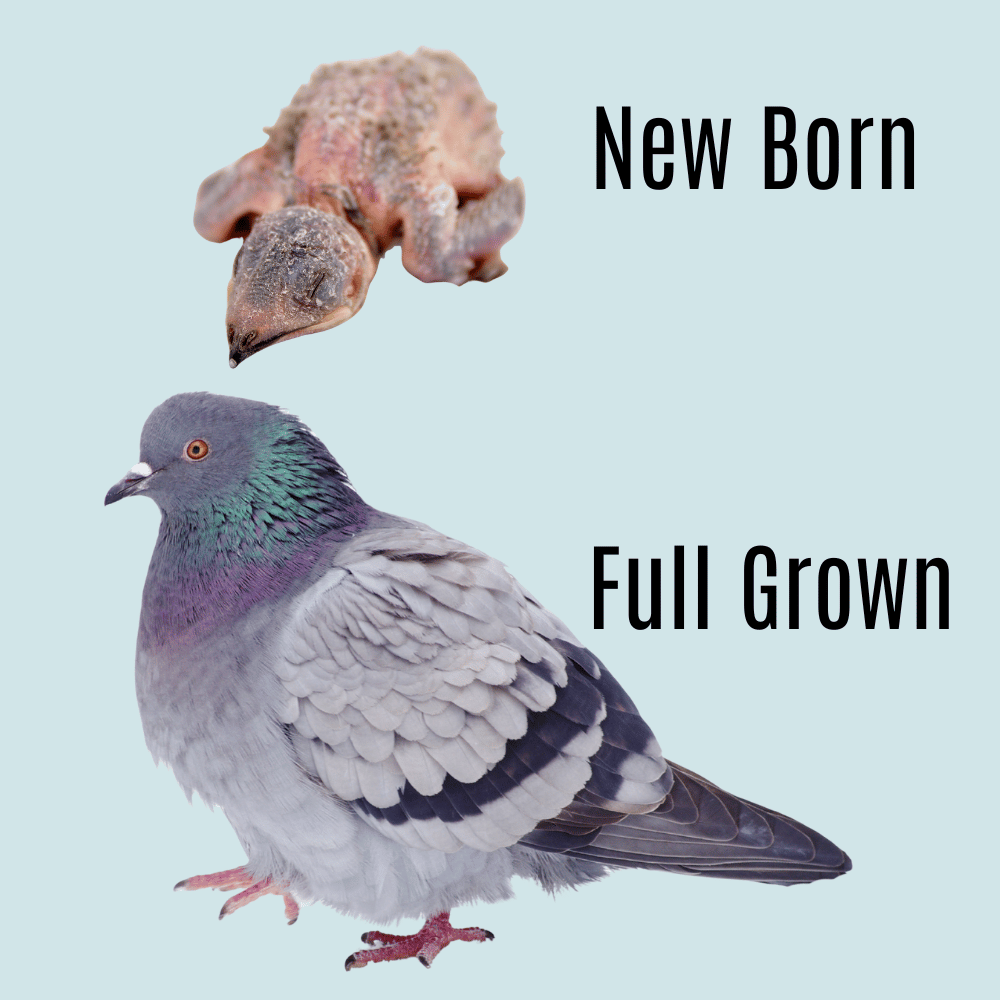
In this sense, pigeons make table birds faster than meat quails.
3. Quiet and neighbor-friendly
Meat pigeons are bigger than city pigeons, and probably bantam chickens also. Though large in size, they are quiet, docile, and socially friendly birds.
But don’t blame me if your pigeons poop on your cars and in your garage.
4. Year-round breeding
Pigeons are non-seasonal breeders and produce squabs year-round. Each pair can give 10-16 squabs annually.
Their peak breeding time ranges from March to June in spring and from August to November in Fall.
5. Minimal land requirements
They can roam around your house or be kept in the loft as well.
Make sure you provide 1-2 square feet per bird or 4 square feet per pair of birds.
Getting Started…
Pigeons are naturally great foragers, as you can see them walking and picking seeds and grains in the woods, fields, and meadows.
They can pasture all day but don’t eat worms, grubs, or insects.
Though it’s been centuries since they have been domesticated, pigeons are still wild birds.
I find a few breeds that don’t make good mothers because they have lots of feathers, which makes it hard to fertilize their eggs.
But those are the exceptions.
On the other hand, several pigeon breeds sit on their eggs and raise their babies until they leave the nest.
Both parents incubate their eggs and take care of their chicks.
Though they cannot lay as many eggs as chickens, pigeons still manage to produce 20 babies per year.
Housing & Loft Setup for Meat Pigeons
Choosing the Right Location
Before anything, visit your local (town, city, county, or state) regulations and learn if they allow pigeon flocks.
Pigeons need a dry, well-ventilated housing.
You can raise your birds in the existing structures, such as an old barn, greenhouse, or a child’s playhouse, if you don’t want to build a new one.
Loft Size & Space Requirements
48 square feet of space can accommodate 12 pairs of breeding pigeons. You can expect to add 2 new birds to each nest in the breeding season.
In my experience, lofts are a form of dovecote, but not all dovecotes are necessarily lofts. There are several designs, including simple sheds, stacked cages, and backyard lofts.
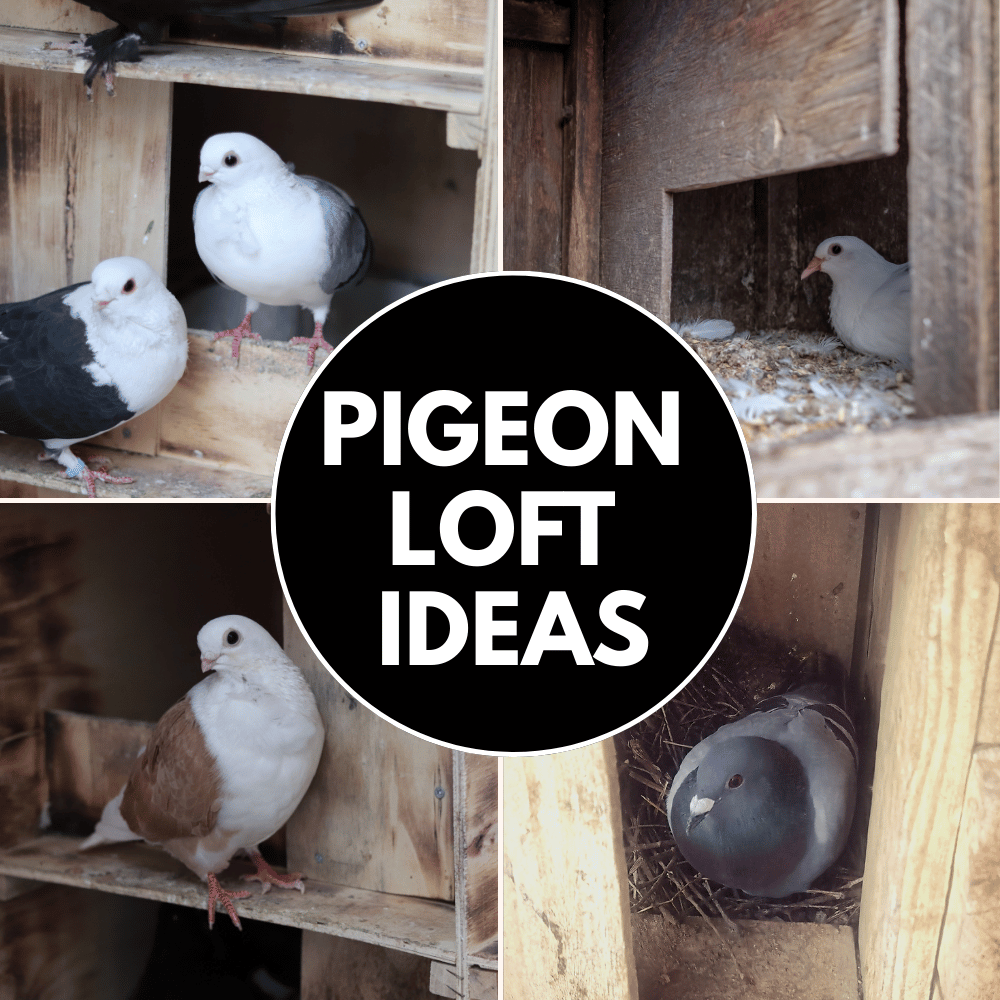
If you don’t harvest the young squab, you can keep these birds in a separate loft after they no longer need a nest.
Or they can live with their parents until there is sufficient room.
Nest Boxes & Perches
Many keepers provide cubicles in the loft, called perches, which are different from chicken perches.
Though chickens share the nest, pigeons don’t.
You can build nest boxes like shelves and make short pieces of 2×2 feet of wood, or build a structure extended out of the cage or loft for perches.
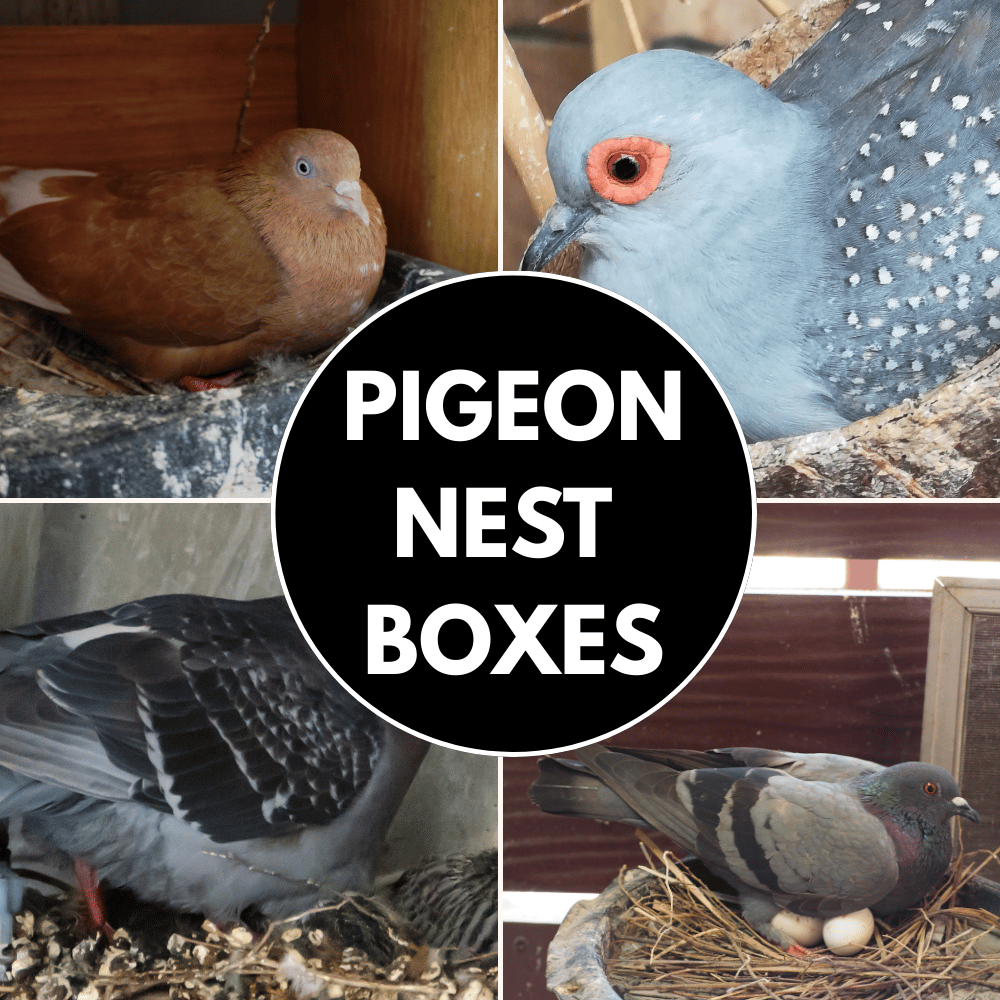
The nest boxes are similar to chicken nesting boxes, which are about 10-12 inches wide and 14-18 inches deep.
Ventilation, Light & Predator Protection
Place a window on the south- or east-facing wall to receive most of the morning light and warmth. Also, add a dimmable LED strip to care for your birds and handle daily chores in winter.
To maintain healthy airflow and deter predators, you use 1/2-inch galvanized hardware cloth in the windows.
You can also dig a skirt of mesh around 8-12 inches deep on the perimeter for drilling predators. Tamper-proof latches also work for additional security.
Feeding Pigeons for Fast, Healthy Growth
Diet and Mix
Though pigeons can live on only one or two grains, it will always be wise to feed them a combination of four or more grains. They prefer grain based diet.
You can make a mix of grains, including corn, sorghum, wheat, barley, rye, oats, or rice. Give them whole grains, no mash, and green feed.
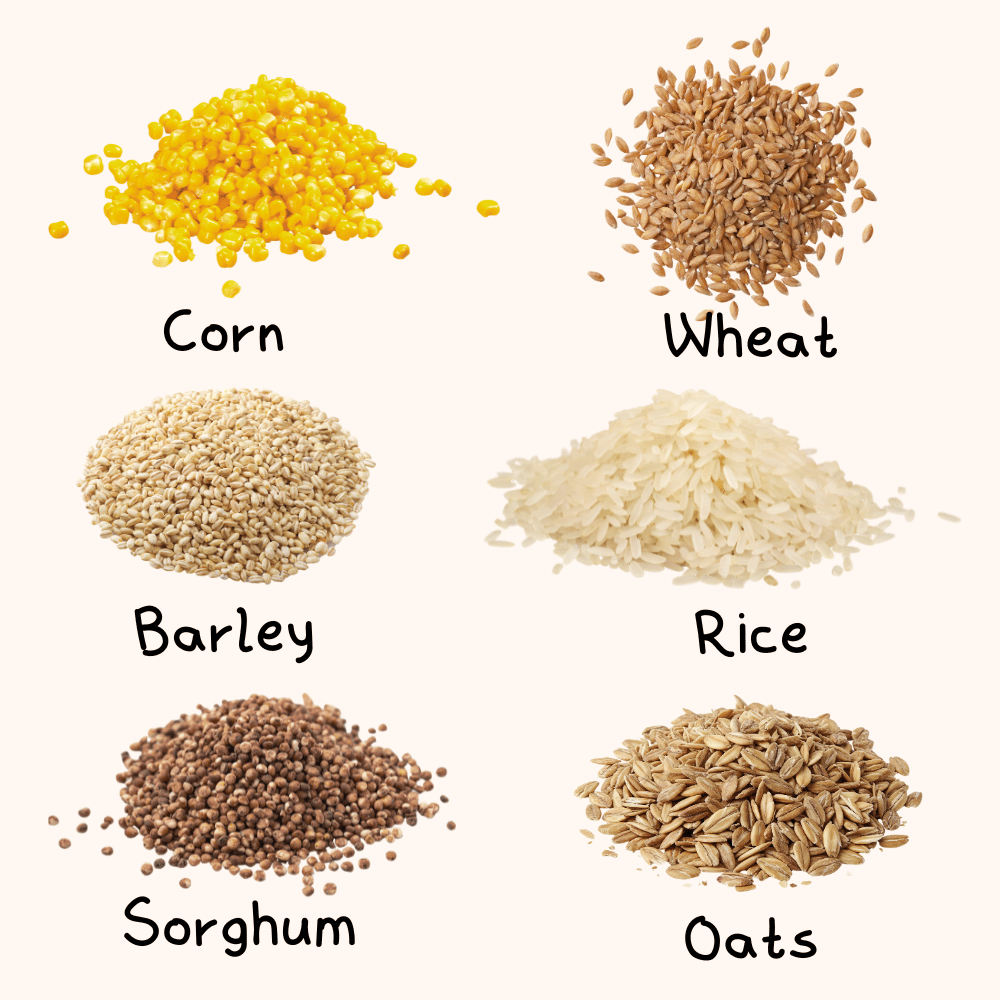
Besides, they also prefer to eat buckwheat, peas, peanuts, legume seeds, soybeans, and vetch.
The healthy diet of pigeons includes the following:
- 13-15% protein
- 60-70% carbohydrates
- 2-5% fat
- Less than 5% fiber
Each pair of pigeons eats 90-100 lbs of grain per year.
Anyway, give your birds as much as they can finish in a single feeding. Don’t let them leave any grains on the floor, as they can become mouldy and cause health problems.
When you are about to buy commercial feed for your pigeons, make sure the feed is not new grain or spoiled. I mean, these birds cannot digest freshly harvested grains from the field.
They can have vomit, diarrhea, and grow ruffled feathers. And newborn squabs cannot survive if their parents feed them with new grains.
Don’t feed your birds grains that are less than three months old after harvesting. The fresh grains have lots of moisture.
But old grains are dry, hard, and low in moisture content.
I don’t recommend seasoned grains if they’re spoiled. You can check it by rubbing a small handful amound of grains between your palms. Then, smell the grains.
If it smells moldy or musty, don’t feed your birds. So, you must store grains in a proper location with a dry and cool environment.
Grit Feed
Grit for pigeons is different from grit for chickens. When pigeons are raised in a cage or confinement, they can find materials to help them digest properly in the gizzard.
So, pigeon grit needs to contain salt, iodine, trace minerals, sulfur, and iron.
Besides, you can give them bone meal (for calcium), charcoal, ground oyster shell, and granite. Mix these substances in the right proportions.
Avoid feeding the excess sole materials.
Each ingredient has its own function. For example, sulfur helps prevent pigeon pox, while charcoal sweetens the crop and helps prevent the effects of spoiled or moldy feed.
Remember, each pair of pigeons requires only 6 lbs of grit per year.
Along with grains and grit, don’t forget to give your birds a fresh, running, and clean bowl of water daily. You can use a regular chicken fountain, and the water needs to be changed daily.
They’re not camels by the way, which can survive without water for days or weeks.
Pigeon Bath
Like a dust bath for chickens, pigeons also need a water bath to clean themselves.
So, you need to provide them with access to water pans or containers once or twice a week for around 2 hours each session.
These baths should be able to contain water 2-3 inches deep and large enough to accommodate a flock (at least 4-5 birds), not a single bird.
The pigeons may struggle and compete for a bath in a small space. They pile up on top of each other, and birds on the bottom may suffer the most.
After bath time, remove the bath pan or containers quickly so they won’t drink that dirty water.
How to Take Care of Pigeons
You need to take care of young birds. They can experience digestive issues and gorging. A lack of exercise can cause serious health problems, including intestinal diseases.
You can feed your flock twice a day. Give them clean, sound grain and mixed grid.
Let your birds bathe in the spring and summer or on sunny days. Keep the bath time short. Also, don’t allow your young birds to spend the night on the floor. Place them on perches instead.
Though heavily feathered, pigeons also molt and cast their old feathers in July and August.
If you provide them with good care, their plumage will be by November. So, this period should be rest time from all family chores.
You need to remove the newly laid eggs and the nesting boxes to stop all nesting and squab raising.
Feed them as much as they can eat, following the daily routine of feeding twice a day.
Breeding & Reproduction Management
Pigeons breed in pairs. If unmated male and female birds in the flock are breeding, they can disturb the already paired birds, leading to egg and squab loss.
So, keepers need to select each male and female and confine them in a small pen for several days so they can pair and breed successfully.
Pigeons lay 2 eggs per clutch and begin sitting on eggs after 2 days. Their incubation period extends up to 18 days.
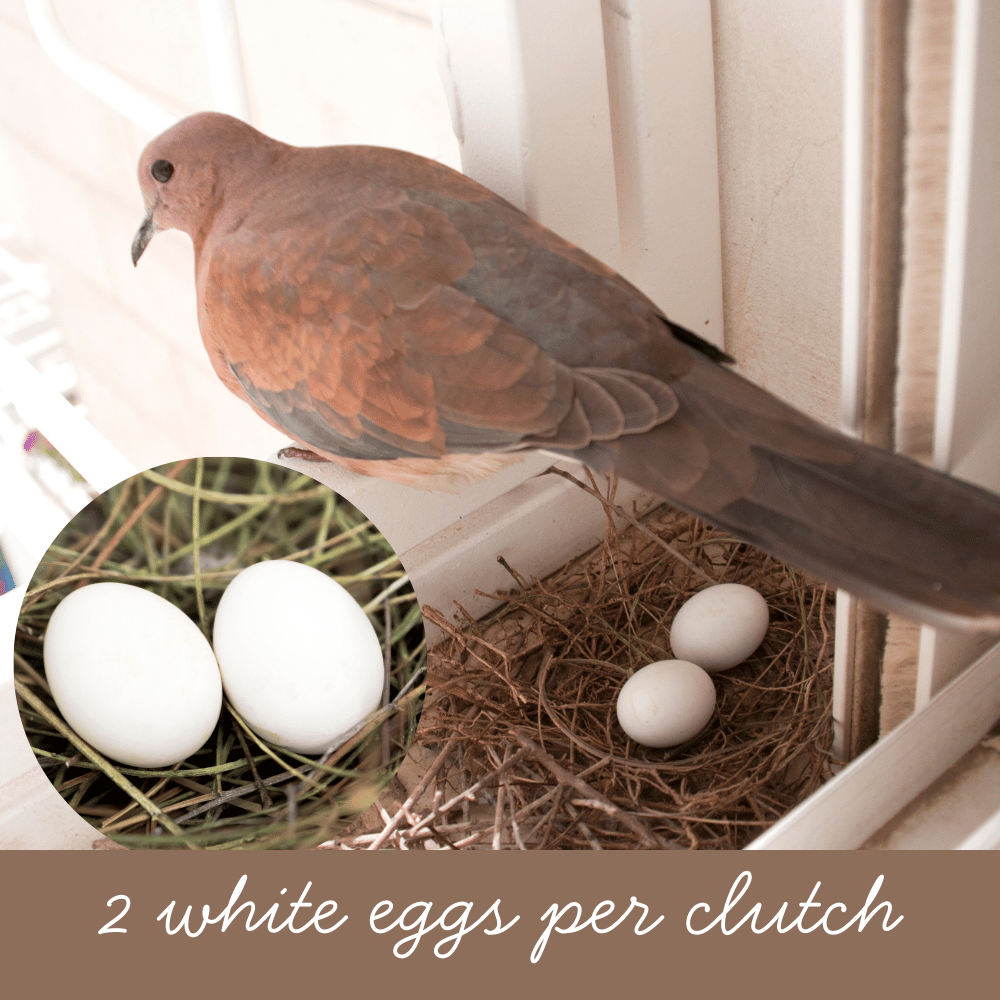
Keep in mind that 10 pairs of pigeons can produce 8 squabs monthly. You can increase the number of squabs by adding a second nest for each pair of birds.
The breeder pair of pigeons can raise 12-14 squabs every year.
The hen lay 2 extra eggs in the nest after they finish hatching their eggs in the first nest. After laying, they start incubating their eggs in the second nest while the male takes care 2 squabs in the first nest.
You can see male pigeons also sit on the eggs from the mid forenoon to mid-afternoon, while females have to do it for the rest of the time.
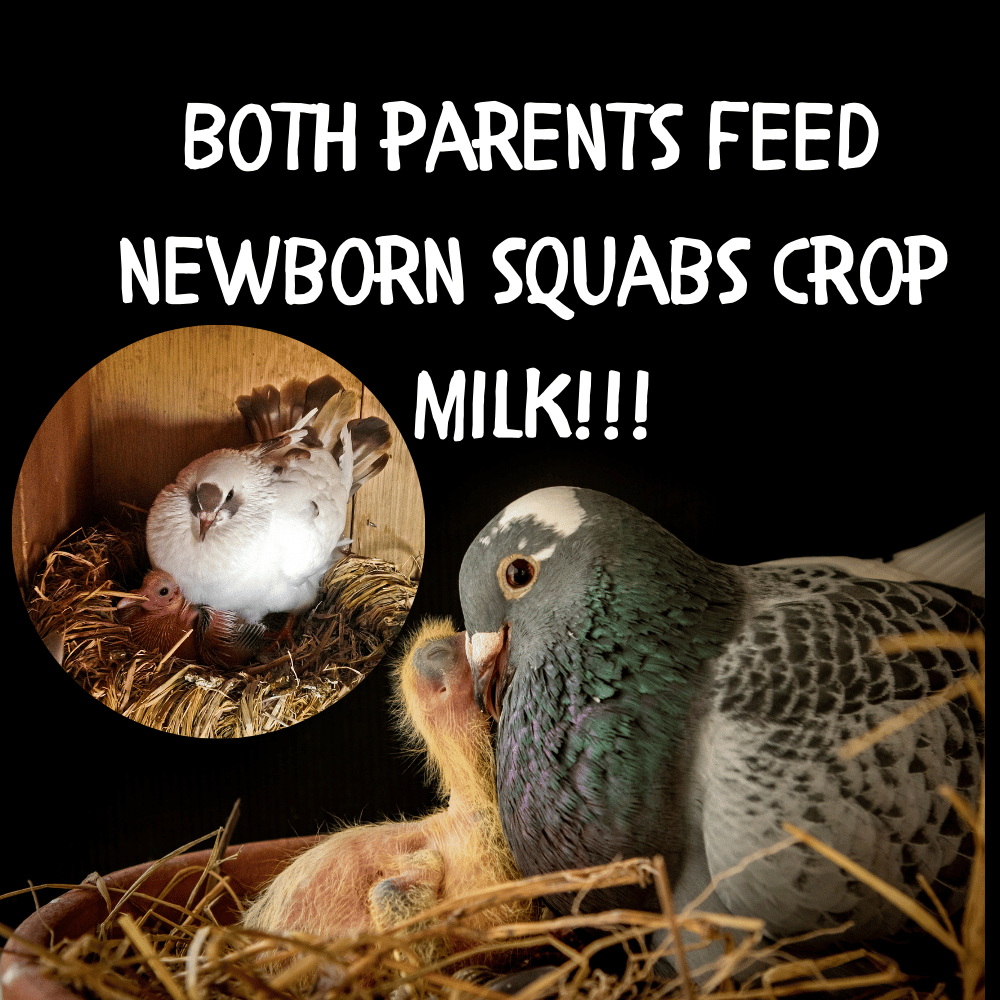
After hatching, tiny squabs live on pigeon milk for the first 4-5 days. It is a cream-like substance that develops in the crop of both pigeon parents at the end of the hatching.
Like other birds, pigeons have higher productivity in spring and summer than in fall or winter.
The parents take the baby’s beak into their own beaks and slowly pump that milk or soft feed. After the milk, they also feed their squabs half-digested grains.
After they grow, the birds can eat whole grains with grit and water.
If you want to keep the squabs for breeding, you need to band them at about 2 weeks old. The band should have a seamless metal ring with a number and the year in which it was hatched.
Hold their toes together and slip the desired band over them.
Harvesting Squabs
Squabs are young birds that have not yet flown and consume only pigeon milk. They are ready for harvest and market in 4 weeks, which is around 26-30 days or 28-35 days.
At this time, they have attained their heaviest weight, about 17.6 oz each bird.
If you allow them to fly, they will lose weight and grow dark flesh.
When harvesting, collect the squabs from the nest the day before processing so their crops and bowels are empty.
Prepare a high shelf against the wall or a narrow table and stools.
After dressing and cleaning the squabs, dip them in fresh water for a few minutes, then spread the meat on the drying racks.
Or you can tie the squabs in pairs by the feet and keep them over a line swing in a cool place, which should be away from direct sunlight and flies.
For later use, you can keep the harvested squabs in the refrigerator or freezer.
Final Thoughts
I think raising pigeons for meat comes easily as an interest when you start homesteading. I kept anywhere from a couple to 25 birds.
They cost me $0.75 per month, including housing and feed.
If you raise twice the number of squabs you need for yourself or your family, you can sell the extra birds in the market. Or you can swap them with neighbors or fellow homesteaders for other needs.


Leave a Reply