
When I don’t see barblers, orioles, tanagers, and some hummingbirds around my homestead, I understand winter has already started, and birds have migrated to the South.
Unlike migrants, resident birds stick around the same area year-round regardless of seasonal changes. They show up in the winter, and you also witness some migratory birds in cold months from higher latitudes.
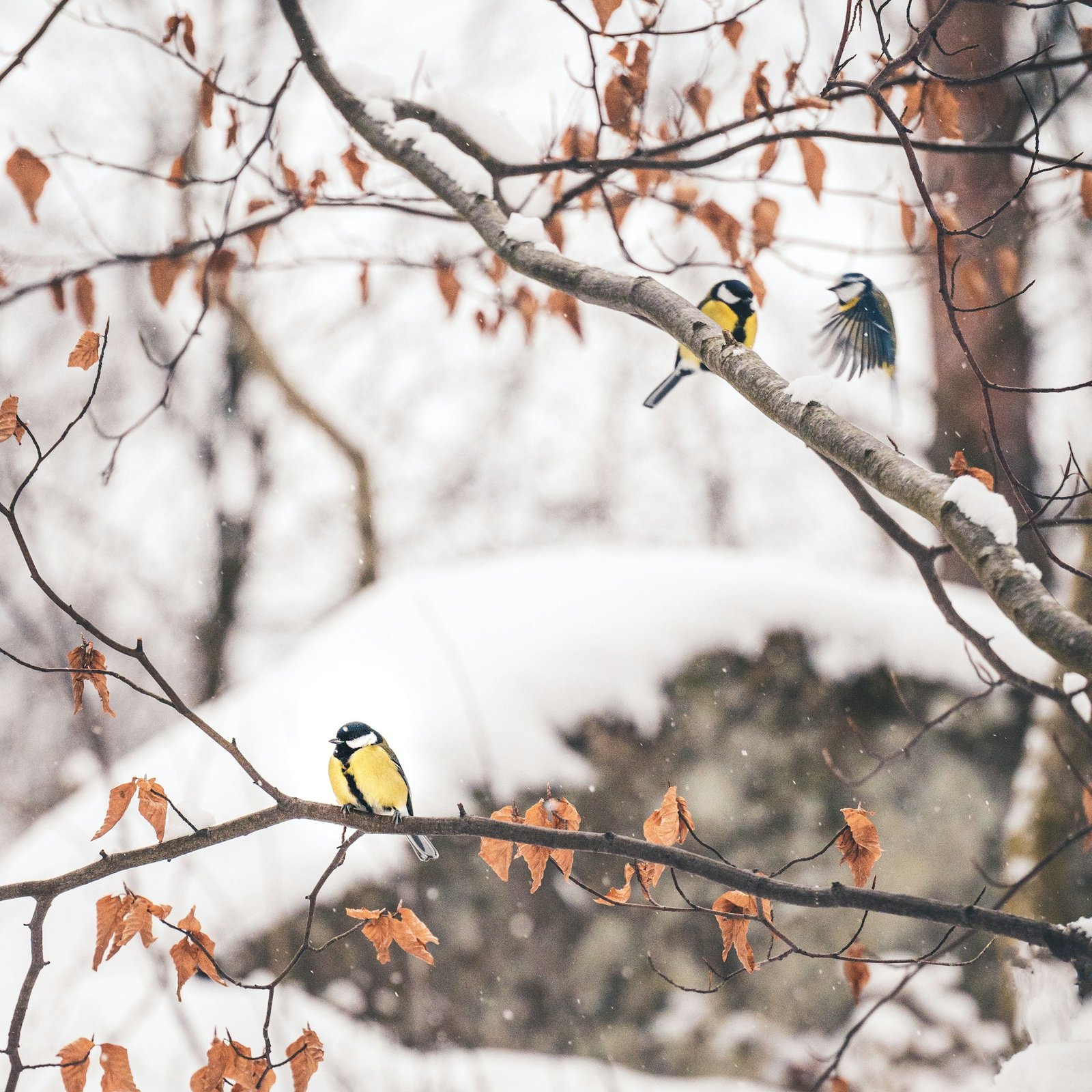
If you’re a birder, homesteader, or plain gardener, you must have noticed some backyard winter birds coming to your place. If not, I have a list with a few tips to help you enhance your birding experience and attract birds to your homestead or garden.
1. Black-Capped Chickadee
As the name suggests, these are birds with a black cap and bib. They also have white cheeks, gray back, and white wings, and whitish or fluffy brown undersides.
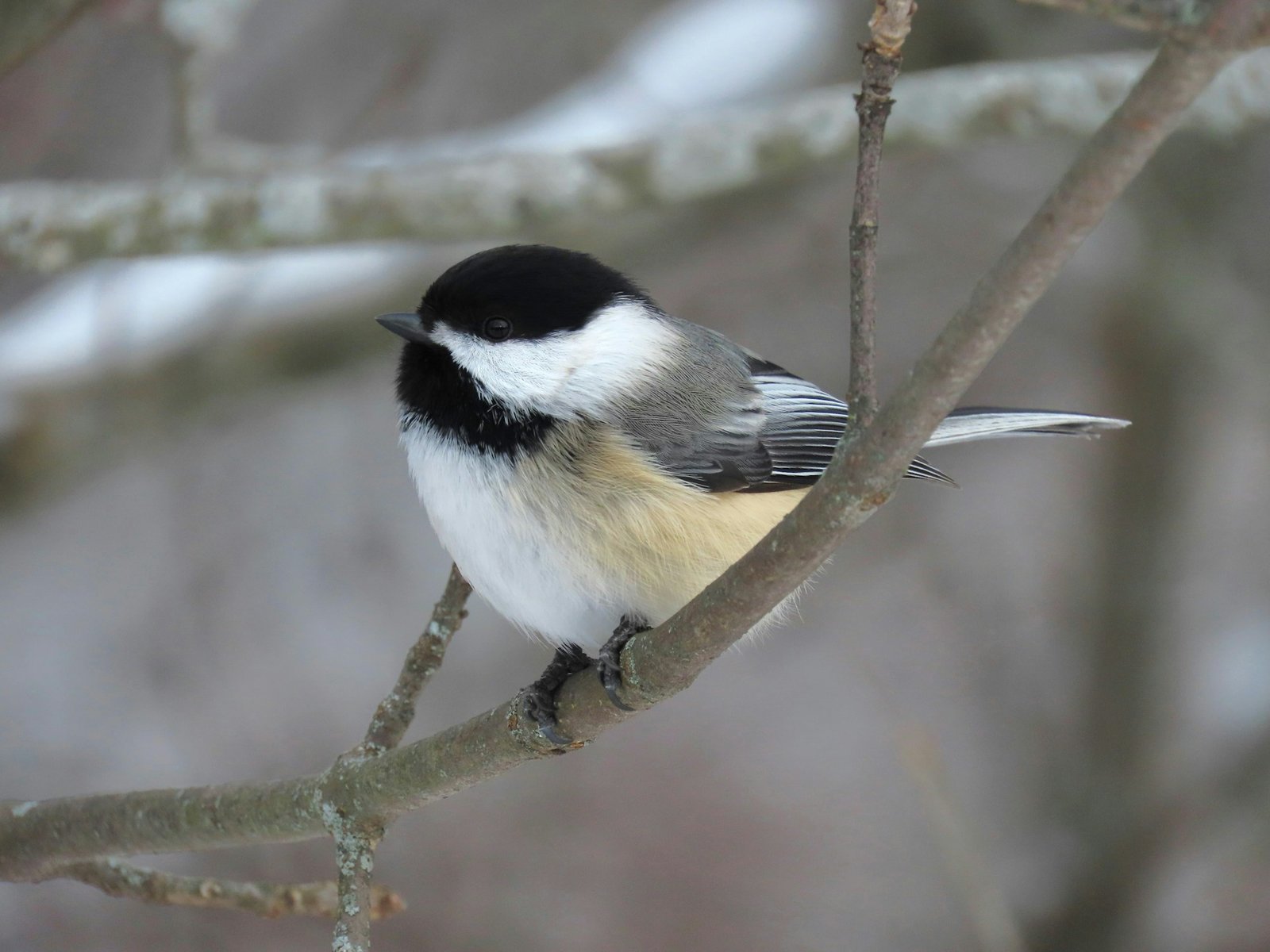
You can tell black-capped chickadees by their short bill, a large head, thick neck, and small, long, slender tail.
They are everywhere, from the forest to the backyard and the park.
I often see them in willow, alder, and birch trees with their partner and nest. You can see them in a flock year-round.
You can also attract a breeding pair by putting up a nest box filled with sawdust or wood shavings. Keep their nest box at least 60 feet into a wooded area to avoid wrens.
Chickadees prefer window feeders, and their food includes sunflower seeds, dried cranberries, black soldier fly larvae, and other bugs and seeds. They would come to feeders and then quickly leave.
They often pouch their food to eat later or store it somewhere else.
Size:4.7-5.9 inches in length, wingspan; 6 to 8 inches
Call/sound: chicka-dee-dee-dee
Feeding preference: Suet, sunflower seeds, mealworms, white proso millet, safflower seeds, and peanuts
Type of feeder to attract: tray, tube, hopper feeders
2. Northern Cardinal
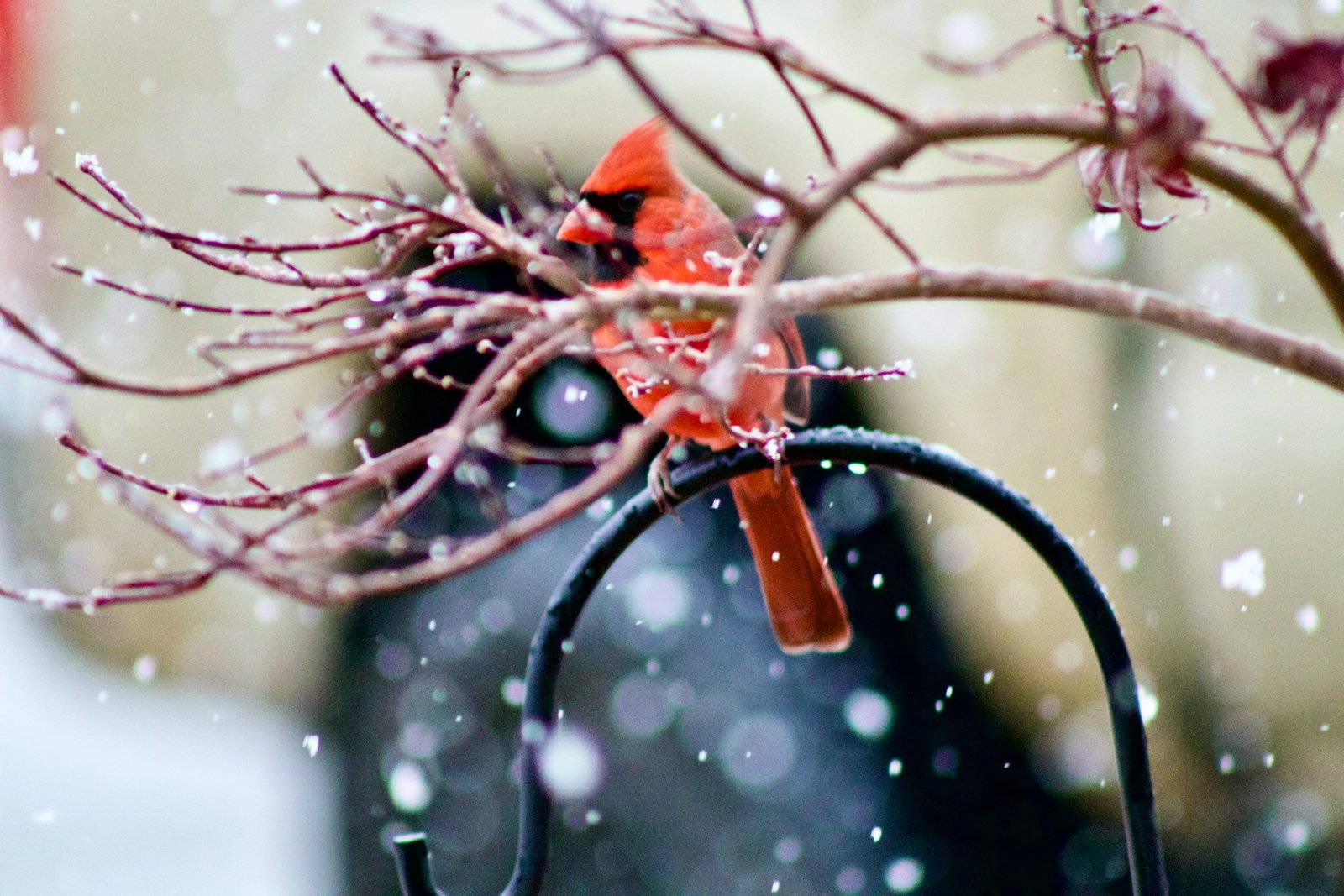
This is a medium-sized songbird with short, thick or heavy bills and a noticeable crest.
While males are soaked in red, with a black mask and neck around the bill, females appear in a pale brown shade with a warm reddish tinge in the wings, tails, and crest.
Birders can see them in dense shrubby areas, including backyard gardens, forest edges, overgrown fields, and hedgerows. Besides, they nest in the mesquite, marshy thickets, regrowing woods, and ornamental landscaping.
They fluff up and expand their feathers to generate air pockets that increase insulation. When the temperature drops, they also create warmth by shivering.
I have noticed them eating corn, dogwood, buckwheat, grasses, sedges, wild grape, mulberry, hackberry, blackberry, black oil sunflower seeds, sumac, and tulip-tree.
You can see the pair together in the winter, but they split up by the next season.
According to legends and folklore, carnal has cultural significance related to Christ, symbolizing vitality, renewal, and strength.
Size: 8-9 inches; wingspan: 9-12 inches
Call/sound: cheer-cheer-cheer-purty-purty-purty or birdie-birdie-birdie
Feeding preference: Sunflower seeds, cracked corn, milo
Type of feeder to attract: hopper or platform feeders, sturdy perches
3. Dark-Eyed Junco
Dark-eyed junco is a medium-sized sparrow bird with a rotund body shape, a round head, a long tail, fairly small and pale bill.
With crisp markings and white outer tail feathers in common, they are in various colors.
- Slate-colored birzd: Grey with a white belly
- Oregon bird: dark brown hood, buffy sides, white belly, and light brown back,
- Pink-sided bird: slate grey head, brown back, and pinkish brown sides
- Red-backed bird: grey head, dark face, bright reddish brown back
You can see these birds on the ground, hopping around shrubs and trees. Also, they are found foraging in open areas, such as lawns.
Juncos’ nests are often on horizontal branches in my backyard, on window ledges, or in hanging flowerpots.
These cuties have a nickname as “snowbird.” As medium-distance migrants, they breed in Alaska and Canada and travel south throughout the United States for the winter.
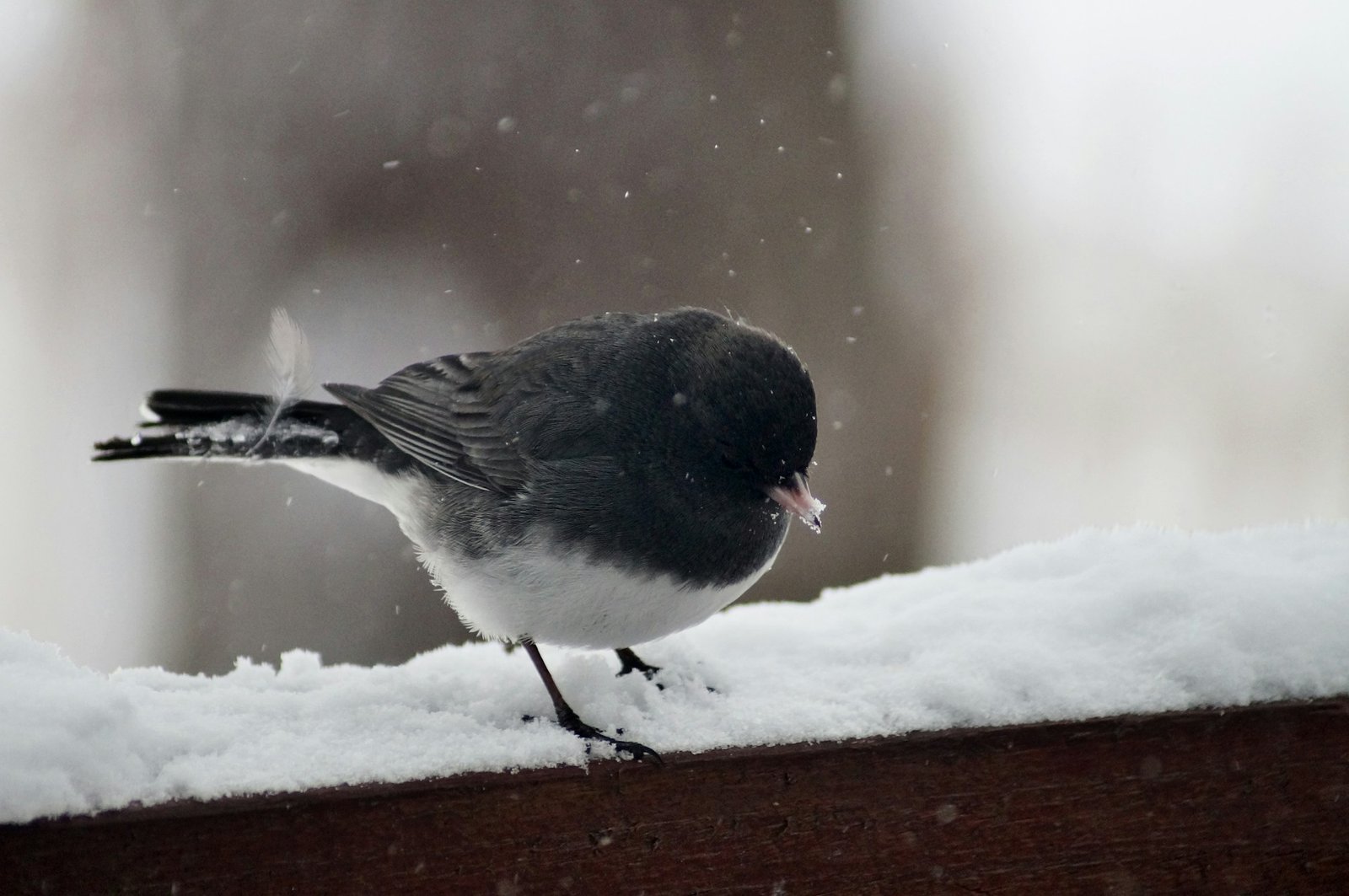
They are also called ground-feeding birds as they prefer hopping and running on the ground while foraging. Also, they scratch with their feet like chickens in leaf litter or snow.
But when you throw grains, they come to the bird feeders,
Size: 5 to 6.3 inches; wingspan: 7.1 to 9.8 inches
Call/sound: tsick or tchet
Feeding preference: Millet, cracked corn, sunflower chips, and bark butter bits
Type of feeder to attract: Platform/fly-through style feeders
4. American Goldfinch
Do you know that American goldfinches change their plumage color drastically depending on the season?
These goldfinches are small birds with short bills, long wings, and short tails.
They show up in bright yellow and shiny black shade with a black head, black and white wings, and a tail in spring and summer. In winter, their yellow plumage turns light brown.
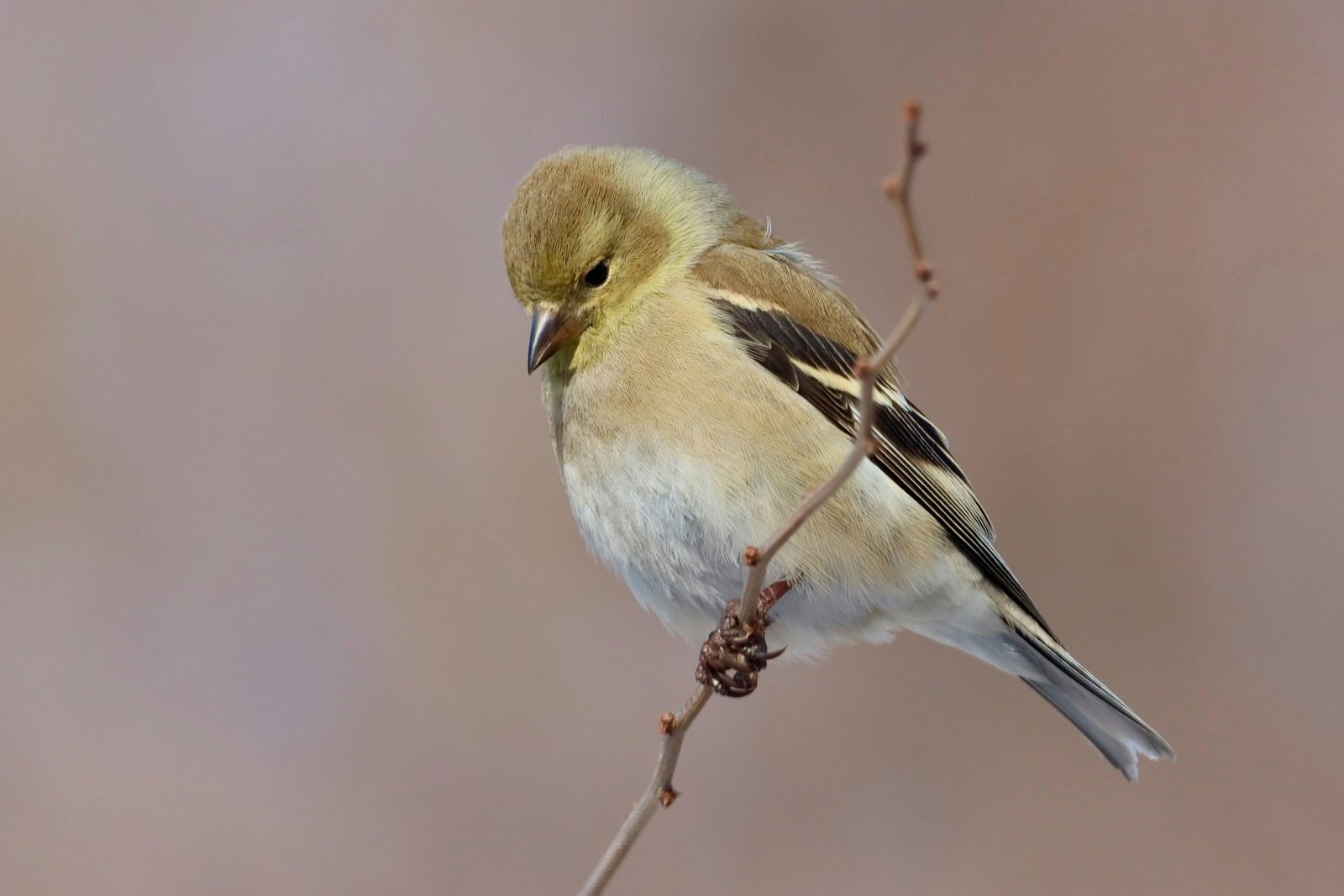
You can identify these birds by their conical bill, pointed, notched tail, and lack of streaking in winter.
Goldfinches are found in gardens or backyards with wildflowers, open floodplains, and overgrown areas with weeds.
They are pure and strict vegetarians that eat seeds all the time. If they happen to eat bugs mistakenly, they make a bouncy flight pattern.
If you want to attract goldfinches to your backyard garden, leave some spent flowers and dried stalks standing. Don’t cut the seeds on the flowers off to make more blooms.
They visit and return there frequently to eat the remains in the winter.
Size:4.3-5.1 inches; wingspan: 7.5-8.7 inches
Call/sound: po-ta-to-chip
Feeding preference: thistle, grey birch, evening primrose, alder, sunflower, ragweed, and dandelion seeds
Type of feeder to attract: tube with small holes, mesh, thistle, and sock feeders
5. House Finch
If you have not seen House Finch recently, chances are they are already tweeting songs in your neighbourhood.
Look for them in lawns, small conifers, buildings, and urban centers. In rural settings, they have nests around the barns and stables.
Their cup nests can also be on cactuses, trees, and planters.
You can also see them in the orchard most of the time, eating cherries, apricots, pears, plums, peaches, strawberries, blackberries, and figs.
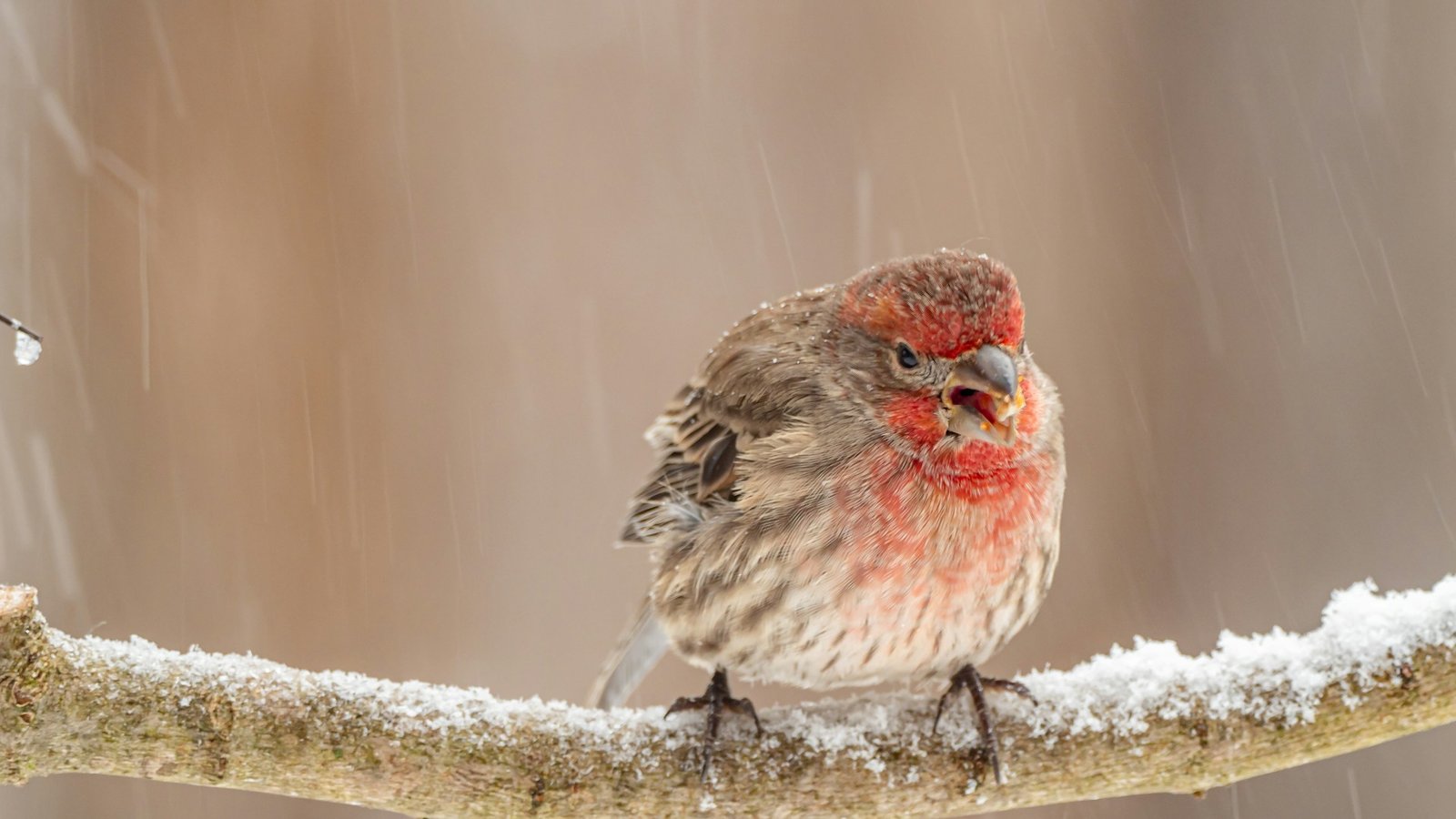
Unlike purple finch, house finches are small birds with fairly large beaks, moderately long, flat heads, short wings, and long, (and notched) tails.
You can identify them with brown streaks, two pale wing bars, streaked brown upperparts, and whitish underparts.
While males are rosy red and sometimes orange or yellow on the face, breast, throat, and rump, streaky brown back, belly, and tail, females mimic males with these identical colors.
Females show up in plain grayish-brown with thick, blurry streaks and an undefined facial pattern.
Anyway, house finches do well in the cold weather as they generate heat by shivering. They prefer to feed on the ground or at fruiting trees or feeders.
Size 5.1-5.5 inches; wingspan: 7.5-8.7 inches
Call/sound: Series of four warbling notes ending in a zeee
Feeding preference: black oil sunflower, striped sunflower seeds, millet, milo.
Type of feeder to attract: tube with a large hole, mesh feeders, or sock feeders
6. Blue Jay
Blue Jays are larger backyard birds that are bold, loud, and aggressive. To protect their nest, territory, and food, they mimic hawks’ calls and deceive predators.
You can tell these birds by their perky crest, combination of blue, white, and black plumage, and noisy calls.
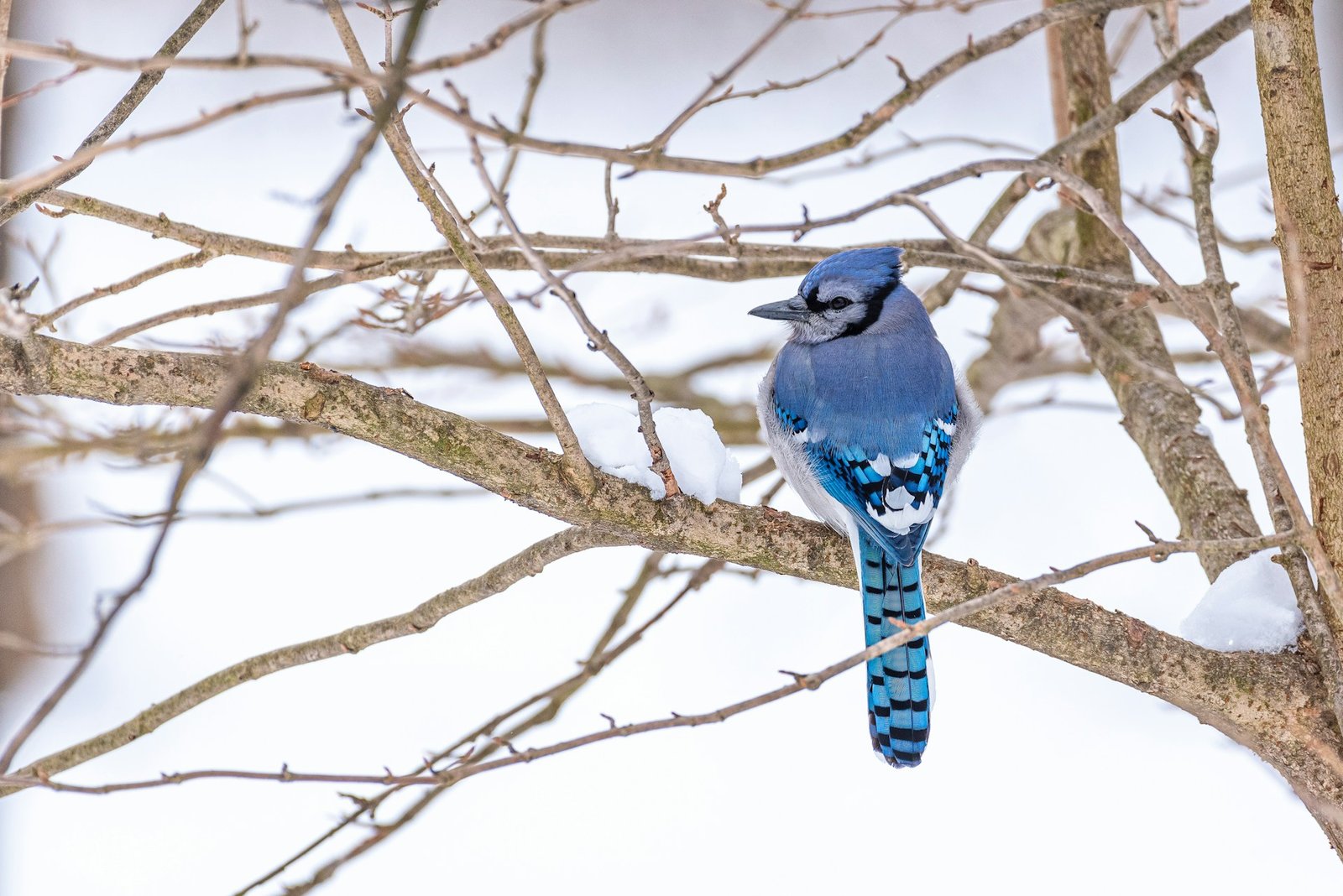
They are bright blue above, with a color matching a pointed crest, and a straight black bill. They also have a black necklace, a blue tail with dark and white bars, and white underparts, including the belly, and flecking on their wings.
Both male and female birds look alike in these birds.
Find their bulky nest of twigs in a tree or tall shrub in your backyard or woods. Although they are in the garden year-round, they are migratory birds that live in the colder regions of the United States.
If you hear a flock of blue jays, chase them, and you will also spot an owl.
Size: 9.8-11.8 inches; wingspan: 13.4-16.9 inches
Call/sound: jay-jay-jay, queedle queedle queedle-qeedle or wheedle-wheedle
Feeding preference: peanuts, sunflower seeds, and suet
Type of feeder to attract: tray feeders or hopper feeders
7. Downy Woodpecker
Downies are often found around backyard feeders and in orchards, parks, suburbs, and woodlots. They come long the flocks of chickadees and nuthatches.
If you have miniature trees in your backyard or garden, you can easily attract these woodpeckers.
They prefer tall, soft trees, such as pines, to drill their nest holes.
Also, they climb trees and spend their time searching for insects and larvae there in winter. They mainly eat bugs, including beetle larvae that live in wood or tree bark.
Ants and caterpillars also come to their favorite food.
Besides, they can control corn earworm, bark beetles, tent caterpillars, and apple borers in the backyard or on the farm.
You can identify downies by their broad white backs, which are striped down the center, and white horizontal lines on their wings.
They are small checkered black-and-white woodpeckers, but medium-sized backyard birds with a chisel-like bill and a blocky head. Their face is striped white and black.
In addition, males have a small red patch on the back of the head.
While downy woodpecker bills are small, sharp, and stout, going the impression of the point of a chisel, hairy woodpeckers have larger and longer bills.
Size 5.5-6.7 inches; wingspan: 9.8-11.8 inches
Call/sound: Chirp/Chip, Drum, Rattle, Trill
Feeding preference: black oil sunflower seeds, suets, millet, peanuts, and chunky peanut butter
Type of feeder to attract: mesh or suet feeders
8. Hairy Woodpecker
Unlike downy woodpeckers, hairy woodpeckers don’t eat weed stalks, cattails, or reeds. But they prefer to feed on larvae of wood-boring bugs or beetles, bark beetles, ants, as well as moth pupae in their cocoons.
Hairy woodpeckers are small yet powerful birds that forage on trunks and main branches of large, mature trees.
You may see them in trees such as open pine, oak, or birch. They are often found in the orchard, woodlots, suburbs, parks, and cemeteries.
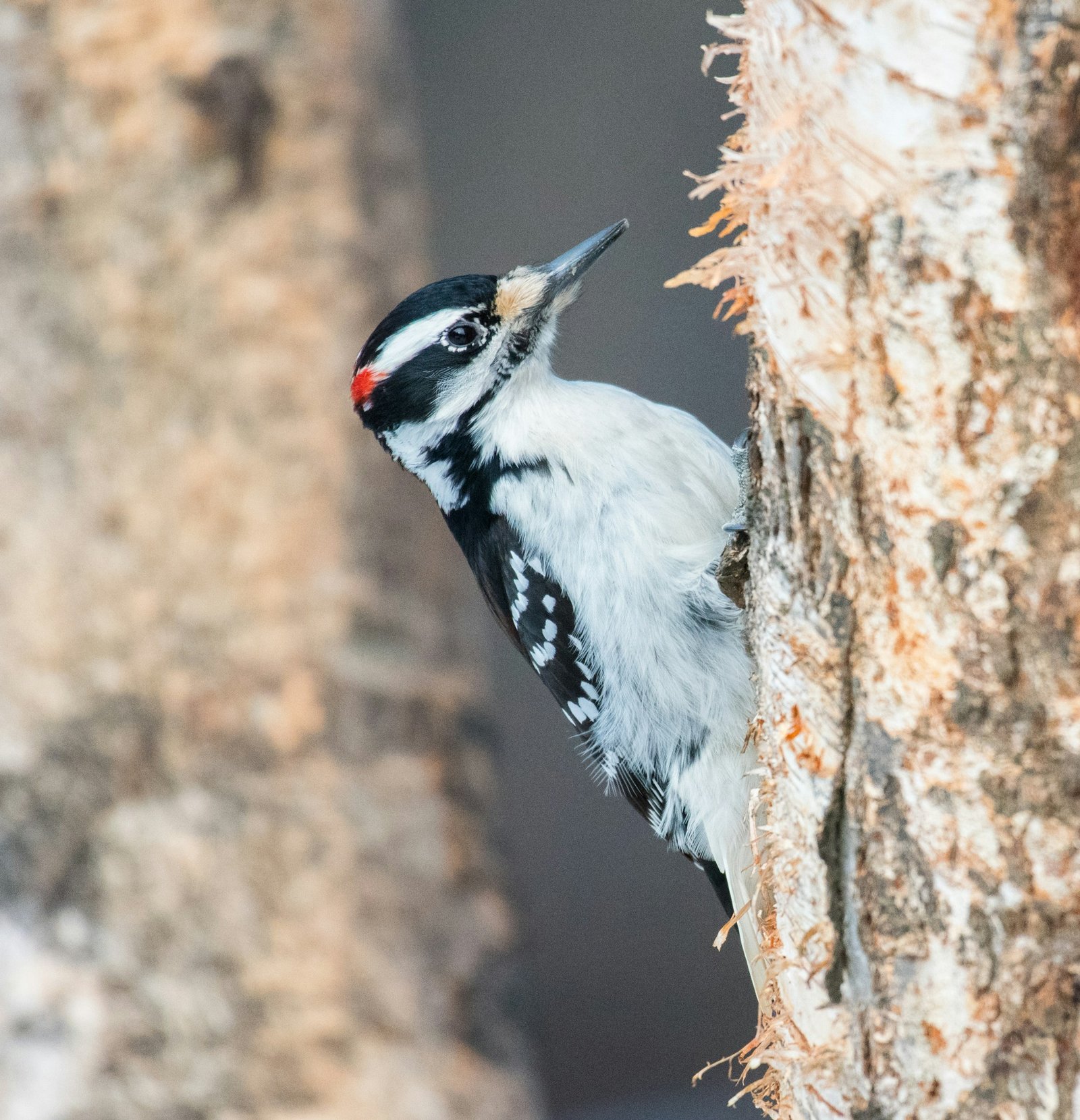
Anyway, hairy woodpeckers are medium-sized black-and-white woodpeckers. They have a somewhat square head, a long, straight, chisel-like bill (which is the same length as the head), and stiff, long tail feathers.
Their other highlights include black wings checkered with white, two white stripes on the head, and a large white patch running down the center of the dark back.
Their bills are longer than those of downy woodpeckers. Also, hairy woodpeckers show a fairly soldierly look with their upright, straight-backed posture and striped heads.
Size 7.1-10.2 inches; wingspan: 13.0-16.1 inches
Call/sound: “peek” or “pee-ik,
Feeding preference: suet, peanut, black oil sunflower, suet, bark butter, peanuts, tree nuts, mealworms
Type of feeder to attract: tube, platform, and hopper feeders
9. White-Breasted Nuthatch
This is a small backyard bird with a large head, a very short tail, a long, narrow bill, and almost no neck.
I often find them in the mature woods and woodland edges, particularly perched on the branches of maple, hickory, basswood, and oak.
They feed on insects on lifeless trees and eat large, meaty seeds. While foraging, they walk headfirst down the tree trunks and branches.
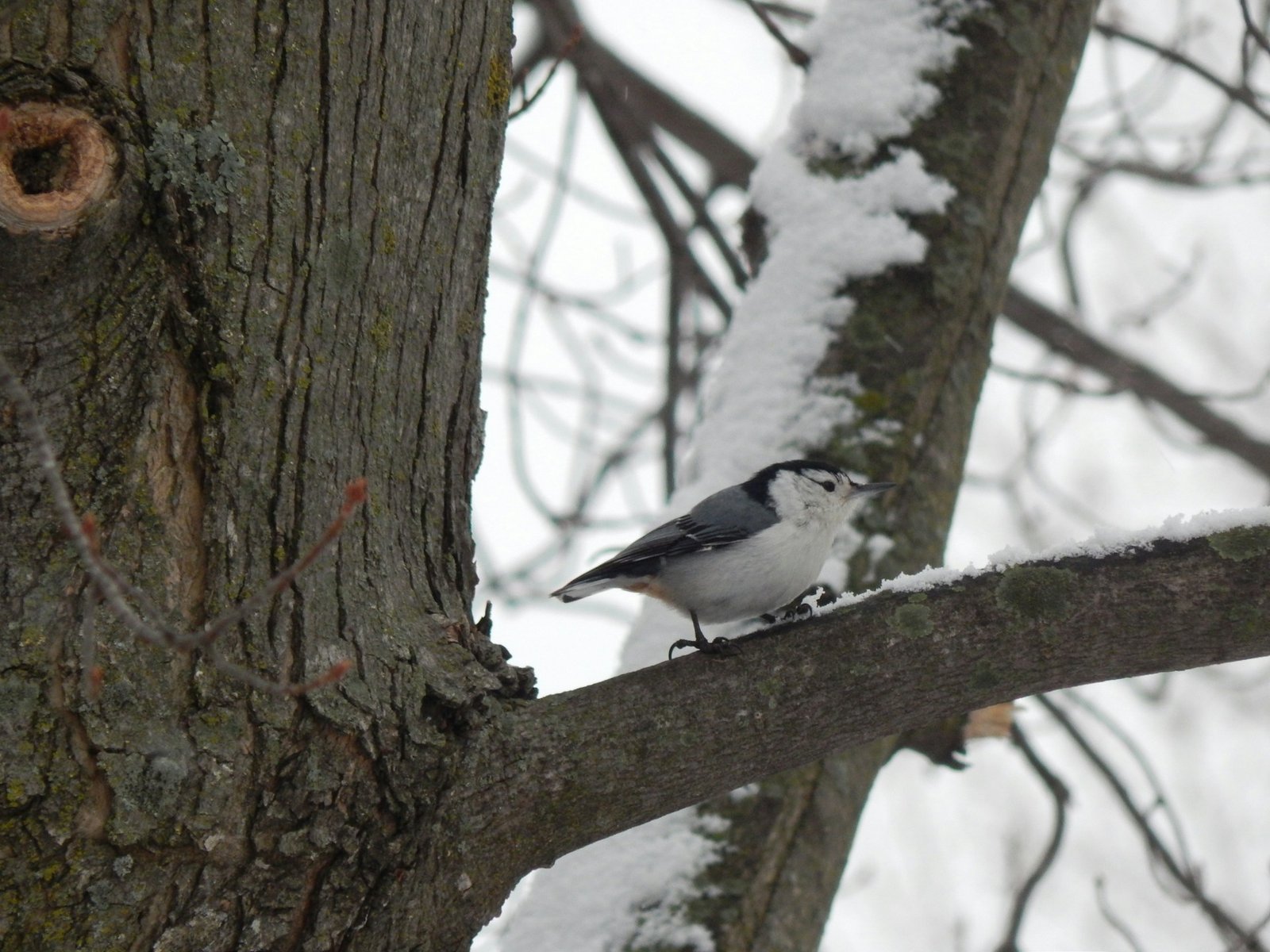
This upside-down movement ability helps nuthtches see different angles on a tree’s bark and reach food more easily.
Well, you can identify these birds by their gray-blue back, frosty white face, and underparts.
White-breasted nuthatches are small, compact birds with a short tail in rusty-red, white, and reddish sides. Their narrow, black or gray cap and white face with a neck frame make them look like birds wearing a hood.
Besides, they have a chestnut-colored lower belly and undertail.
Size 5.1-5.5 inches; wingspan: 7.9-10.6inches
Call/sound: “yank” or “quank.”
Feeding preference: Mix of sunflower, suet, and peanuts
Type of feeder to attract: a metal mesh screen, hopper feeders
10. Tufted Titmouse
Tufted titmouse also shows up around the backyard feeders, especially in winter. They are small gray birds with a large head, stout bill, large black eyes, and combed crest.
You can tell them by their soft gray upperparts, white bottomparts, a rusty streak down their flanks, and a black spot just above their bill.
They nest in tree cavities and in nest boxes (if they find any). But they can’t drill the hole and find natural hollows or nests left by woodpeckers.
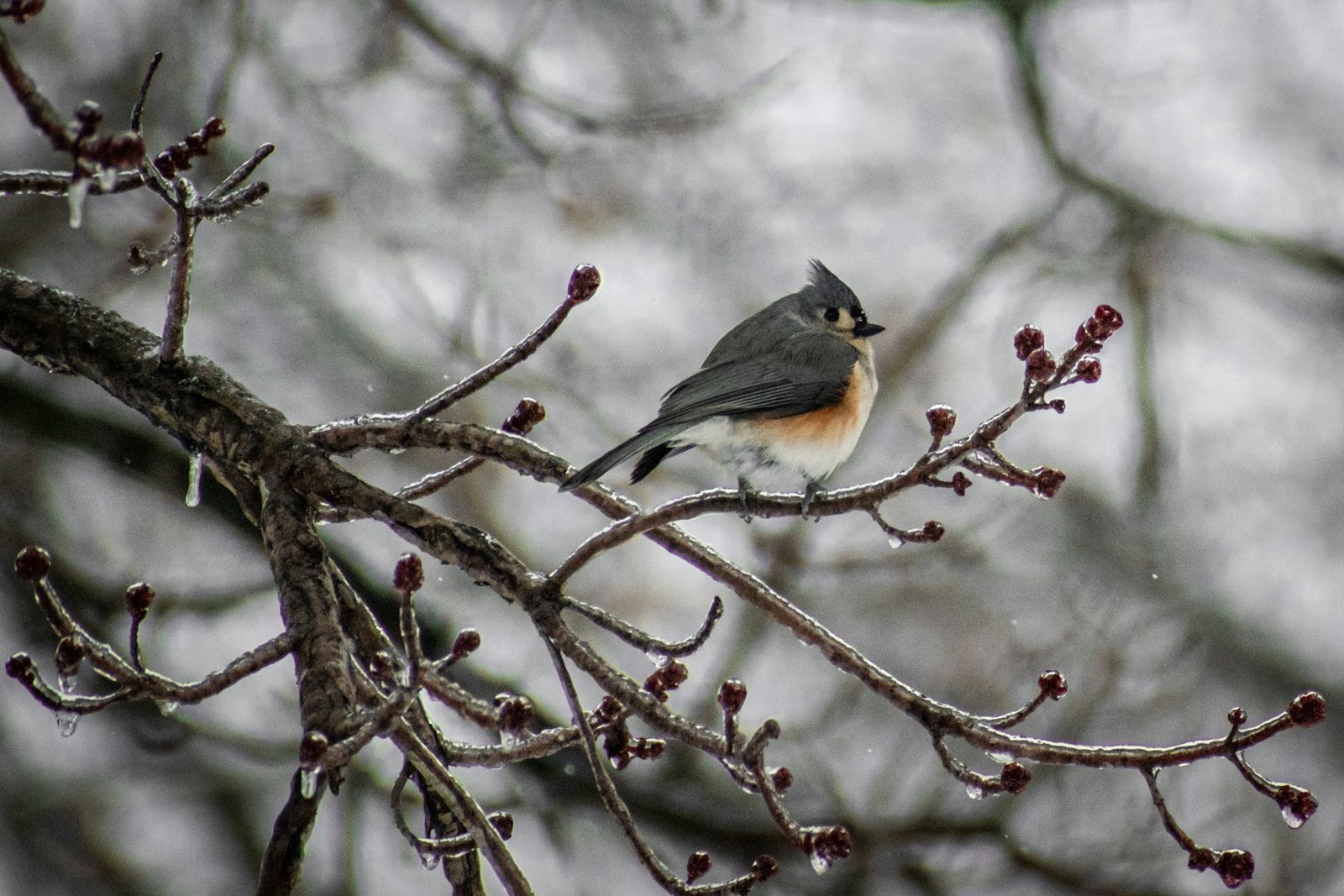
If you ever follow timices, you will see them hoarding food in the fall and winter, similar to their relatives, like chickadees.
In the spring and summer, they eat caterpillars but also prefer bugs such as wasps, sawfly larvae, bees, beetles, spiders, and snails, so they can help you save your garden harvest.
When it’s winter, they start feeding on seeds, nuts, berries, and small fruits. So, you can easily watch them in the backyards, parks, and orchards.
Size 5.5-6.3 inches; wingspan: 7.9-10.2 inches
Call/sound: tsee-day-day-day or peter-peter-peter
Feeding preference: mealworms, peanuts, safflower, and suet.
Type of feeder to attract: tray, tube, and hopper feeders
11. Mourning Dove
Maybe mourning doves are everywhere in America, so you can see them year-round in the countryside, parks, and neighborhoods. No wonder they appear in shrubs or evergreen trees or patches of bare ground in your backyard.
You can easily watch them perched on the telephone wires.
It’s easy to identify them by their small head and long, pointed tails.
Mourning doves are pomp-bodied and brown to buffy tan birds with a small bill and short legs. They also have black patches on the wings and black tails with white tips.
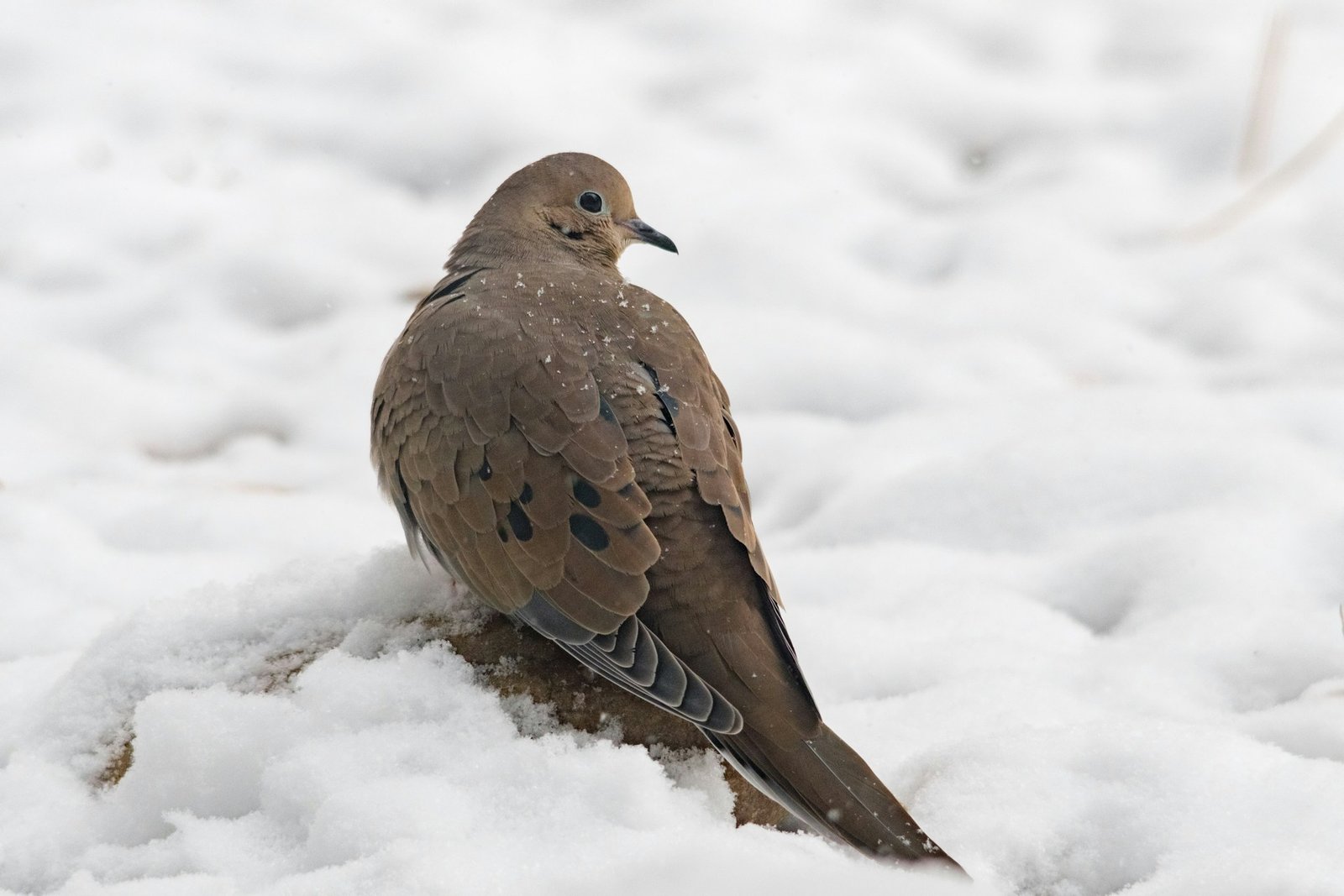
These birds live on cultivated grains, wild grasses, weeds, herbs, and sometimes on bugs.
They prefer feeding on the ground and in open areas. So, you need to keep your feeding area safe from predators. If you have barn cats, keep them out of the place.
Besides, you can invest in a squirrel baffle, which slides down with a chain and acts as an umbrella.
Size 9.1-13.4 inches; wingspan: 17.7 inches
Call/sound: cooooOOOOO-woo-woo-woo or perch-coo
Feeding preference: sunflower seeds, millet, and cracked corn
Type of feeder to attract: ground or platform feeders, open-style feeders with wide ledges (hopper or tube feeders)
Final Thoughts
Half of the bird population plummets during the winter months, so a few only show up flying and perching in the snowfall.
Though I have several homestead birds, I still crave seeing wild backyard birds and little animals (including my little neighbors, squirrels) in winter.
So, I refill the feeders midday and wait for birds to see them playing around and eating the feed.

Leave a Reply