
I have been hatching my heritage chicken eggs at home without an incubator for years. The new chicks are doing well and making a productive flock.
To get big and fat chicks, you need to breed larger roosters and hens (than average).
If you are only starting with chicken raising and don’t have an incubator, this guide will help you hatch eggs without spending any money.
Method 1: Using a Broody Hen
Broody hens are natural incubators that hatch their eggs successfully.
If you place others’ eggs (let’s say, other hen eggs, duck eggs, turkey eggs, or others’) under the broody, they also hatch without complaint.
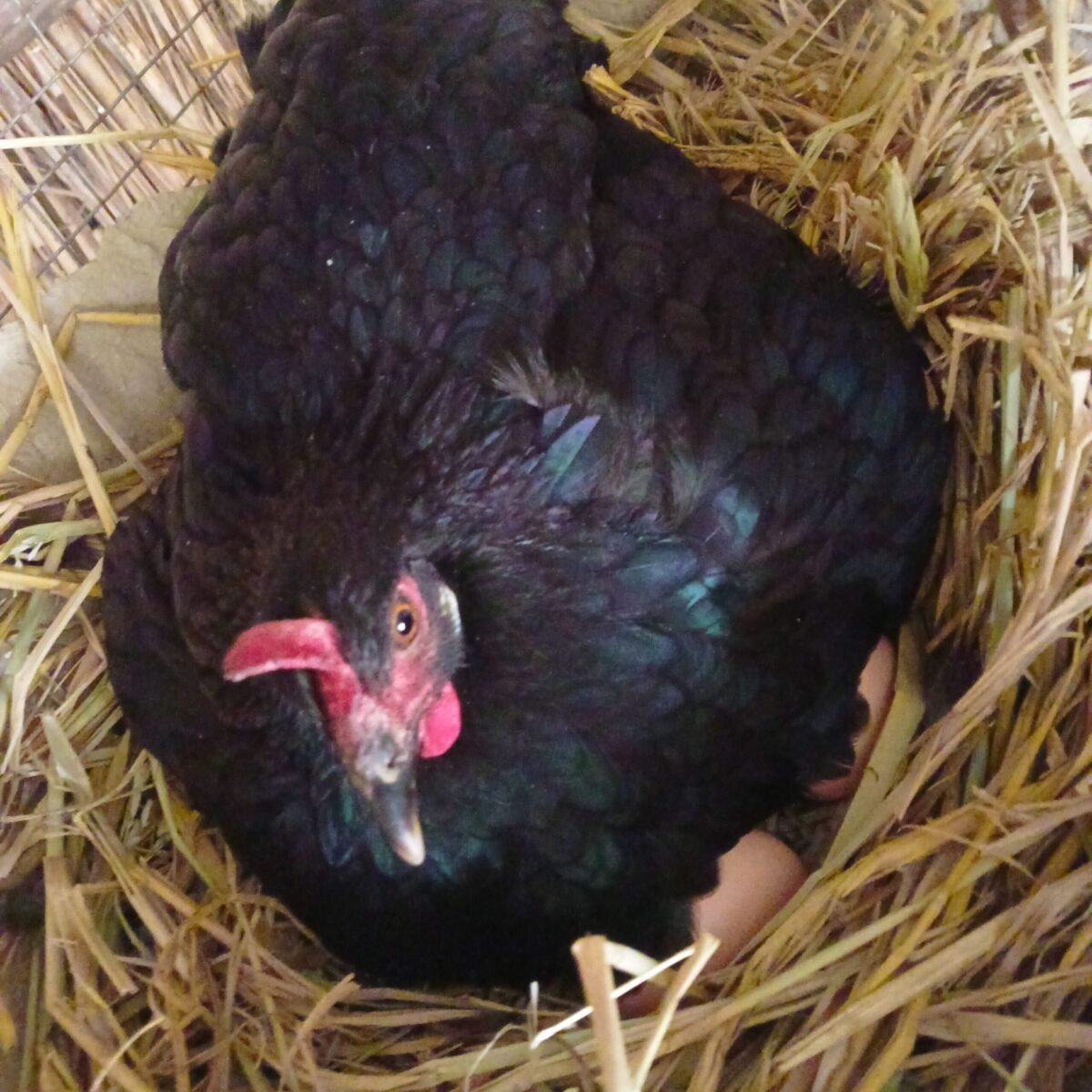
After laying a clutch of eggs, hens become broody, developing an irresistible urge to hatch their eggs.
Then, they start sitting on eggs in their nest box the whole day and night. They leave their nest for only a few moments for food and water.
Broody hens also steal eggs from other nests nearby if they feel their clutch of eggs is not full.
You don’t have to do anything when they sit on their eggs. Only felicitate them.
How to Hatch Eggs with a Broody Hen
Choose Fertile Eggs
The average hen can hold around 11 or 12 eggs, depending on their size, and so is the bantam. But if you place a large egg under her, they can end up covering only a few eggs.
And if there is a large hen, she may take 12-15 eggs at a time.
I always find myself placing large eggs under my broody hens. The larger the eggs, the bigger the chicks, and the bigger the chickens will be.
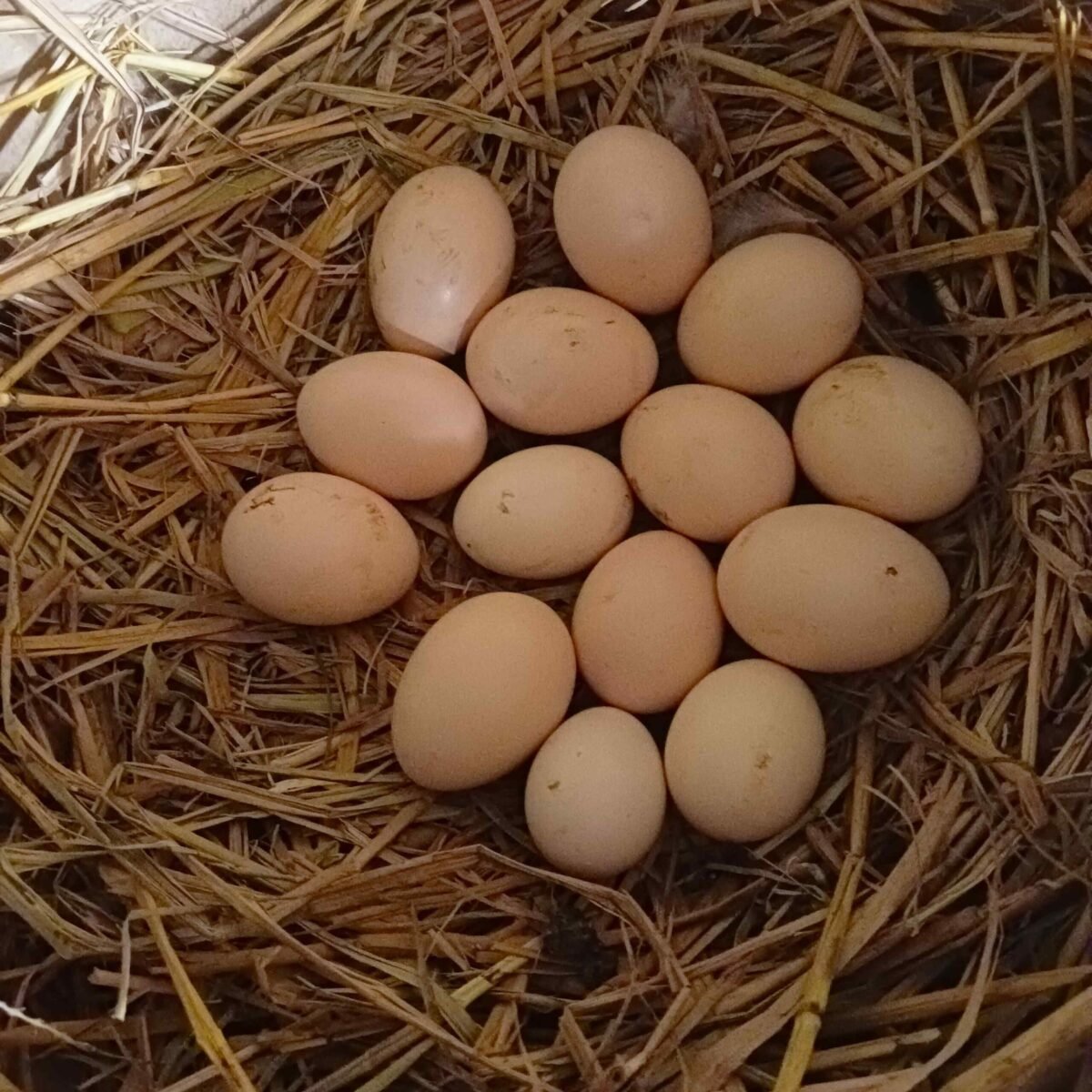
Prepare a Safe Nest Box
Broody ladies require their own private, comfortable, undisturbed, and predator-proof place to warm their eggs.
The wise breeders often provide them with dedicated coops or broody pens for the same purpose.
Place soft materials such as straw, wood shavings, or clothes so that the eggs remain unbroken. These materials also help hens to trap warmth.
Give Maternity Ward If You Can
After laying eggs, hens are more glued to their clutch of eggs and don’t want to move anywhere else. There is not much space for hens to live in all the time.
Feeder, water, and other arrangements, including a chicken dust bath, are not possible in the small box or in the higher nests.
Though they don’t complain about it, you need to move their nest to the maternity ward.
The birds may resist moving, so you need to transfer their location at night.
Provide Food and Water
Broody birds won’t consume much. They eat 80% less feed than usual. While laying, they may need calcium-rich feed for eggshells, but hens don’t need it anymore when sitting on their eggs.
I often give my ladies chick starter, which is high in protein.
Besides, you can feed them scratch for its high-carbohydrate content.
Keep the feeder and waterer close to their nest so they don’t feel the need to move away. This way, they remain full and healthy.
Keep Nest Dry and Safe
Your job is also to keep the chicken nest clean and dry. If the eggs have bacteria, these could develop into useless embryos and rotten eggs.
Remove broken eggs, clean the hen litter, and dirt from the nest.
You can do it when ladies leave their nest to eat, drink, poop, or take a dust bath.
Candle the Eggs
Check the eggs to see whether an embryo is developing. You need to remove eggs without developing embryos, and also the eggs with embryos that have already wasted.
Use a torch on eggs in the dark so that chickens cannot see it, and you can have better visibility.
I always candle eggs every 7-10 days. If the embryo has not developed for 17 days, that egg should be removed.
After 18 days, eggs are assumed to be in the hatching stage. You can check the eggs at 17 days to confirm the embryo and whether the chicken will hatch it.
Do a sniff test. If the eggs are rotten, they stink. And if the rotten egg is broken, you cannot bear the odor.
Let the Hen Hatch Eggs
It takes 3 weeks or 18-21 days for broody hens to hatch eggs. But sometimes, it can extend up to 24 days.
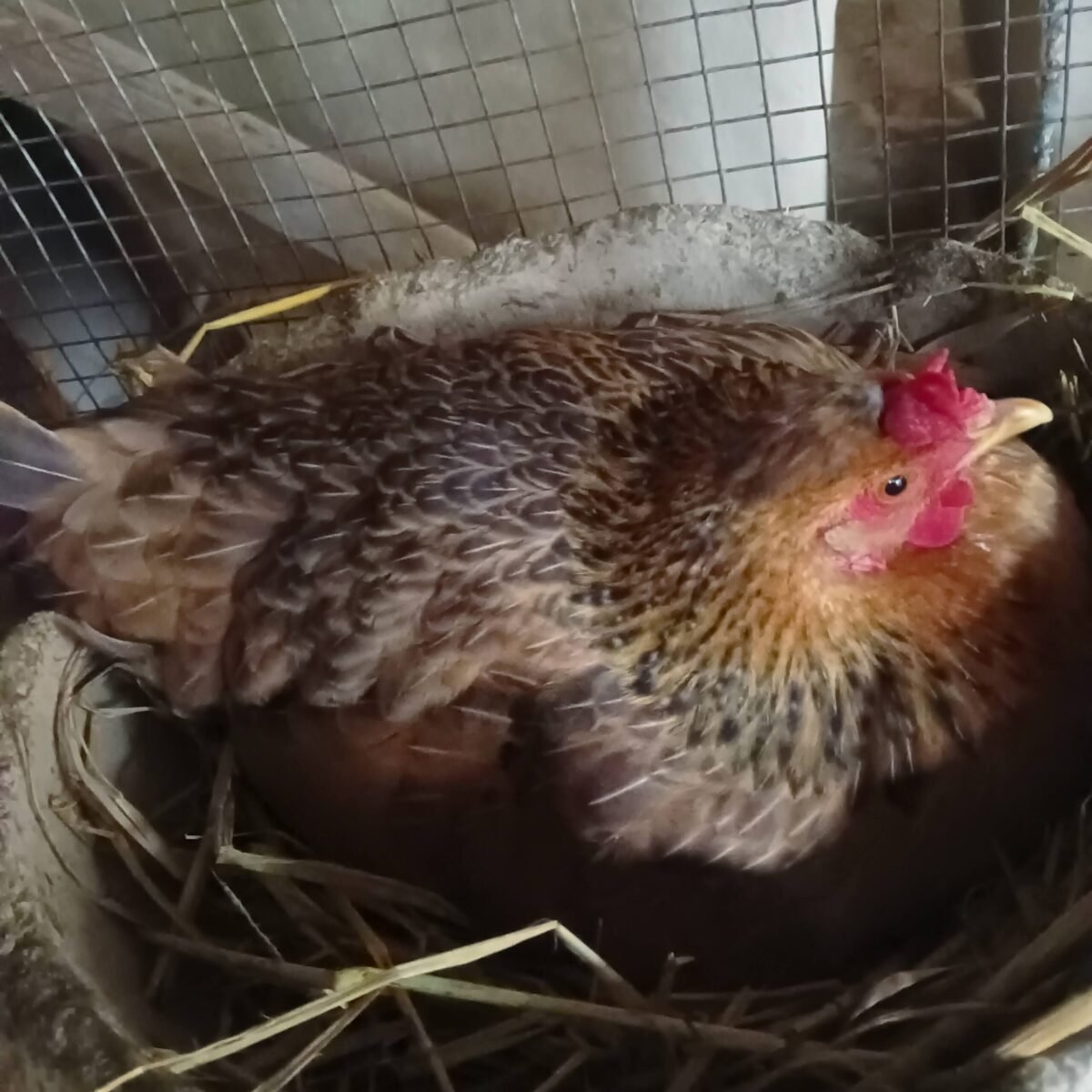
You will hear the newly hatched chicks peeping or chirping in the nest under their mothers.
They live without food or water until all the eggs have hatched. So, it can take a whole day ot two sometimes.
I’m surprised that new little birds can survive such a lengthy time.
If a hen leaves an egg without hatching, but it has a chick, confirm it by listening for a cheeping sound and dented cracks on the egg.
In such a case, help yourself by cracking open the eggs and placing them under the hen’s feathers. This helps dry the later-hatched chicks.
Feed Mom Hen and Chicks
After hatching eggs, you can either let a mother hen raise her babies or raise the chicks in the brooder and free the hen.
But she won’t leave her chicks without her protection.
So, provide chick starter, and the mother hen will teach the chicks to eat and drink. Don’t feed special treats; feed only the prepared chick starter.
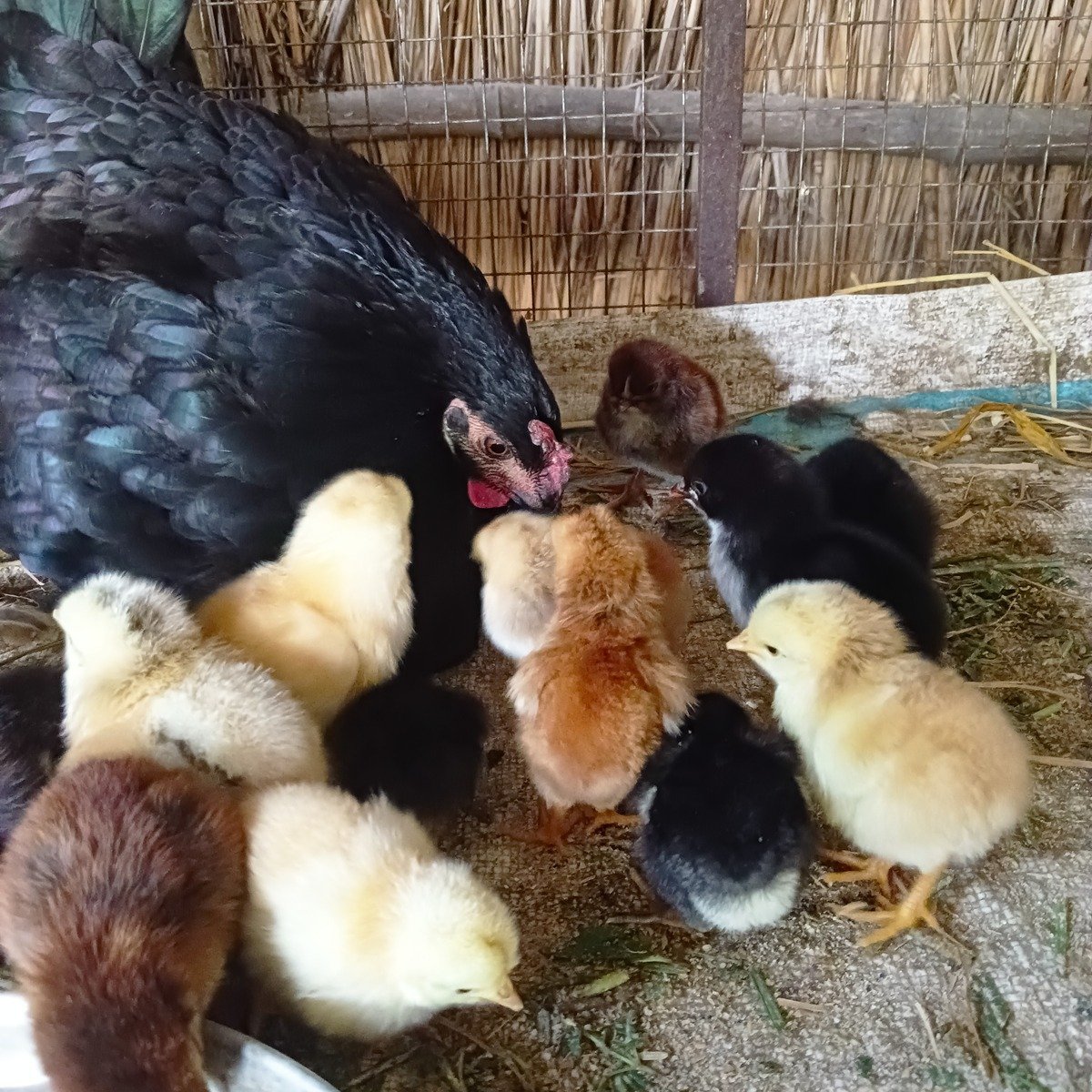
It takes a few weeks for hens to raise their chicks. Then they can easily leave their chicks and return to normal flock life.
You can expect the ladies to take one month after hatching to get ready for laying eggs. So, they need layer feed after a few weeks of hatching.
I think they start laying eggs from the 5th week.
Method 2: Use Handmade Hatching Box
This is not natural, but you can use this method if you lack broody hens and a store-bought incubator.
It’s an insulated box, which mimics the environment a real incubator provides.
Since the box is not ready-made, you need to DIY it yourself. For this, you may need some electrical skills.
Don’t try this method if you lack fundamental knowledge and expertise in an electrician’s job!
What You’ll Need
- Box or container (Fish tank, foam container, or anything that can endure high humidity and warmth)
- Heat source (lamp, filament bulb, warm water bottles)
- Thermometer and hygrometer
- Soft bedding (hay, wood shavings, cloth)
- DC Fans
- Temperature Controller
Step-by-Step Process to Set Up an Insulated Box
- Take a container and check for cracks or holes. You can block it with wide masking tape.
- Make holes for the fan and light holders. (You can also insert these devices without poking the holes if you have other ideas.) You can place two in each holder for a small number of eggs. But if you want to hatch 50-100 eggs, you will need 2 holders for bulbs and 2 for fans. I often use 3 fans for 100 eggs, by the way.
- Place the holders in the box and insert the fans and bulbs attached with wires. I’m sure you would find some ways to direct the wires to the electricity source.
- Add a water bowl or a damp cloth to the box. Actually, you need to make space for eggs, water bowls, or other devices.
- Now, you can attach the temperature controller outside the box so that you can easily monitor and operate it.
- Once everything is done with the device, check that it is functioning properly.
- Spread bedding materials over there where you place the eggs.
- Then, cover the box with the lid. You can also cut a hole there to install a fan or a peephole to monitor the inside from outside without opening the lid.
How to Hatch Eggs
All you need to do is provide heat and humidity indoors so that the eggs stay warm consistently until they hatch.
Start by placing the fertile eggs. Also, before placing, mark the eggs with a sign (such as a cross).
Now, you need to turn on the device’s power supply. This supply should be regular for 21 days.
Maintain or set the temperature at 99.5°F (37.5°C) for 21 days. And humidity should be 45-55% for the first 18 days.
Turn eggs 2-5 times daily. You can learn the side to turn next by the mark.
Actively use a thermometer and a hygrometer to monitor the environment.
You need to increase the humidity to 65-70% for days 19th to the 21st. From day 21, you can see some chicks popping out of the eggshells.
Final Thoughts
Well, I have found my broody hens having a more than 90% success rate in hatching eggs, with barely 1 or 2 eggs left unhatched.
But they also trample one or two if they have finished hatching all.
The insulated box also works fine and helps hatching eggs without hens, so that your hens don’t need to starve for weeks.



Leave a Reply