
Do you know that blue chickens are only the result of a genetic dilution of black color?
They look beautiful with their slate-blue, slate-gray, and lavender feathers. Due to their rare genetics, they appear strikingly different than other flocks.
If you want to raise blue-feathered chicken breeds, here is a list, and from there, you can choose one or many for your backyard.
1. Blue Andalusian
Andaluians are medium-sized birds that look bluish-gray.
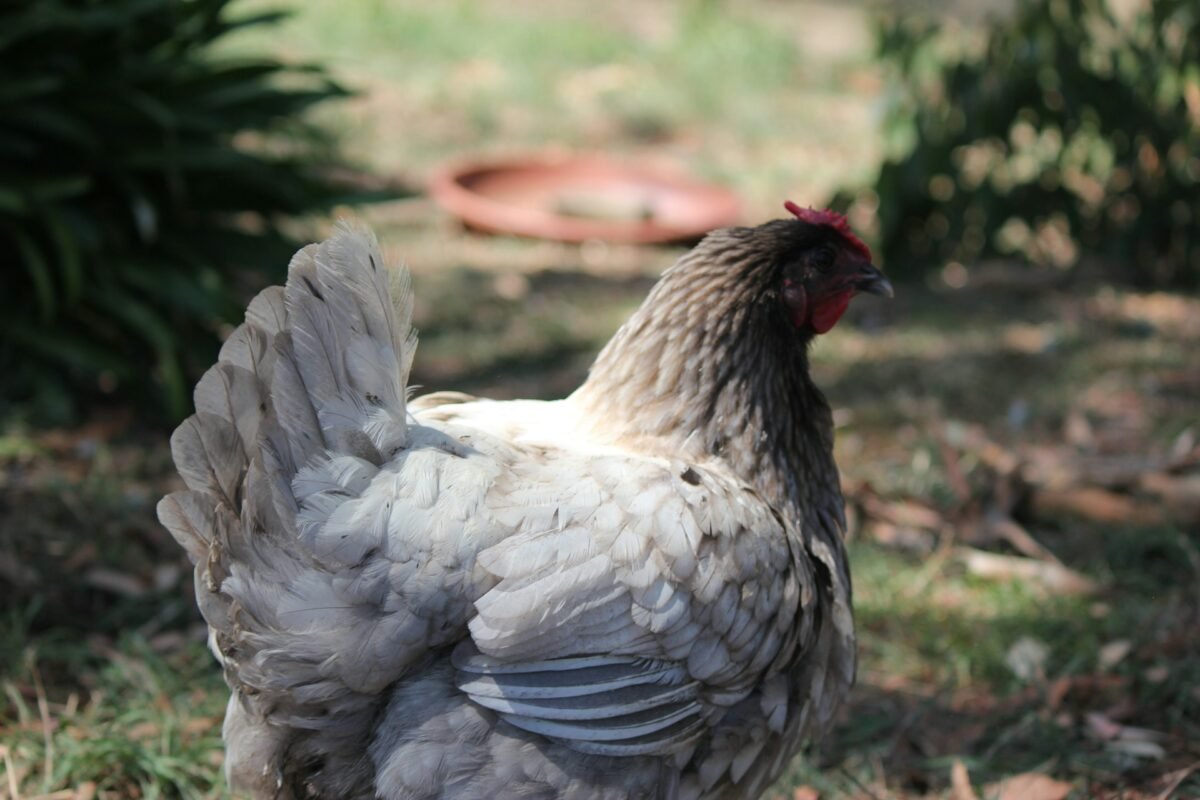
They boast darker blue feathers from the head down the whole neck. Then the rest of their bodies have blue or ash-colored feathers.
It is not a solid blue color, but you can tell it looks laced in blue. I mean, their plumage is outlined by a darker shade of blue.
You can also see some darker bluish color sparingly.
They also highlight a single comb and white, almond-shaped earlobes. Their legs and feet are black, and their skin is white.
Andalusians are slim and have visible tails on both roosters and hens.
2. Blue Orpington
Blue Orpingtons look similar to blue Andaluians, but you can easily identify them by their size and structure.
They are large birds with rounded bodies and fluffy feathers.
These birds boast slate-blue to charcoal-gray plumage. Also, they have broad frames, deep chests, and lots of dense feathers.
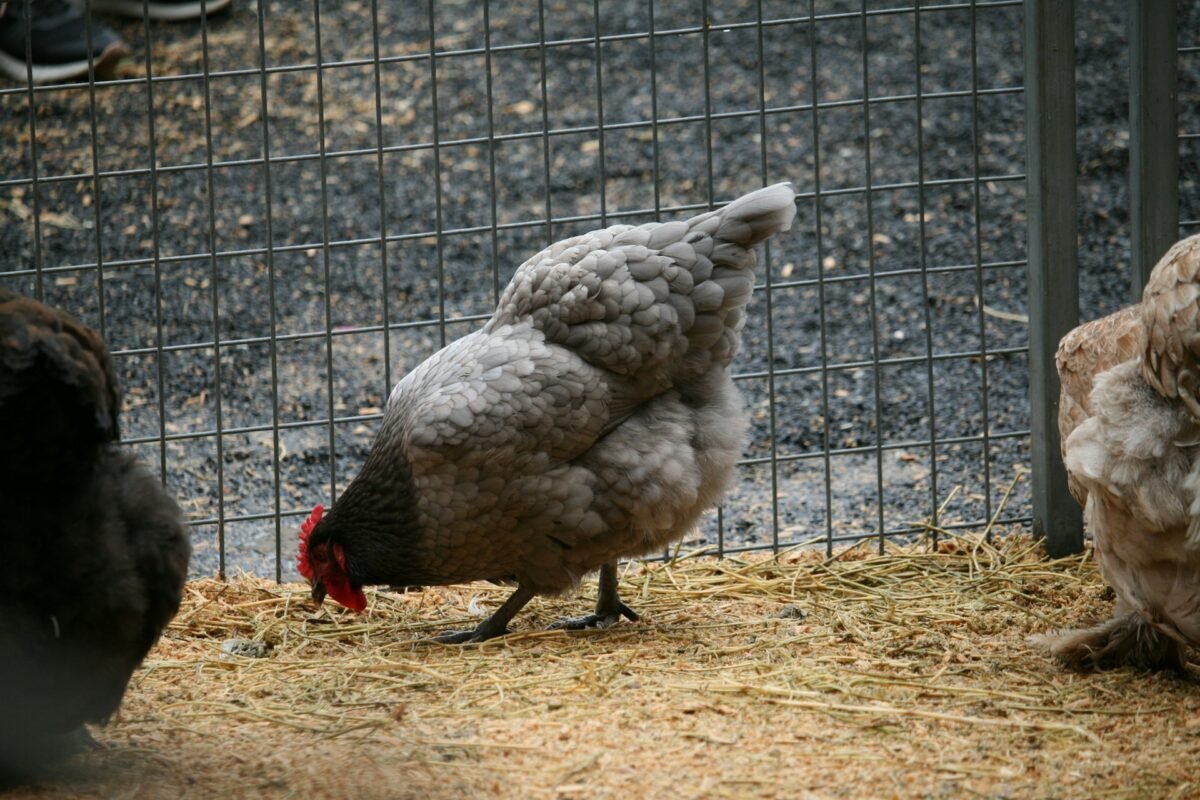
The signature clue is that they have short tails; even roosters have short or thin saddles.
While roosters have darker, laced plumage from the head and neck to the shoulders, they also have blue down feathers.
But hens have blue feathers all over their body except the head and neck, which are darker blue.
3. Blue Plymouth Rock
Blue Plymouth Rocks are hybrid chickens, so they look different from bird to bird.
Hens boast attractive blue-gray plumage, with darker blue feathers on their head and neck.
As they are known for barred feathers, they also have a batting pattern or a lighter shade of plumage, sometimes lavender.
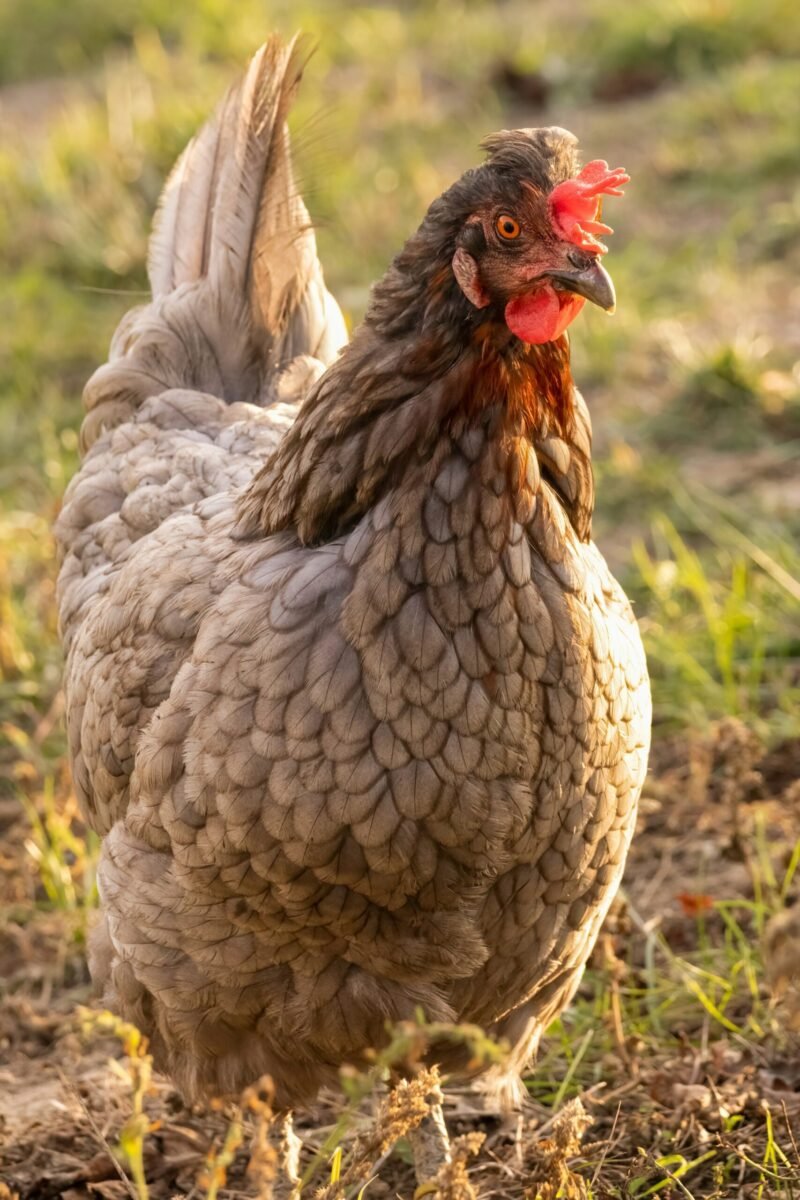
While roosters also have plumage similar to hens, their feathers are darker blue with more visible barring.
I think they show more contrast in their plumage than their counterparts do. You can also see their large tails with sickle-shaped feathers.
Besides, they are heritage chickens and lay light brown eggs.
4. Blue Australorp
Blue australops are giant-sized birds in various shapes, including round, boxy, and V-shaped.
Their plumage ranges from light steel tones to deeper charcoal. With their darker lacking, they show a unique outline to their plumage.
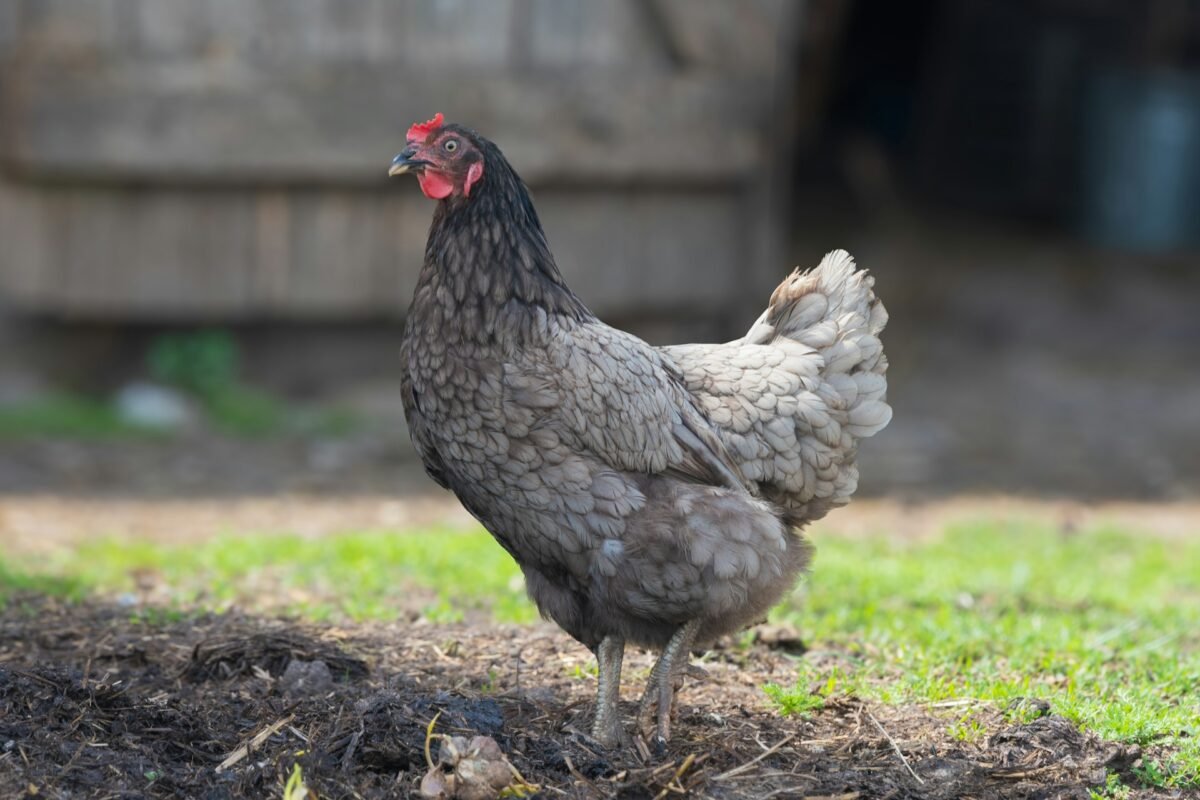
Roosters have more pronounced blue plumage than hens, and they have a regular plumage pattern.
For example, they have dark plumage on the head, neck, and shoulders, and on the top of the tail. And light-blue feathers on the lower parts.
But ladies have irregular color patterns. Sometimes, they have dark-colored feathers on the top of their bodies and light-colored feathers on the bottom of their bodies.
And other times, they have all light blue feathers all over their body except the head and neck, which are darker colored feathers.
I love that the ladies produce a large number of eggs, with a yield of more than 250 per year.
5. Blue Cochin
I also love these big fat chickens.
Blue Cochin is a stocky bird with a short tail. But they are more known for their plumage.
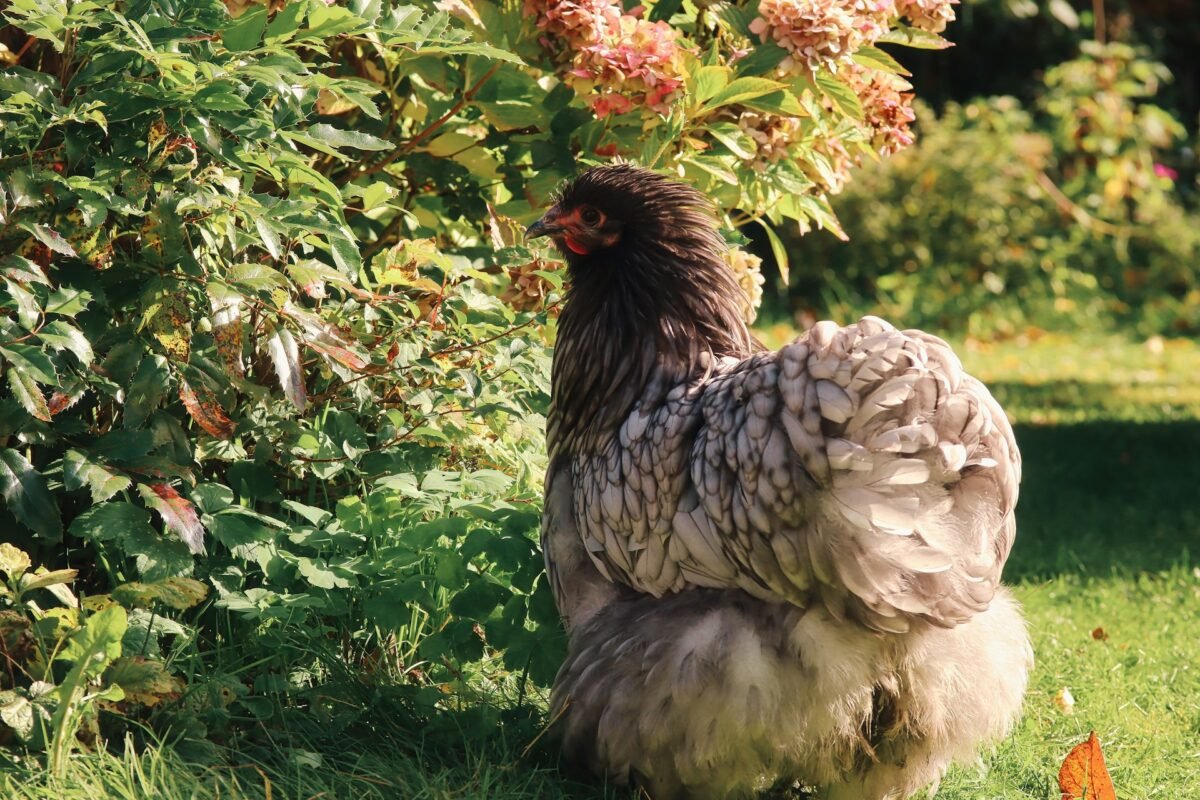
When standing in the grass, they look like a ball of feathers.
They have a blue-grayish color and dense feathers covering their bodies from head to toe, including their shanks and feet.
You can only see a comb and waddle in a rooster. But both males and females have sharp spurs on their legs.
I find that Cochins are quiet, noiseless birds that rarely crow or cluck compared to other chicken breeds.
Though they don’t lay many eggs, they can hatch other eggs at a high success rate.
6. Blue Wyandotte
These chickens look shiny, uniform, and soft with their silvery-grey-blue plumage.
Blue Wyandottes have a shady, solid coloration and a few fine lacing patterns. You can have plain blue Wyandottes, blue laced Wyandottes, or blue laced red Wyandottes in this category.
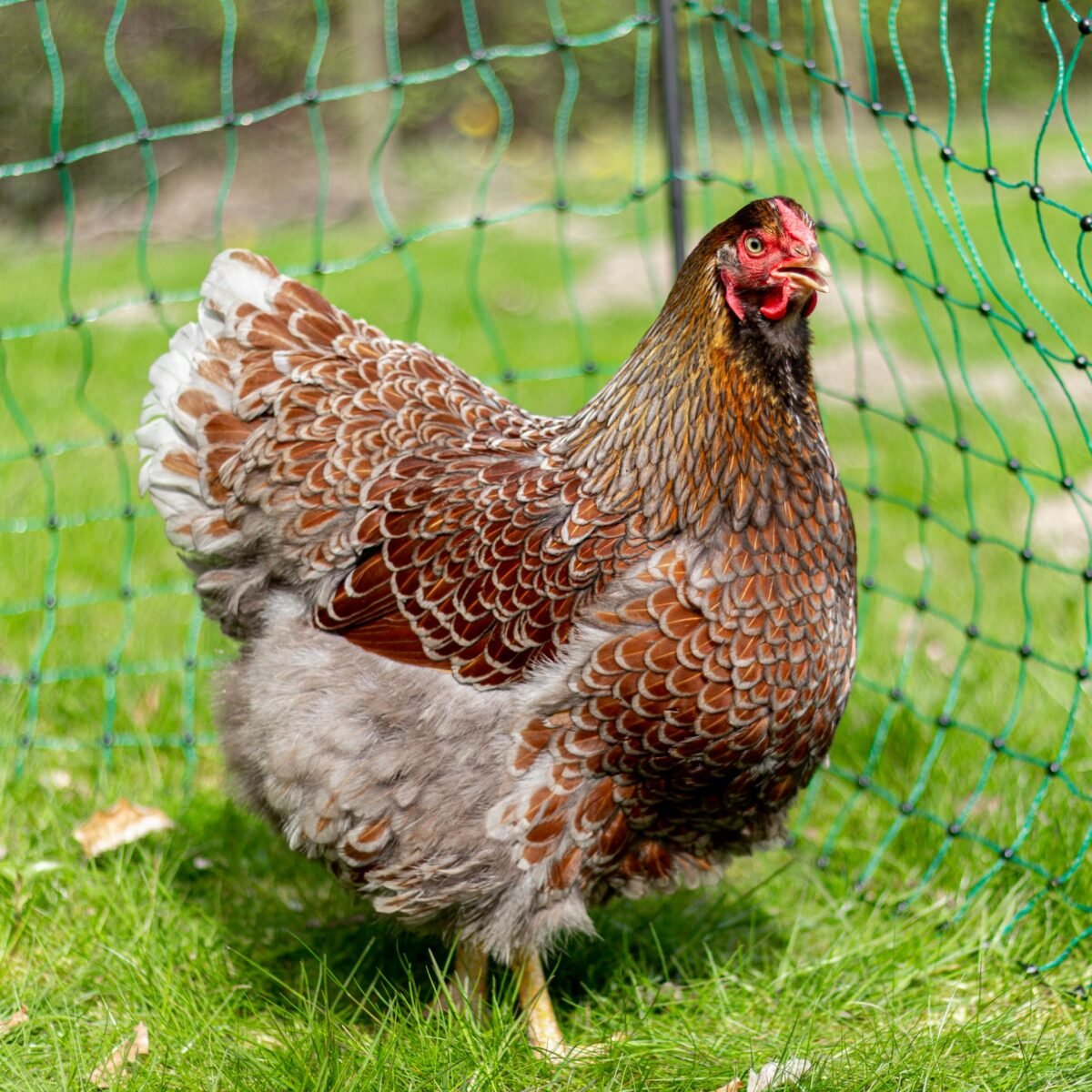
These chickens have an iconic rose comb, a low, round head, and a stocky body. You can also tell them by their yellow legs, golden beak, and red earlobes.
I like birds with orange plumage on the upper body and blue feathers on the underside.
7. Blue Leghorn Bantam
Blue Leghorn bantams are slender and short-tailed birds.
As their combs and wattles are large, roosters look like small, active birds with large heads. While roosters have large combs, hens boast double-folded combs.
Both birds possess straight tails, with roosters lacking sickle-like feathers.
You can tell them by their yellow beaks and legs and their white earlobes.
8. Blue Jersey Giant
Like their black counterparts, Blue Jersey Giants are large birds with a V-shape or a stocky build.
So you need a large space for these big birds.
Roosters have long, lustrous, dark, and cascading feathers on the upper parts, including heads, neck, and shoulders, and wings.
On the other hand, hens have uniform blue-grayish plumage all over except the head and neck, which have a bit darker feathers.
The birds also have subtly laced feathers and dark willow or black legs.
9. Blue Araucana
Blue Araucanas are among the best chickens for laying colored eggs. These birds lay blue eggs.
Another unique characteristic is that they are rumpless, meaning they lack a tail and tailbone.
But they are notable for their ear tufts. You can witness feathers on each side of their faces or a small skin flap near their ears.
They also have a tuft on their head and a beard, which makes them look like a head with only a beak and shaded eyes. But they have better visibility than silkie bantams.
10. Blue Ameraucana
Blue Ameraucanas also look like Blue Araucanas, but they have proper tails.
Though they don’t have tufts, they are full of hair on their face, so they have muffs and beards, which make them look like owls.
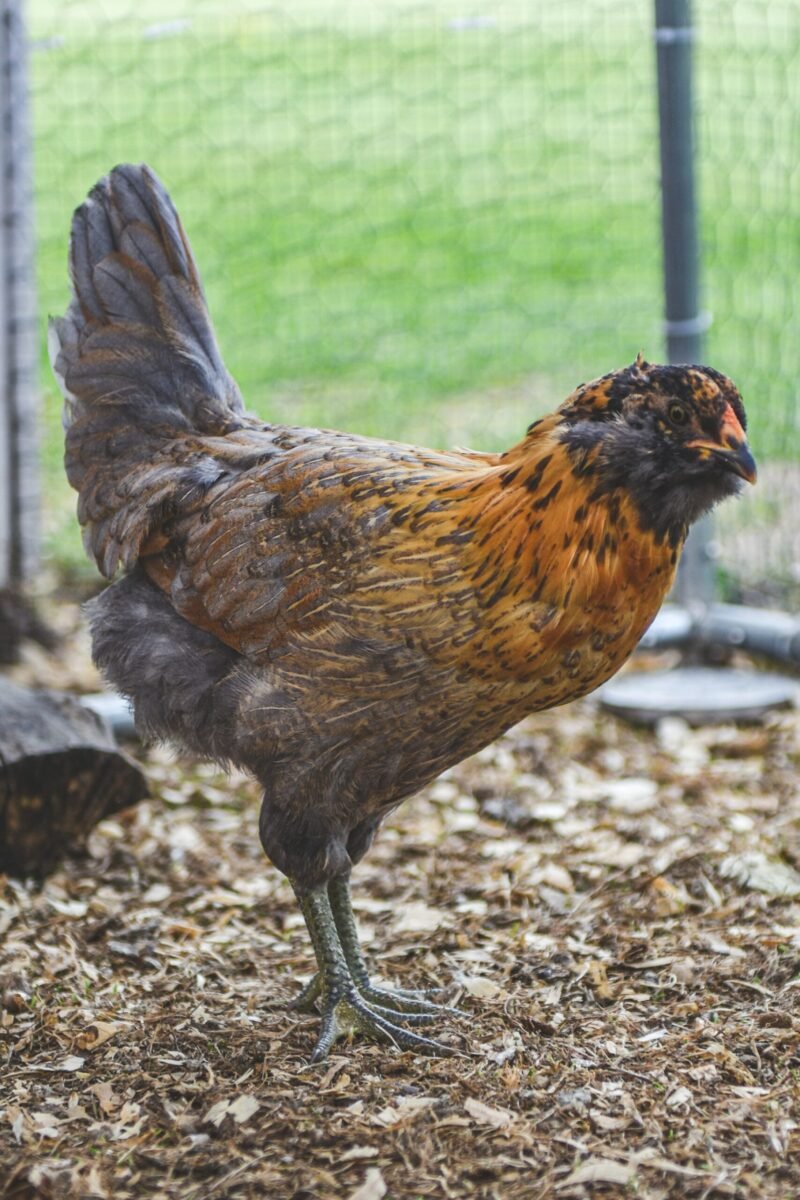
While males have darker upperparts, females have uniform blue slate plumage throughout.
These birds also have a small, three-rowed pea comb and black legs.
11. Blue Easter Egger
Easter Eggers are mixed breed, which can be any color.
When you pick up blue birds, you can find different birds in the same shade.
These chickens are plain slate blue, blue, dark blue, or blue pied (especially in the case of a rooster).
Blue Easter Eggers are muffed and bearded, mimicking Blue Ameraucanas.
They also have a pea comb, small wattles, and gray, yellow, or dark greenish legs.
12. Blue Copper Marans
Blue Copper Marans are one of the chicken breeds that lay rainbow eggs.
These birds are the result of crossing Splash Copper and a Black Copper Marans.
They are slate-blue birds, but can range from light to dark blue, with copper on their necks. You can expect the body to have black lacing.
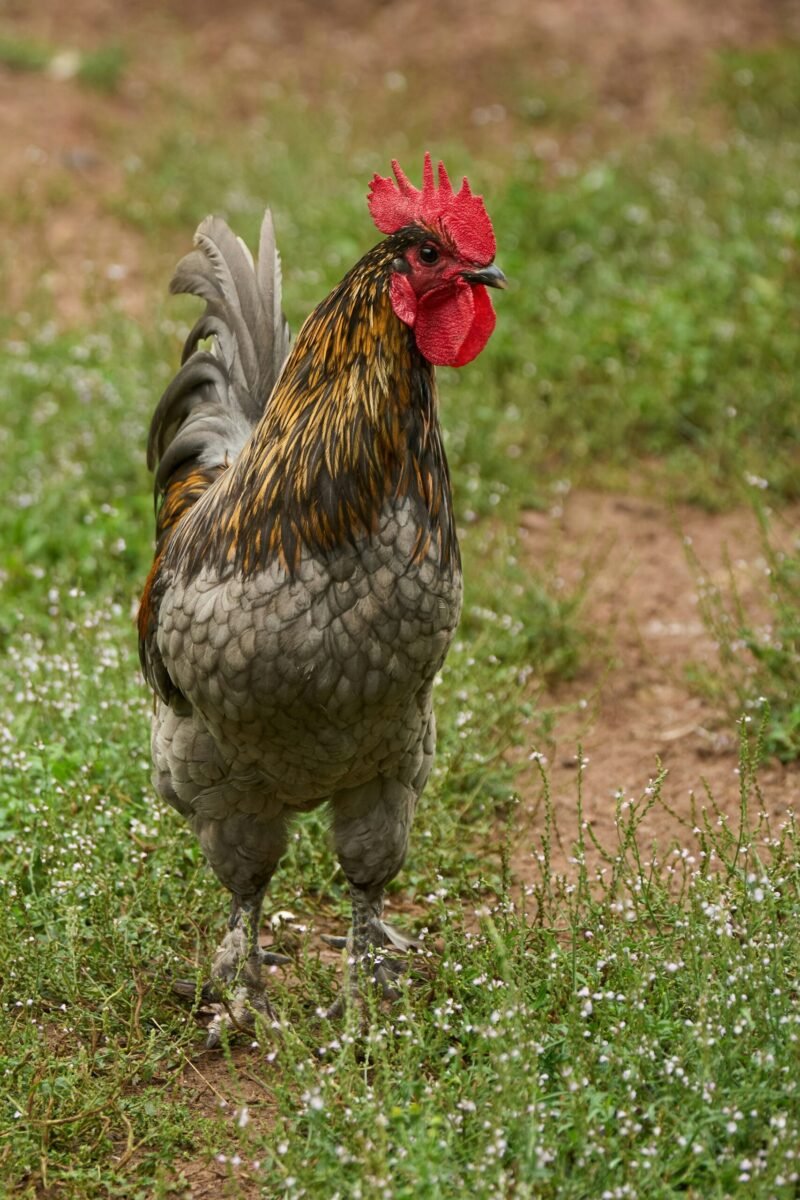
Besides, you can identify these birds by the feathers on their legs. Their beak and legs are also rusted black.
13. Blue Langshan
Blue Langshans are tall and elegant birds with a U-shaped body.
If you want quiet and calm birds, this is the perfect breed, which also lays brown eggs.
You can tell them by their feathered legs and small single combs. They have bluish slate shanks and feet.
Roosters have more tail feathers than other breeds, giving their tails a denser appearance.
14. Blue Polish
Blue Polishes are bantam chickens with a heavy crest resembling a feathered cap.
By the way, their crest ranges from white to bluish gray, or a mix of both.
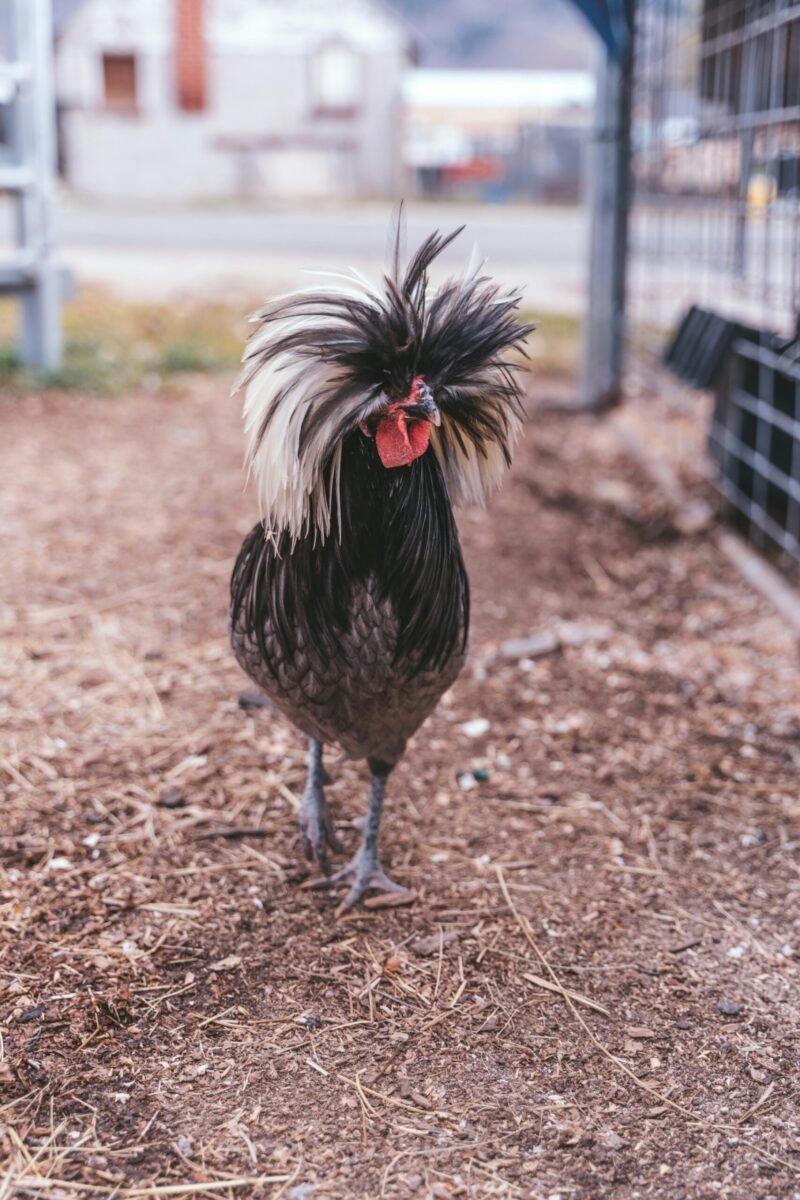
They have a V-shape comb and small earlobes and wattles, which are rarely visible due to the heavy tuft.
These birds are skittish, so you need to take good care of them.
15. Blue Silkie
Blue Silkies are known for their fluffy, hair-like feathers. This is because they lack barbicels, which give them a soft, silk-like texture, hence the name.
Unique of all, Silkie chickens have black skin and bones. They also possess small red combs and wattles and dark blue earlobes, which are covered by dense feathers.
Actually, Silkies are heavily feathered from head to toe. So, they look like a ball of silkie feathers.
Though they are poor layers, they can go broody and become great for hatching other eggs.
Final Thoughts
Many blue chicken breeds are very similar in feather appearance, but you can differentiate them by their body size and visible parts.
Besides, I want to tell you that blue gene doesn’t guarantee true breeding, so you should expect color variation to be very common.
A few blue parents can even hatch black or splash chicks.

Leave a Reply