
Unlike others, dairy cows mean lots of milk from large animals, and at least two milkings a day.
While raising cows, you also get dairy products and the calves (which turn into either bulls for meat or cows for additional milk or profit) after breeding.
If you have already prepared a pasture or stable for new milk-producing livestock, consider the following dairy cow breeds to get started.
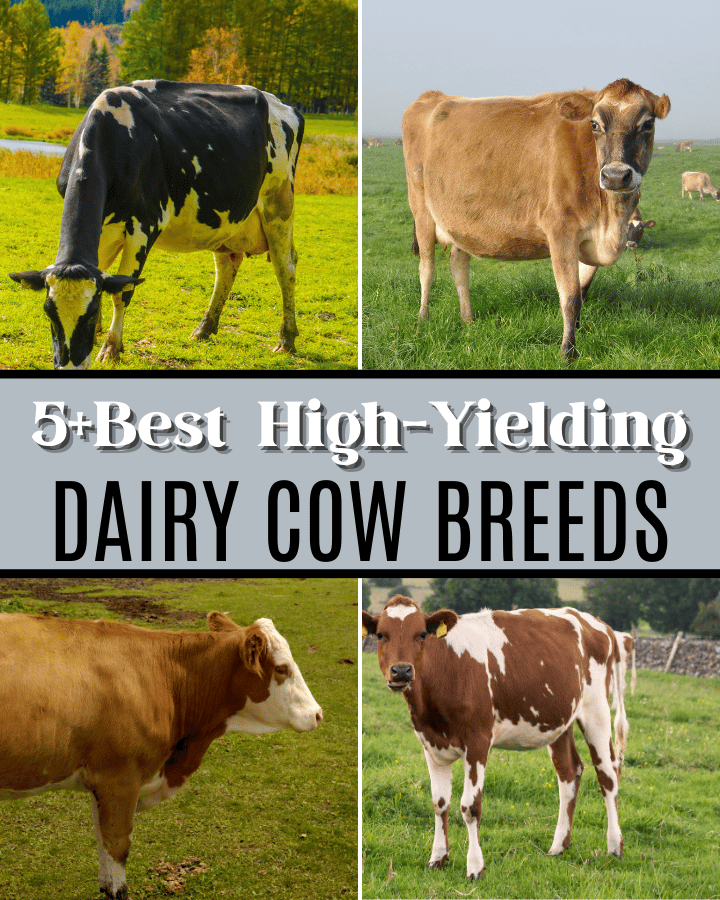
1. Holstein Cow
This is a Dutch cow breed, originating in the 1850s, and mostly comes from the provinces of North Holland, Friesland, and Schleswig-Holstein, in northern Germany, and hence the name Holstein.
Farmers and breeders also call it Holstein-Friesian, and it was brought to America in 1631.
Do you know Holstein is known as the queen of milk?
They have the largest milk production capacity, with 17408 lbs of milk, 632 lbs of butterfat, and 550 lbs of protein annually. You will shower with milk if you have this cow.
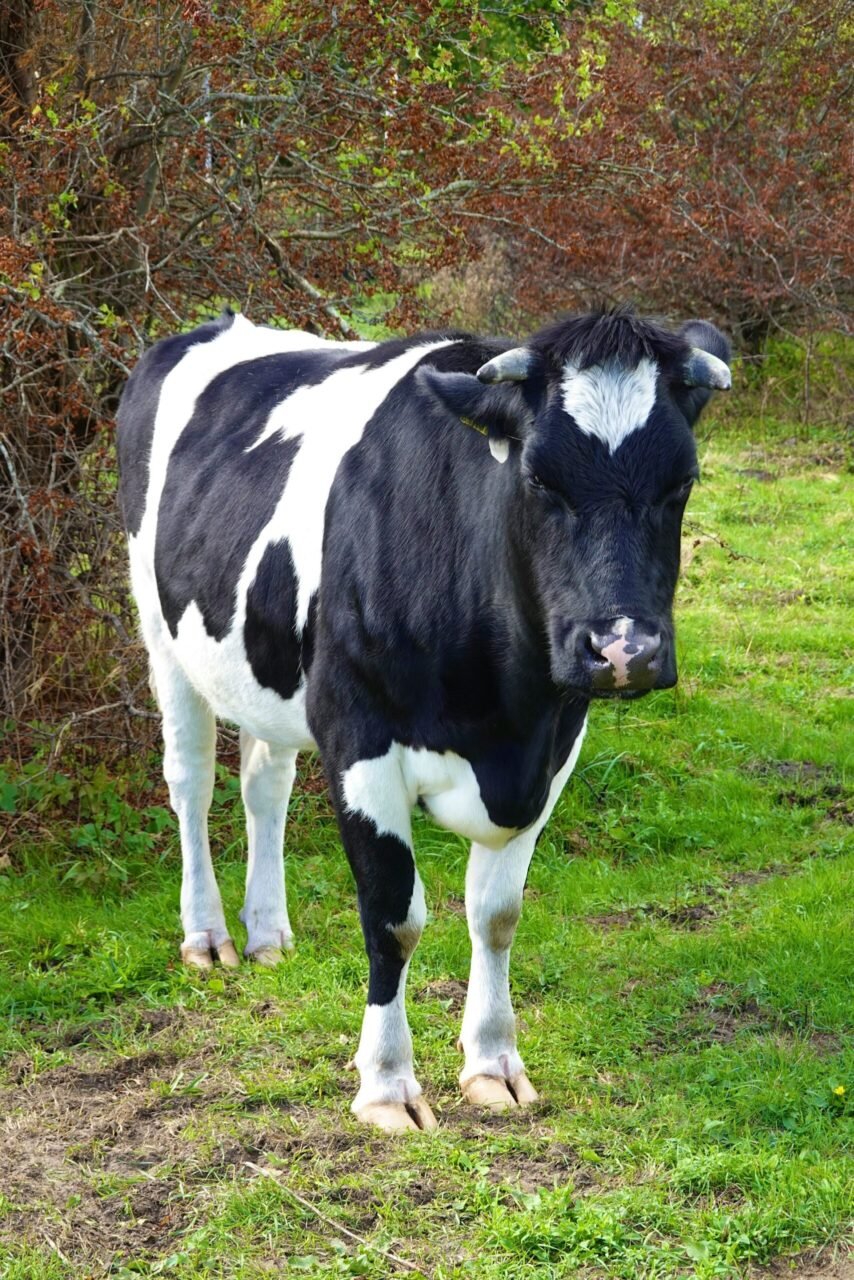
You can tell Holsteins by their 2 coat types. The most common is black-and-white spotted (dominant gene), while the rarer one has red-and-white spots (recessive gene).
Adult cows stand 57-65 inches at the shoulder and weigh 1500 lbs. But the bulls are taller and weigh up to 2500 lbs.
Anyway, expect a cow weighing 800 lbs at 15 months of age and first calvings from them between 24 and 27 months of age.
Their healthy calves weigh 90 lbs, and their gestation period extends to 9 months and can be productive for as long as 6 years.
Pros:
Holstein calves grow faster and mature early. They are large animals with a mild temperament, easy to handle and care for.
You can expect them to be resistant to stress and show a herd or non-solitary nature. If you manage them well, they don’t show any fertility issues.
They do well in all sorts of management and utilisation systems, no problem in stable and pasture land.
Also, breeders can keep Holsteins in mixed farming systems with biannual grazing or in stables throughout the year.
Cons:
The larger the cow, the bigger the responsibility. Holsteins require high maintenance because they are not resistant to heat or disease in difficult agroecological areas. They cannot make full production capacity.
But the plus point is that they have divergent adaptation abilities. When crossbred with natural breeds, they produce calves that exhibit enhanced heat tolerance and higher production.
2. Jersey Cow
Originating in the English Channel, Jersey cows are the smallest of the dairy breeds, which grow 45-47 inches taller at the shoulder and weigh around 1000 lbs, while mature bulls get 1300-1500 lbs.
They grew popular from the 1860s to the early 20th century, and then only the United States started importing these herds.
They can produce 10,000 lbs of milk per lactation, with 25% more calcium than the average. If you are in tropical regions, they would be fine to produce 4000-5000 lbs of milk per lactation.
Though smaller in size than others, Jerseys have high-quality milk with 4.84% butterfat and 3.95% protein, which is suitable for making cheese, ice cream, and butter.
You can identify these cattle by their different coat shades ranging from light brown to dark brown. They also have large and expressive eyes, a black snout, and a frontal slit.
Besides, cows may show perfect conformation to support the udder and their limbs are thin and light.
Pros:
Jersey cows are dual purpose breed (milk and meat) and can adapt in various climates and unkempt conditions. You can expect them to show resistance to moderate heat. They are docile and easy to handle and keep.
They live on a pasture and forage-based diet with a high feed conversion rate and stay longer in the herd than any other dairy breed.
Owners would find little or no calving issues in them. They also have earlier maturity, greater fertility, and a shorter calving interval.
Besides, they are less likely to be susceptible to lameness because of their black hooves, which make them very hard, and their light weight.
Cons:
They often show nervous dispositions, but don’t worry. They are also known to be easy to work with.
3. Guernsey Cow
Like Jersey, these cows also hail from the English Channel Islands, particularly from the island of Guernsey, and hence the name.
They are registered as a separate breed around the 1700s and became popular from the late 19th century and early 20th century.
Farmers began importing these cattle into the United States in 1840.
Guernseys are medium to large cattle that are between 54 and 55 inches tall at the shoulder, with cows weighing 1400 lbs. and bulls 2000 lbs.
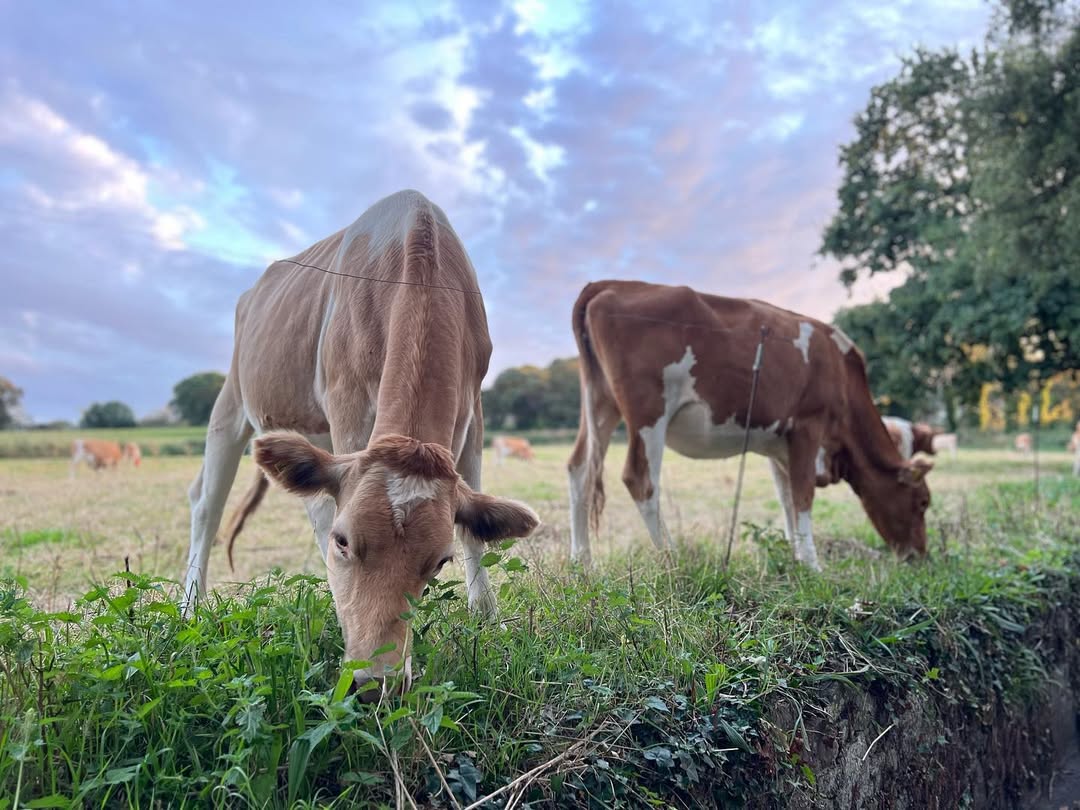
They come in various appearances, from yellow to reddish-brown with white patches. Also, they range from red and white to darker brown.
These cattle show beautiful carriage with a graceful walk. You will also notice there’s a strong back, broad loin, wide rump, and deep barrel, and a strong, attached udder that extends forward well enough.
With that, Guernseys can produce 13,200 lbs per cow per year, with 5% high milk fat and 3.7% high milk protein. Their milk is also known for its higher beta-carotene content, which gives it a distinctive golden tone.
Pros:
These cows are known for their hardiness and quiet nature, and bulls can also be handled with care. They make good mothers and protect their calves. As a social herd, they also babysit for calves from other companion cows.
They mature early and calve at 22 months of age. The cattle are also fertile and show no signs of birthing problems, with 15-year-olds giving birth.
Besides, you can expect high-quality milk production, adaptability, and longevity from cows in this breed.
Cons:
Guernseys give less milk than big milk cow breeds. Also, they are low-growing animals and are prone to heat stress.
They are not as popular as Jersey and Holstein cows, which makes them a niche market and difficult to source.
4. Brown Swiss Cow
As the name suggests, this breed derives from Braunvieh cattle, which originated in the Alpine region of Europe. I believe the
Braunvieh cows are one of the oldest and served as tri-purpose cattle. Later, Swiss Brown was developed as a dairy cow.
Anyway, they’re medium to large cattle with cows standing 54 and 61 inches at the shoulder/withers, and bulls taller at 59-65 inches.
Also, they weigh between 1000 and 1400 lbs.
You can tell them by their coat, which is in a light grayish brown, ranging from almost white to gray or dark brown. They also boast a light brown body, a creamy white muzzle, a dark nose, and dark blue eyes.
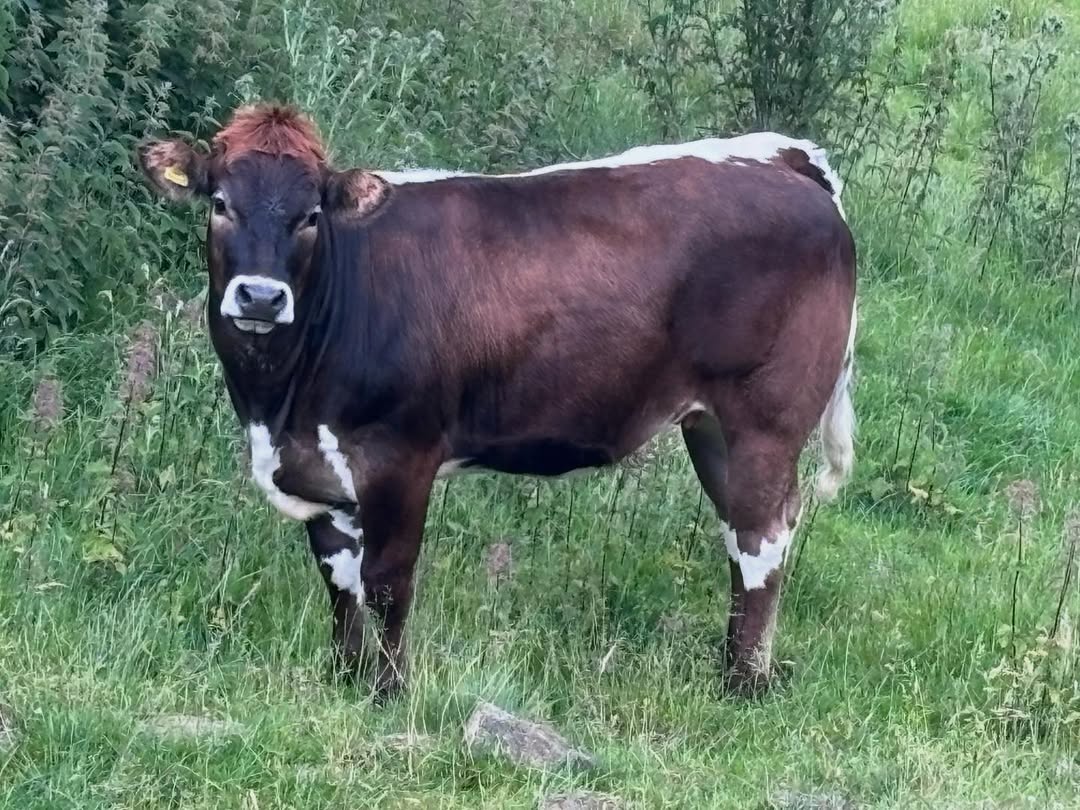
With various shades in a coat, they also have forequarters that are often darker than the legs and hindquarters. I like their well-balanced build, with proportional hooves and limbs.
They can be horned, with short horns growing dark upward, or polled.
Bred for dairy qualities, Braunvieh or Swiss Brown can yield 22600 lbs with 4% butterfat and 3.5% protein, making it ideal for dairy products, especially cheese-making.
Pros:
These cattle are hardy and can thrive in various soil and climate conditions, especially rough terrain and mountainous, cold environments. They also make prolific breeders and long-lived cows.
They can be productive as long as they are 12-15 years of age.
Cons:
I think they mature late, so you’ll need to wait about 30 months for the first calving. Sometimes they become stubborn, which can be hard for beginners to handle.
Besides, they require high feed.
5. Ayrshire Cow
Ayrshires are Scottish cows that have been popular since 1812.
They are medium-sized cattle that grow to about 49-50 inches at the shoulder and weigh 1000-1200 lbs.
You can tell these herds by their coat comes in red and white markings, with red shade ranging from orange to dark brown.
On the bulls, the mahogany shade is so dark that it shows almost black in a white background. Their making goes from almost red to all white, and spots are printed at the edges with small spaces in between and scattered all over the body.
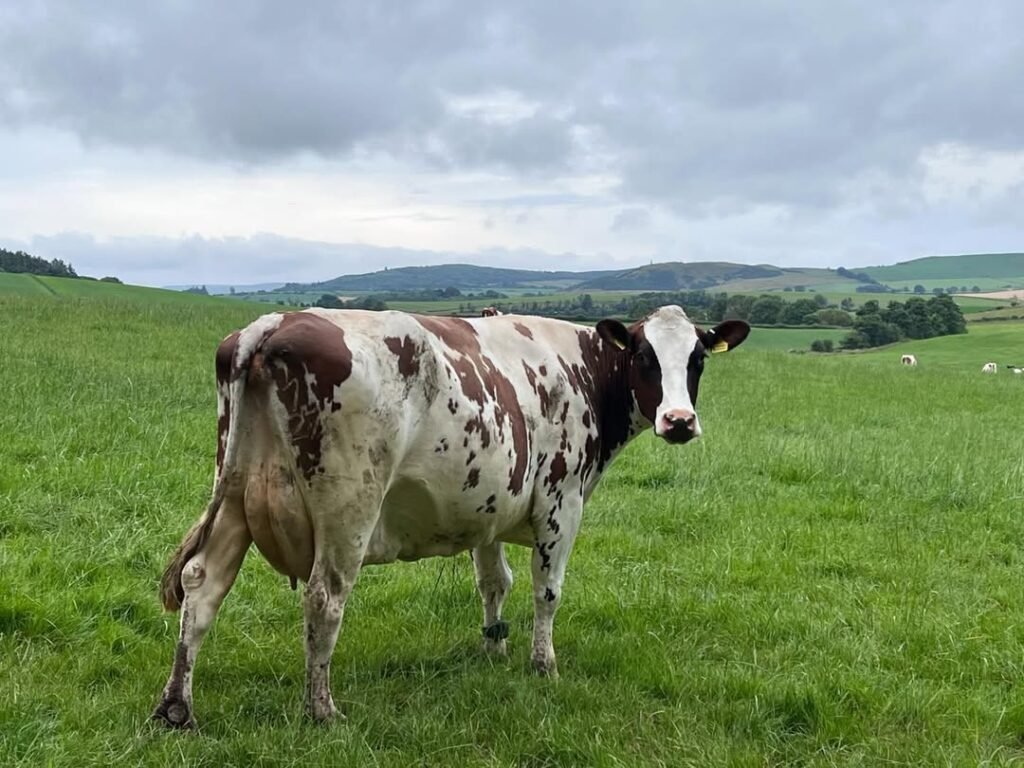
They are animals with curved horns, which are not practical, so I suggest you dehorn them.
Okay, if you raise Ayrshires on your homestead or farm, you can expect them to produce 2000 lbs of milk with a fat content of 4.13% and a protein content of 3.30%.
Pros:
Ayrshires are hardy, strong, and rugged cows that can thrive in almost all types of management systems, including group herding on dairy farms with free stalls and milking parlors.
They are alet vreed, which can also be raised in grazing pasture. As they excel in udder conformation, they won’t be prone to excessive foot and leg issues.
Besides, they are free from genetic diseases, have good longevity, and are easy to calve.
Cons:
These cattle can be strong-willed, which beginners may find hard to handle. Though they produce high-quality milk, they give less.
6. Milking Shorthorn
Shorthorns are a dual-purpose breed that originated on the coast of northeastern England in the counties of Durham, Northumberland, York, and Lincoln in the 16th century.
In particular, they belonged to the valley of the Tees River and reached the United States in 1783.
In the United Kingdom, this cow breed has four varieties such as Beef Shorthorn, the Dairy Shorthorn, the Whitebred Shorthorn, and the Northern Dairy Shorthorn. They have been bred in the United Kingdom since Roman times.
Australia has developed seven varieties of this breed, including Australian Shorthorn, Beef Shorthorn, and Dairy Shorthorn. And the United States has Milking Shorthorn, and I’m going to talk about this only.
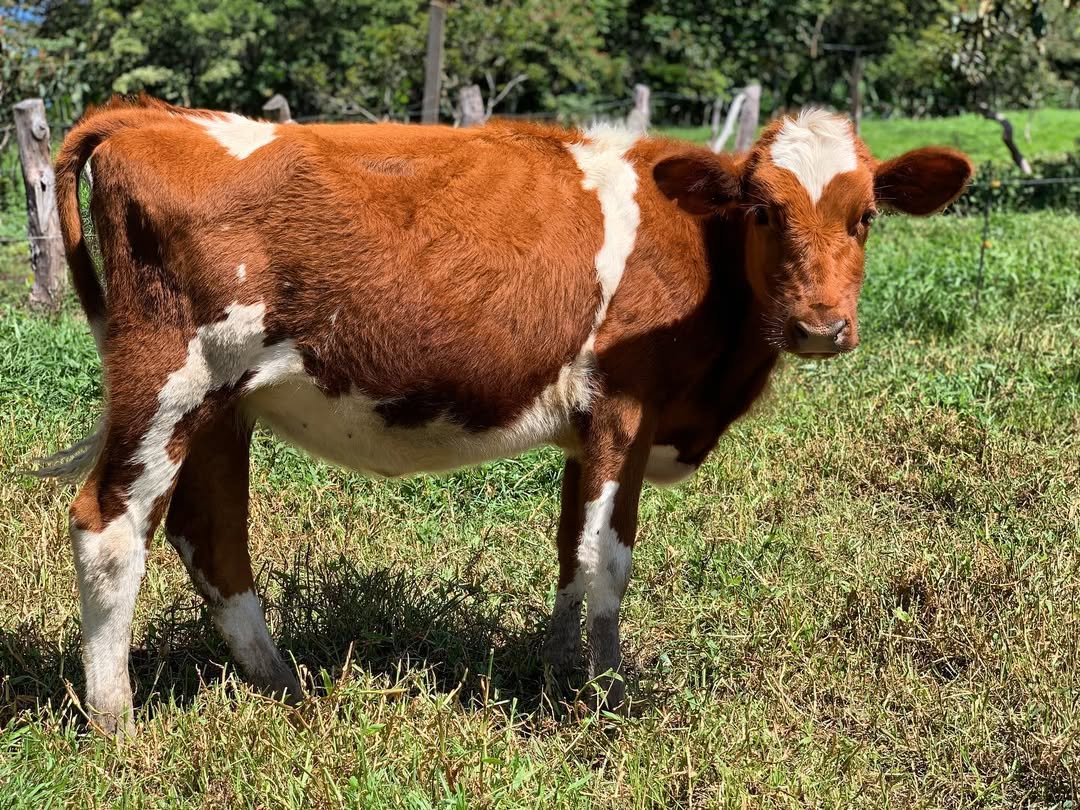
You can recognize Milking Shorthorns by their coat, which ranges from white to red, or a blend of red to white. While mature bulls weigh 1400-1800 lbs, you can expect cows between 1,200 and 1,400 lbs.
The cows are decent milk producers, yielding 15,400 lbs of milk per lactation (which extends to 305 days), with 3.8% fat and 3.5% protein.
Pros:
Shorthorns are versatile and can be used for both milk and meat. They are known for early maturity, a calm disposition, long lifespans, easy calving, and productive lives.
Besides, these cattle have efficient feed-to-milk converters and make excellent animals for cheesemaking and beef crossbreeding.
Cons:
Though they have strong heritage-breed appeal, they may develop genetic problems, so I recommend you buy one or more from a reputable breeder.
7. Dexter
Dexters are the smallest traditional milk cows, which are also called miniature cattle. Native to the southern part of Ireland, they were developed from the Kerry, an Irish dairy breed, and were selected for smaller size and improved beef quality.
These herds were first imported into the United States between 1905 and 1915.
You can tell Dexters by their color, such as solid black (mostly), red, or dun. While cows have fine horns, bulls develop horns that curve forward.
Expect the 3-year-old bull to measure 38 to 44 inches at the shoulder and weigh under 1000 lbs. The same-age cows are between 36 and 42 inches at the shoulder and weigh under 750 lbs.
Besides, Dexters come in short-legged and long-legged varieties, or the Kerry type. Both share milk and beef yield in quality.
They have a short head and a wide space between the eyes with straight sides.
The cows generate 3,000 to 4,000 lbs of milk per lactation.
Pros:
Dexters are multipurpose cattle often raised for milk and beef. Sometimes, owners keep them for novelty or ornamental purposes.
As small cows, they produce moderate milk with high butterfat. Expect 1.5 to 2.5 gallons of milk per day, with butterfat of 4 to 5 percent.
You can raise these animals in a small space, which is best for small-acreage homesteads. Don’t worry, they are also easy to handle and require less feed than bigger breeds.
Besides, they are hardy and forage-efficient. The cattle are fertile enough, and cows make good mothers.
Cons:
In my experience, dexters have lower-quality flavor and texture than other breeds. Most often, if they are short-legged type.
8. Dutch Belted
This is an American breed derived from the Lakenvelder of Germany and the Netherlands. They were first imported into the United States in 1838.
I see Dutch belts as the classic triple-wedge shape of dairy cows. You can also tell them by their body with the straight top line, deep middle, extended wide rump, and nice spring rib.
As the name suggests, the Dutch Belted, or Dutch Belt, has a white coat on the middle of the body, extending from the shoulders to the hip bones.
This should encircle the entire body, from top to bottom.
Apart from white in the middle, cattle have a similar solid color in the front and back, including on their legs.
They can be black or red. These cattle have long horns with slight curves at the tips.
Besides, they have a broad head that is long and somewhat dished.
While bulls are 1350-2000 lbs, cows weigh 900-1500 lbs. The cows have an excellent milk yield of 20,000 lbs.
Then, their milk is rich in butterfat, at 3.5-5.5 percent, making it ideal for daily consumption.
Pros:
Dutch Belted cattle are small-boned animals, which makes them easy for mothers to calve. They are fertile and produce a high beef yield.
Also, cattle are smart and friendly, and make a good choice for beginners and family-owned farms.
They are excellent grazers and foragers, so they make nice grass-fed animals.
On top of that, they are also hardy and disease-resistant, which makes them live longer.
Cons:
Dutch Belted cattle are not a commercial breed but an endangered breed.
9. Randall Lineback
Another American breed is Randall Lineback, or Randall, which results from the crossing of Dutch, Swedish, English, and French breeds.
I think they are the oldest cattle breeds in the United States, with origins among the Pilgrim Fathers.
Here, “lineback” suggests a line-back color pattern in cattle.
Randalls are blue-black in the wide frame and have a white strip above and below. You can also see roan coloring on their backs, which varies from almost black to nearly white. The visible spots appear on the black noses, ears, eye rings, feet, and teats.
Most often, animals are blue roan or speckled, but the increased number of breedings has extended the coat colors to include blue, gray, and recessive red.
Anyway, these are medium-sized, horned cattle. While bulls weigh 1000-1800 lbs, cows are 600-1100 lbs in weight.
The cows can generate milk of 5,000-10,000 lbs per year.
Remember, Randall Lineback is different than American Lineback.
Pros:
Randall Lineback is a heritage dairy breed that produces excellent butterfat for home dairy use.
Their milk test results are good, with an average butterfat of 3.7% and protein of 3.2% on a pasture-based diet.
They are calm, easy to manage, and thrive on forage.
Because of their size, they can also be used as draft animals. You can train these cattle easily.
The cows also show good nurturing ability with easy calving.
Cons:
Randall Linebacks are generally rare and need to be preserved. So, you cannot raise them for commercial purposes.
10. Normande
Normande is derived from the Normandy region of north-west France.
This breed is red-pied or speckled, and sometimes black-pied or blonde. The cattle have white heads and eyes surrounded by dark spots to mimic spectacles.
You can tell them by their white skin and dark muzzle.
They are medium-sized cattle with bulls weighing 2000-2400 lbs and cows weighing 1200-1500 lbs.
The cattle also have body depth and spring of rib, and maintain a nice body length.
You can observe the high-capacity body type of these animals, which indicates their ability to perform on high-roughage diets.
The cows average 14,000 lbs. per lactation with 4.2 percent butterfat content and 3.5 percent protein.
Pros:
This breed has high-protein milk, which is ideal for making butter and cheese.
Besides, Normandes perform dual-breed animals. They produce nice beef, which is marbled and well-flavored. Owners are happy making these cattle into beef animals with a high carcass yield.
The cattle are also Ideal for dairy crossbreeding. They are fertile and have calving ease.
Cons:
They are lower stocks outside Europe. Though easy calving, maiden heifers might face difficulty.
The milk yield is lower than that of specialized dairy breeds, such as Holsteins.
Final Thoughts
If you want milk for your family-based homestead, you can start with Jersey cows. They’re gentle and easy to care for, and don’t bother with pasture and surplus dairy management much.
Also, your cows may require a bull to breed every year. For this, you may rent one or ask your homestead neighbors for help.



Leave a Reply