
While standard sheep can yield more wool, milk, and meat, small sheep breeds are easy to care for and beginner-friendly, thriving on a small pasture and a little feed.
Though they yield less, miniature sheep don’t compromise the quality and make better pets.
If you have a small homestead or acreage and want to add some herds, consider the following sheep breeds based on their characteristics and performance.
1. Babydoll Southdown Sheep
This sheep hails from the South Down hills of Sussex County, England, and arrived in the United States in 1803.
Many pet lovers like this breed for its teddy-bear appearance, with its woolly face and never-ending smile. By the way, the sheep are known for their finest wools in the whole British breeds.
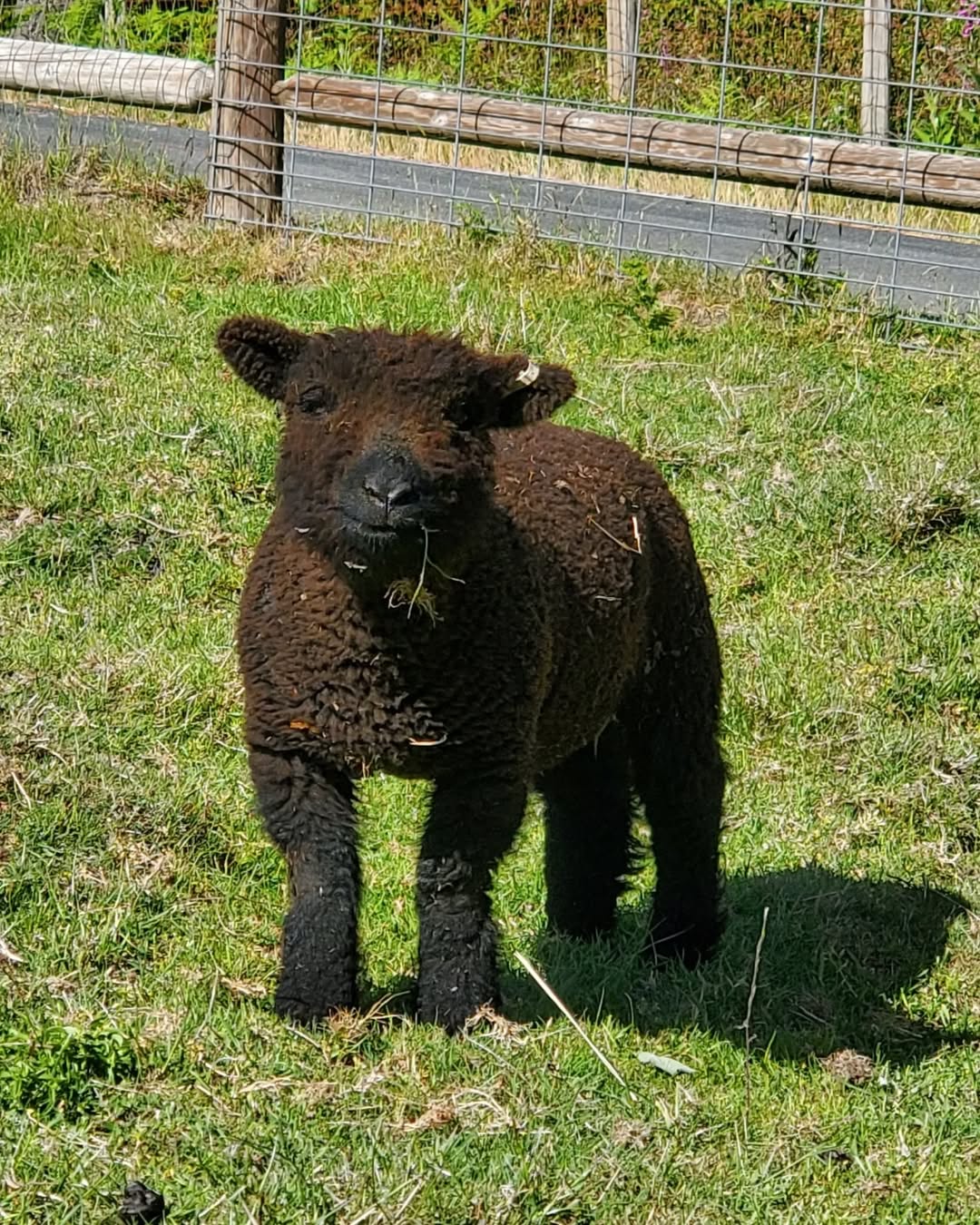
They have springy, soft wool, which is usually short, just two inches in length, but it’s dense enough to cover the entire body except their eyes and the bridge of the nose.
You can witness white or off-white and black coats. When the light falls on the black sheep, they become dark brown.
Their fleece averages 19-22 microns with more barbs per inch than any other sheep breed. Every spring, your homestead or farm can be filled with fleece shearing and wool work.
Babydoll Southdowns are medium-sized sheep that stand between 18 and 24 inches at the withers when shorn. You can expect them to weigh 60-125 lbs.
While rams get 35-50 lbs, ewes are 80-100 lbs in weight.
While Eve’s cycle lasts 13 to 19 days, estrus lasts 18 to 48 hours. I think their gestation must be there between 138 and 149 days, and they often give birth to twins.
If you’re lucky enough, they can get you triplets, also.
Learn if ewes are in estrus by the behavior called “flehmen” when rams smell. In this behavior, sheep extend their necks and heads into the air and curve their upper lips.
I like these heritage sheep for their multiple uses, including fine meat quality with tenderness and flavor.
Besides, they make excellent vineyard sheep that graze on grass and weeds without destroying fruits, tree trunks, and shrubs like goats tend to.
Height: 18-24 inches
Weight: 60-125 lbs
Lifespan: 10 years
Best for: wool, pet, lawn grazing
2. Shetland Sheep
Native to the Shetland Islands, this breed has a history of over 1000 years. They are descendants of ancient Scandinavian sheep.
Do you know that Shetland sheep are one of the smallest British breeds and belong to the northern short-tailed sheep family?
Yes, they are small sheep with fine bones, which stand between 22 and 26 inches at the shoulder. While rams weigh 90-125 lbs, ewes get 75-100 lbs.
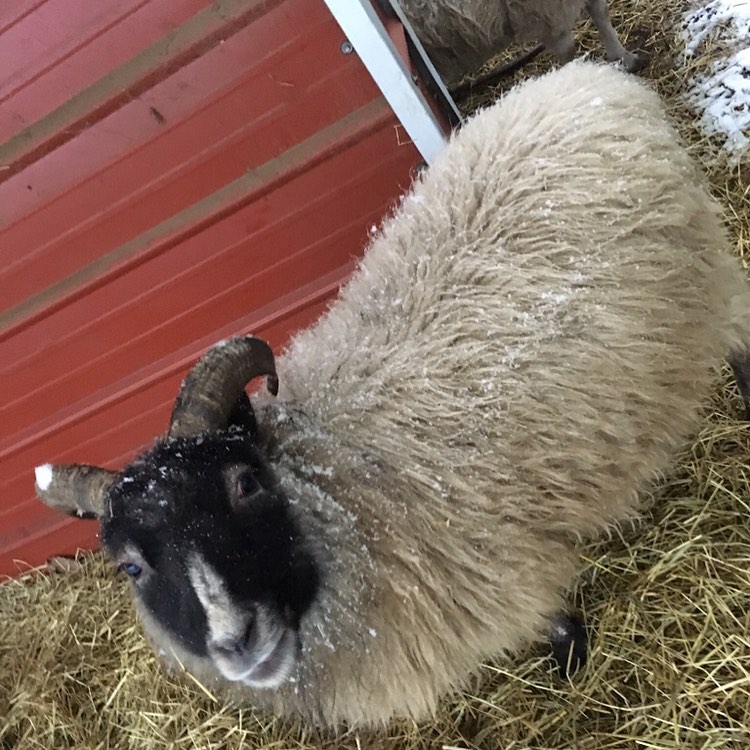
You can tell Shetland herds by their naturally short tails, which don’t need docking.
They are also known for the widest color varieties in their coats, ranging from white, red or, brown, and silvery gray, to fawn, gray, dark brown, and black
I like these sheep with patterns like katmoget (dark belly), gulmoget (light underside), and krunet (white crown). In total, they produce 11 primary colors and 30 markings.
Besides, rams have spiraled horns, while ewes are polled.
If they’re crossed with an early maturing terminal sire, for example, Ryeland, they get fat lambs, which make excellent meat sheep and are dressed out well.
You can have wethers that are often run through to shearlings.
Though they have characteristics of wild sheep, Shetland sheep are easy to care for as they are a primitive or “unimproved” breed, calm, docile, and intelligent.
Also, they are a slow-growing breed, hardy, adaptable, and long-lived.
Like other primitive sheep, ewes are seasonal breeders that get fertile in October and November. Don’t worry, they make good mothers with ample milk and are easy to lamb.
Many homesteaders like me prefer more Purebred Shetland meat for taste.
They often lamb in the spring-summer and get twins, triplets, or even quads.
Besides, you can raise them for fine, soft, and strong wool. They produce fleeces with 2-4 lbs, which vary in crimp from wavy to straight.
Their single coats tend to have fiber diameter averaging 20-25 microns and staple lengths of 2-5 inches.
Height: 22-26 inches
Weight: 75-125 lbs
Lifespan: around 10 years
Best for: wool, meat
3. Ouessant Sheep
Ouessant is also a primitive sheep with a short tail, named after the small island (Ushant) off the west coast of Brittany.
Sometimes, it is called the Breton Dwarf, due to its smallest size among the sheep. While rams are about 19 inches taller at the shoulder, ewes are a bit smaller, 18 inches in height.

Expect these heritage sheep to weigh 50-70 lbs.
These French herds come in various coat colors, ranging from solid black to white or brown. You can tell rams by their large horns, but ewes are polled.
As they’re small, they lamb single kids and are raised mainly for wool. They produce fleece with a staple of 3-4 inches and a thickness of 25-28 microns.
Though they’re not meat breed, you can use them to graze vineyards and orchards; they make decent weeders.
They are also strong and hardy animals that prefer to stay together in a flock to protect themselves from predators. You can keep them in a small flock of 3-10 based on your pasture area.
Height: 18-19 inches
Weight: 50-70 lbs
Lifespan: 13-18 years
Best for: wool, pet, grazer
4. Soay Sheep
You can tell Soay sheep by their deerlike physique with slender bones, clean faces, and legs. Also, they are small-framed herds, standing between 20 and 24 inches at the shoulder, and very nimble.
While rams are scurred or horned, ewes are either polled, scurred, or horned.
Soay herds are either brown or tan with a white belly, rump, or white area under their chin. You can sometimes see white markings on the face, body, and legs.
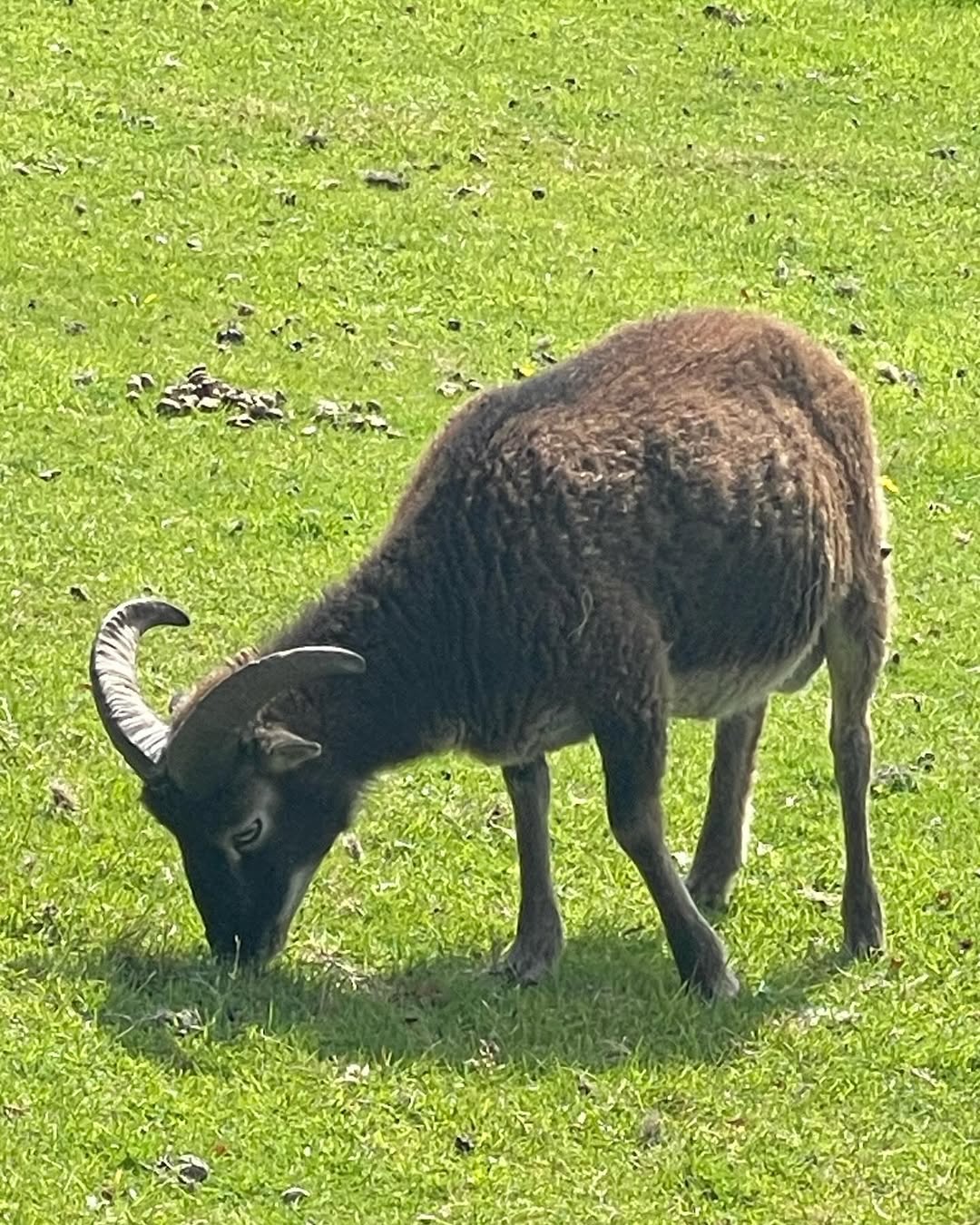
It is common to see self-colored black or tan animals with no markings.
Do you know that Soay sheep produce natural shedding wool?
This means you needn’t toil on shearing fiber every spring. Run your fingers through their coat, and you see your fingers get stuck, and then the wool comes out.
So, you can roo or hand-pick the wool easily without a machine. Expect their fiber to be woolly or kempy, weighing 3-5 lbs, measuring 44-50 inches in length, and having a staple length of 1-5 inches.
Ewes make good mothers and can easily lamb for 10 years.
Soay sheep are hardy, resilient, and independent, and can tolerate the harsh North Atlantic environment. Soays were native to the British Isles. Then they were moved by the Norsemen and the Romans, but their name derives from the island of Soay off the coast of Scotland.
Also, they have parasite-and disease-resistance.
These herds are also companion-friendly and exhibit flocking behavior, like some other breeds. They survive on marginal pasture and can quickly become overweight on lush grass or grain.
Besides, Soays show shy, curious, and gentle behavior to humans. But wethers and ewes make good pets, and adult rams need experienced shepherds or breeders.
Besides, you can raise Soays for low-fat, low-cholesterol meat with a slightly gamey taste.
Height: 20-24 inches
Weight: 50-80 lbs
Lifespan: 10-12 years
Best for: wool, pet, and meat
5. Mini Cheviot Sheep
Mini Cheviot is not a true miniature sheep; it was imported from Canada to the United States.
They resemble their larger version with their long, deep bodies, but their legs are short, small, and upright.
Besides, you can tell them by wool-free legs and wide faces with a ruff of wool behind their ears. There are Roman-nosed cheviots and straighter ones with a regal-looking, alert profile.

These herds have white faces and legs, eye rims, black noses, and black hooves.
You can expect them to reach 23 inches in height at 2 years of age. While rams weigh 55-100 lbs, ewes are 45-85 lbs in weight.
Besides, they are also known for their fleece, which is medium to long in staple length (3-7 inches). The wool is soft, crimpy, low-grease, and averages 25 to 32 microns.
Not only white, but they also produce various colored wools from true black through pale beige and silver. You‘ll appreciate it if you’re true handspinnrs.
Like their ancestors, mini Cheviots make good dual-purpose (wool and meat) sheep. You can also raise them as pets, but I don’t often see them.
Height: 17-23 inches
Weight: 45-100 inches
Lifespan: 10-12 years
Best for: wool and meat
6. Jacob Mini Sheep
Jacob is known for their unique look and rich heritage. Originating in the British Isles, they are different from other British and Northern European sheep with multiple horns.
Yes, they are multi-horned or “polycerate” sheep with a striking, piebald fleece pattern of patches in white, black, and brown.
You can witness sporting two, four, and even six beautiful horns on their heads.
They are hardy, smart, independent, alert, disease and parasite-resistant, and dual-purpose sheep.
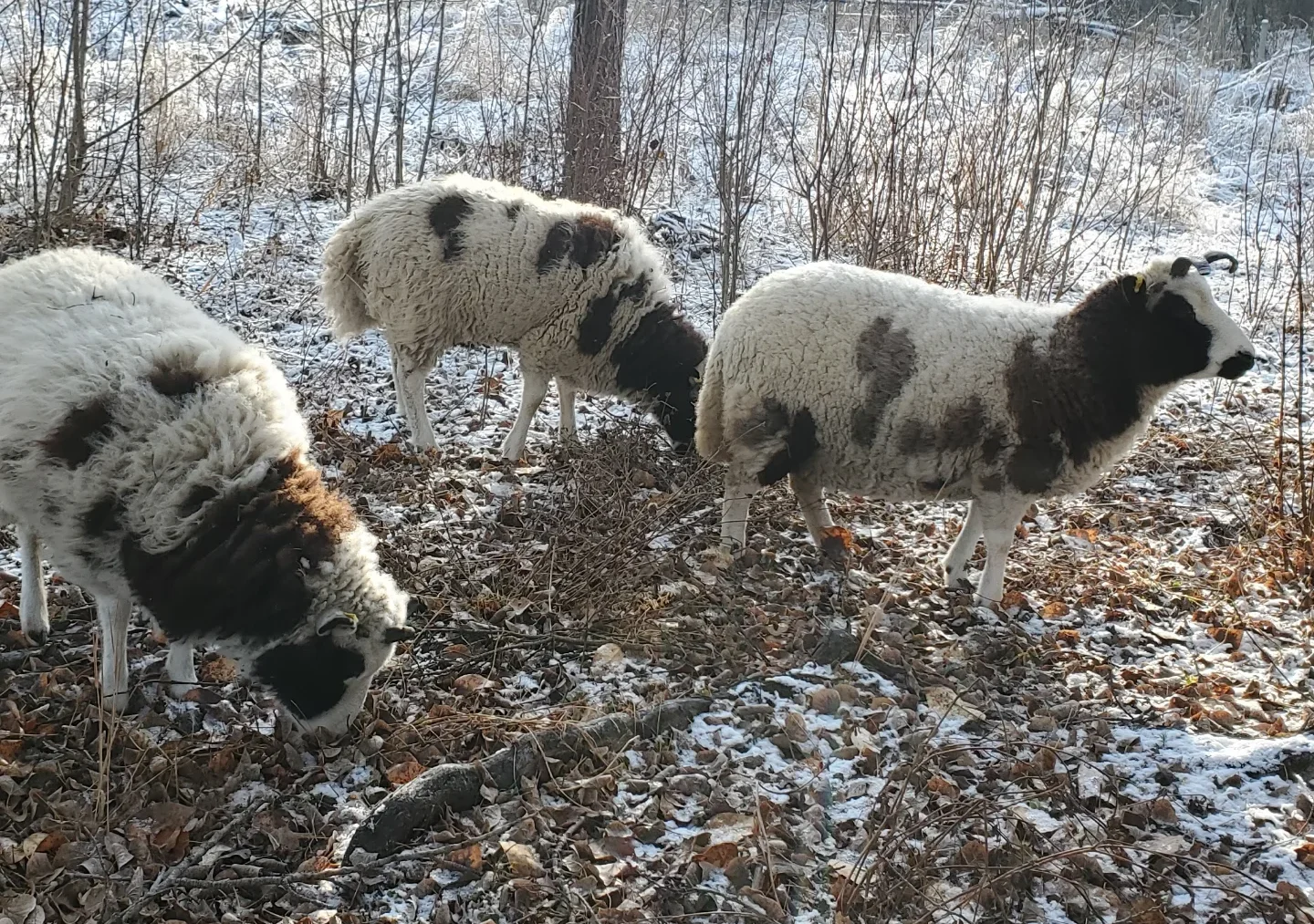
They are also docile, but more spirited than other domestic breeds, with semi-wild characteristics.
Mini Jacobs are small, horned, goat-like, and piebald sheep with dark markings. You can also identify them by their pendulous ear and fine, wool-free tail.
Many shepherds breed Jacob sheep for dual-purpose herds. Wool is their primary goals but their meat is also of good quality.
Their fleece is soft and multi-colored, popular among weavers and spinners, making it an ideal choice for handcrafted artisan textiles.
They have a medium-fine fleece with no external coat, weighing 2-5 lbs and with a staple length of 3-7 inches.
They also make excellent mothers, producing lambs easily, from yearlings to twins and triplets. Though rams are protective, I don’t see them as aggressive to the flock.
Height: 18-24 inches
Weight:
Lifespan: 12-15 years
Best for: wool and meat
7. Harlequin Sheep
Harlequins are a new sheep breed and a result of crossing between White Dorper rams and Persian ewes. First, it was developed by Kathleen Sterling on Black Sheep Farm East in Virginia.
They’re small (23 inches) polled sheep with short tails and short hair, and are easy to handle and care for.
You can identify these herds by their wide, deep chests and blue eyes. As a surprise, rams weigh 90-150 lbs, and ewes weigh 80-120 lbs.
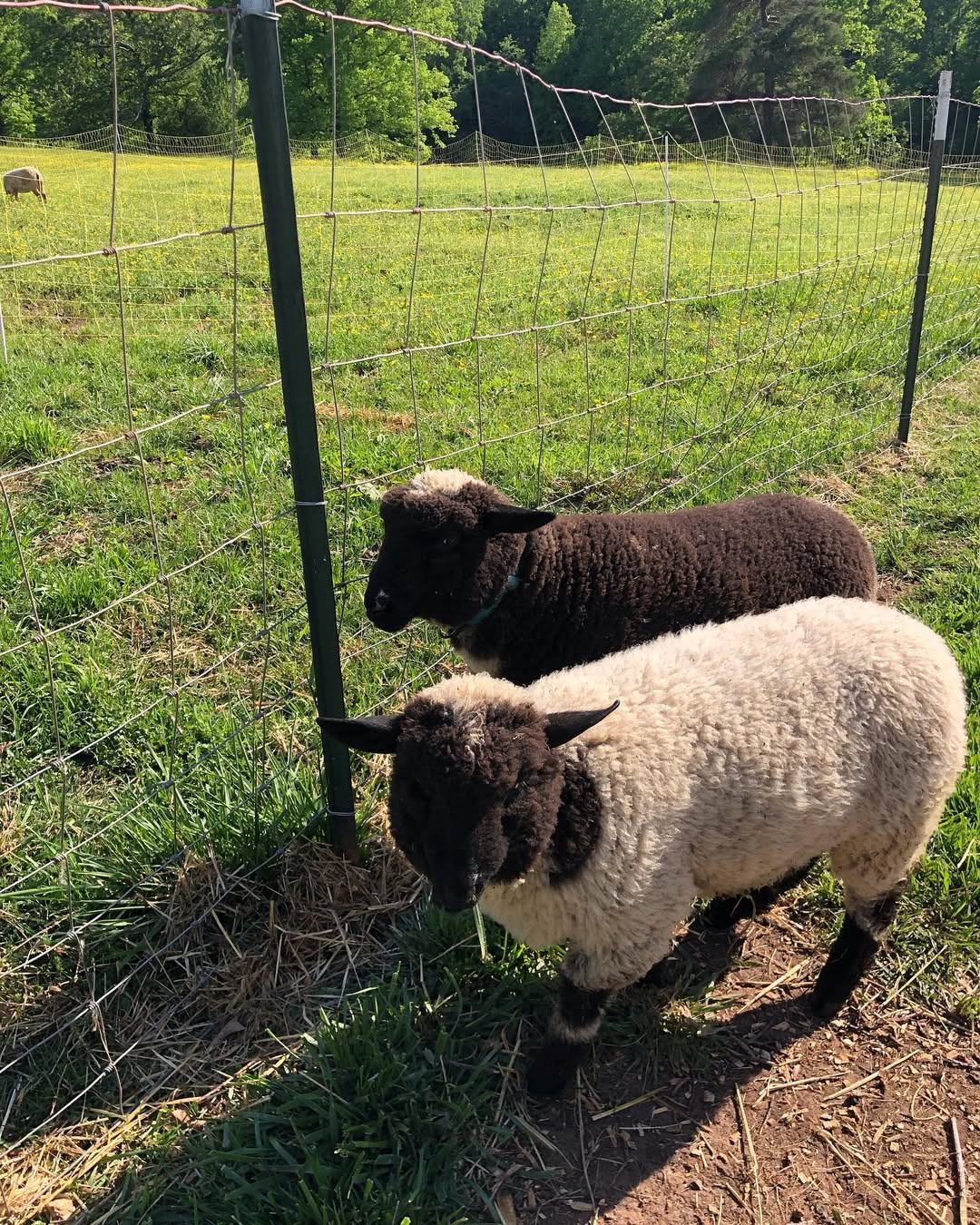
They’re known for their varying patterns of white and black. You can notice the lambs maturing from cocoa brown to shades of white, gray, and finally black.
Expect the rich, dark, brown fleece at birth, with a white patch on their head and chest.
Okay, these pint-sized sheep also produce fine fiber similar to that of Babydoll Southdowns. Their wool has medium character, measuring 25-35 microns and a stable length of 3-6 inches.
With dense, highly crimped wool, they have a single coat.
Height: 23 inches
Weight: 80-150 lbs
Lifespan: 10-12 years
Best for: meat and fiber
8. Finnsheep
Native to Finland, Finnsheep were first imported from Canada in 1966.
They are medium-sized sheep with a well-proportioned frame, lean structure, and a unique wedge-shaped head. They mature quickly, and lambs also gain market weight faster.
You can expect rams mature in 4-8 months for fertility, and ewes to lamb when they are a year old.
While mature rams can weigh 150-200 lbs, adult ewes are slightly lighter and average from 120 to 190 lbs.
What impresses me more about these herds is that the ewes can give birth to triplets, quadruplets · and even quintuplets at once. They breed seasonally but also can lamb twice a year.
You must know that Finnsheep are versatile and prolific sheep known for their multiple uses. They also produce soft, lustrous fiber, ideal for high-quality textiles.
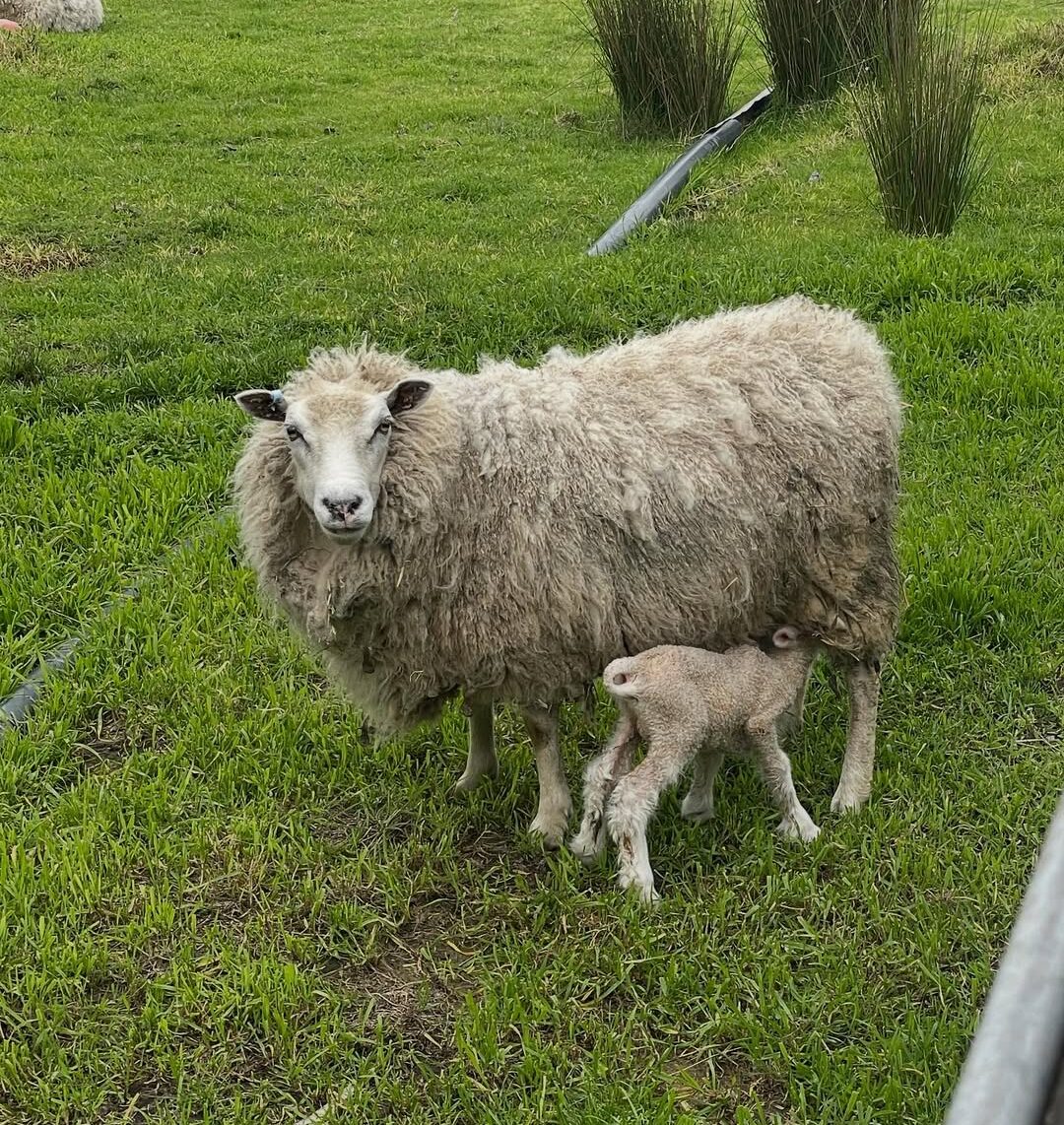
With various fiber shades, they come in white, black, brown, gray, and piebald.
Their fleece weighs 4-8 lbs, has 23.5-31 microns, and a staple length of 3-6 inches. Also, you can get lean, succulent meat from Finnsheep, which has a delicate, mild flavor.
Height: 30-38 inches
Weight: 120-200
Lifespan: 10-12 years
Best for: meat and fiber, milk, and hides
Final Thoughts
Small sheep breeds are not only raised for pet herds and wool, but you can also keep them for meat and grazing lawns and orchards.
I have some experience raising Soays and Shetlands, so I recommend protecting your trees while keeping these two. Soays are aggressive and difficult for beginners to tame, and their fleeces are not very likable for me (compared to other breeds).
As for Shetlands, they have lovely fleeces, but that depends on the bloodline.
Leave a Reply