
My grandmother has 7 peafowl, 3 peacocks, and 4 peahens. They are smarter than chickens and live longer.
Also, these birds don’t mind perching with other flocks on the same platform. But keep in mind that they can fly up a tree a hundred yards away if your dog chases them.
If you want to add a few birds to your homestead or farm, let me suggest some of the best peafowl species and types.
1. Indian Blue Peafowl (Pavo cristatus)
Indian Blue is the most common and beginner-friendly variety.
Peacock shows up with a blue head, a fan-shaped crest, and a feathered tail “train.”The train is a whole show here, which is made of elongated upper-tail covert feathers with eyespots.
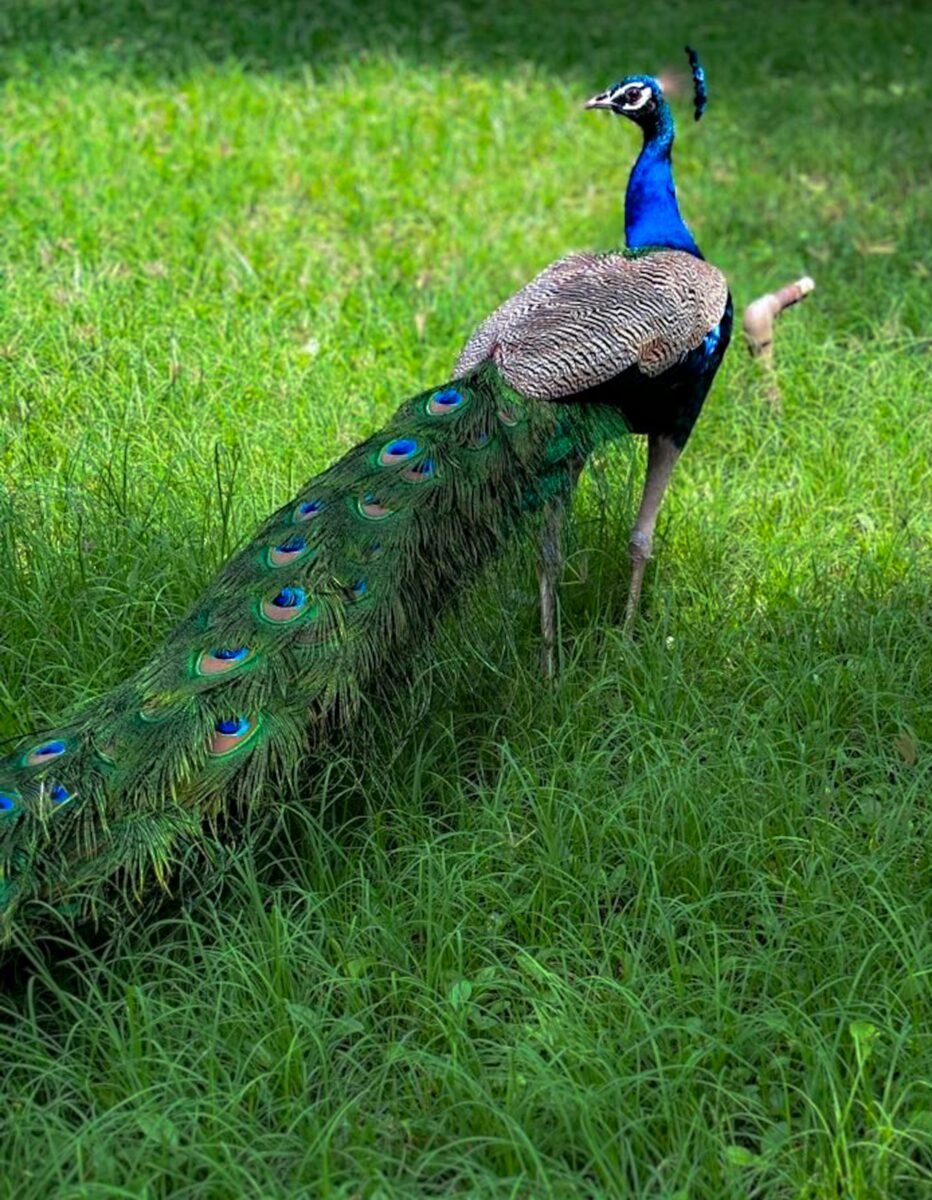
During their courtship with females, males raise these stiff feathers into a fan, as if they are dancing.
Peahens are brown with a white face and a green lower neck. But they lack a beautiful, elaborate train.
While males weigh 8-13 lbs, females average 6-8 lbs in weight. These birds are 34-42 inches without a train. But males can reach 7.3 ft in full plumage.
You can raise them for 23 years on a homestead or farm. They have several uses on a farm.
2. White Peafowl
These peafowls are white birds with blue eyes. But they are not born white as peachicks.
These birds have yellow down when they are chicks. Soon, they develop the while tips to their wings. When they mature, their white down feathers turn into pure white feathers.
Many believe peafowls belong to the albino, which means plumage occurs in a specific condition. But white peafowl is a result of a genetic color mutation.
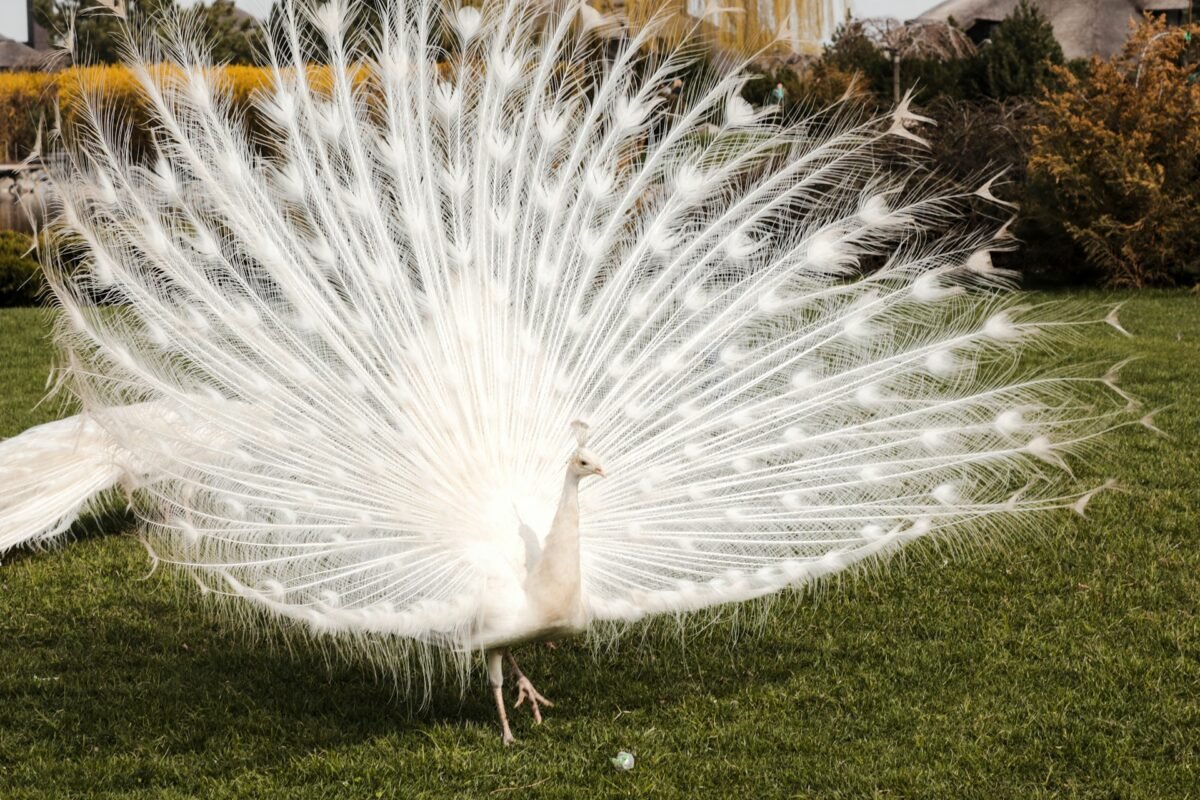
To get white birds, each parent must carry a recessive gene.
And they can be either pure white, pied, or half white.
When you see these birds in the garden in the twilight, they seem like burning lamps while dancing.
Many homesteaders and hobby farm owners raise them for their aesthetic appeal.
They are perfect for weddings and other events.
3. Green Peafowl (Pavo muticus)
Native to Southeast Asia and China, Green Peafowls have beautiful green necks, a dark green crest (which always grows vertically), and dark wings.
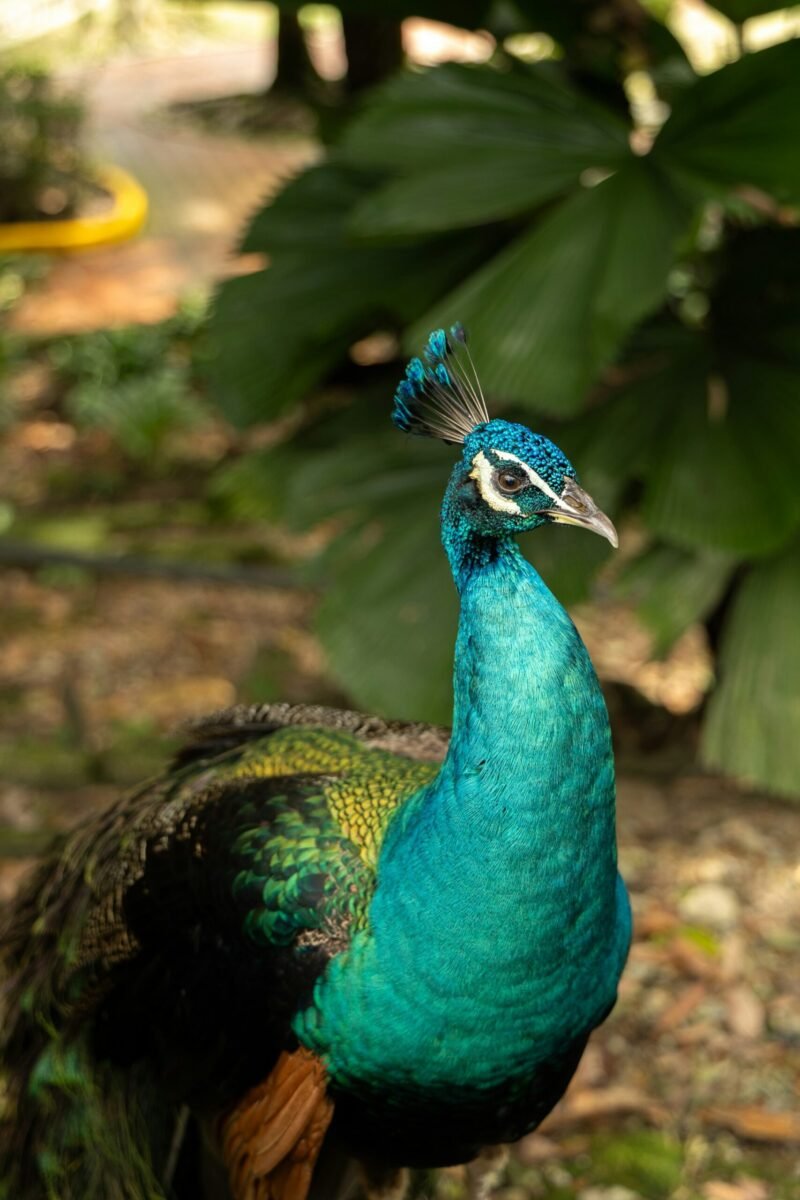
They stand with green-gold iridescent feathers.
You can tell the males by their classic peacock trains. But females have a short tail. It contains some feathers of a green train, but without frilly plumes.
While peacocks are 8.5-11 lbs, peahens weigh 2.4-8.8 lbs.
These birds are more aggressive than Indian types, so owners need to be experienced keepers to handle them.
4. Black Shoulder Peafowl
As the name suggests, these birds have entirely black shoulders with a bluish-green sheen.
Though the Black Shoulder Peafowls mimic the pattern mutation of the Indian Blue Peafowl, they lack the black and white barring on their shoulders.
This is because of a recessive gene.
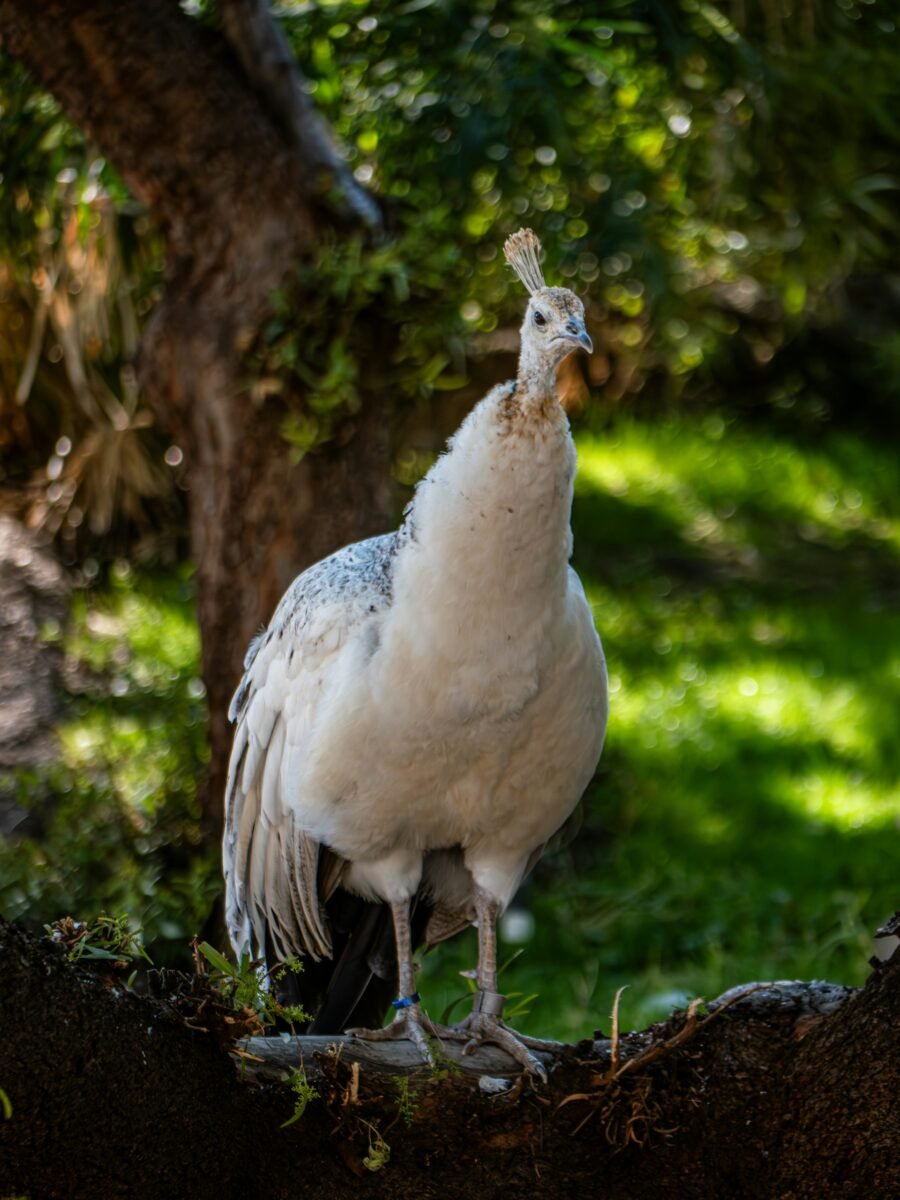
While Peacocks have plain black wings with a greenish-blue sheen, peahens are cream colored and boast a rusty-colored neck with metallic green.
But the peahen’s coloration can vary from darker mottled cream to brown on the back feathers. The sheen on their neck also differs from light to much lighter in green.
These are calmer than standard Indian Blue, so beginners can find them easy to manage.
5. Purple Peafowl
Purple peachicks mimic Cameo Peachicks, which are lighter brown than Indian Blue and almost a creamy brown.
To differentiate peacocks from peahens, peacocks are identical to Indian Blue but have a purple sheen on their heads, necks, breasts, and bellies.
They also boast purple train and teal-blue feathers in various shades of blue.
You can see cameo to oaten brown shoulders. But they can also show some green and blue hues like Black Shoulder Peacock.
On the other hand, Purple Peahens are lighter than the Indian Blue and darker than the Cameo Peahens.
They show up with purple feathers on the back of their necks.
Besides, female birds also have a cameo to oaten brown to light creamy white shades all over their body.
6. Opal Peafowl
Opal peafowls are two-tone gray birds that mimic the coloration of the opal gemstone. They have soft, muted gray-blue coloration and pastel-like feathering.
After hatching, peachicks have pale gray down.
When they grow older, Opal Peacocks develop a darker grey neck. They also highlight dark and light grey barred wings.
On the other hand, peahens mimic light dove grey in coloration, which varies from Purple to Cameo.
Also, you won’t see an iridescent shade on their neck.
7. Cameo Peafowl
Cameo peafowls are docile and friendly birds with a brown or tan color mutation. They also warm in earthy tones.
At the beginning of the season, peacocks look dark brown. As time passes, they start molting and turn into coffee-colored or creamy brown.
But their neck remains darker than the rest of the body, like a darker chocolate brown.
Also, their train is darker than their wings and shows brown and tan barring. You can witness ocelli on a train with different shades of brown.
On the other hand, peahens are lighter brown than Burford Bronze Peahens and Cameo Peacocks. But they display a darker, rusty metallic hue around their necks.
8. Pied Peafowl
In the pied pattern, you can expect the white feathers to replace a few colored feathers, which causes the white patches.
For example, if you have a blue pied bird, blue feathers turn into white feathers.
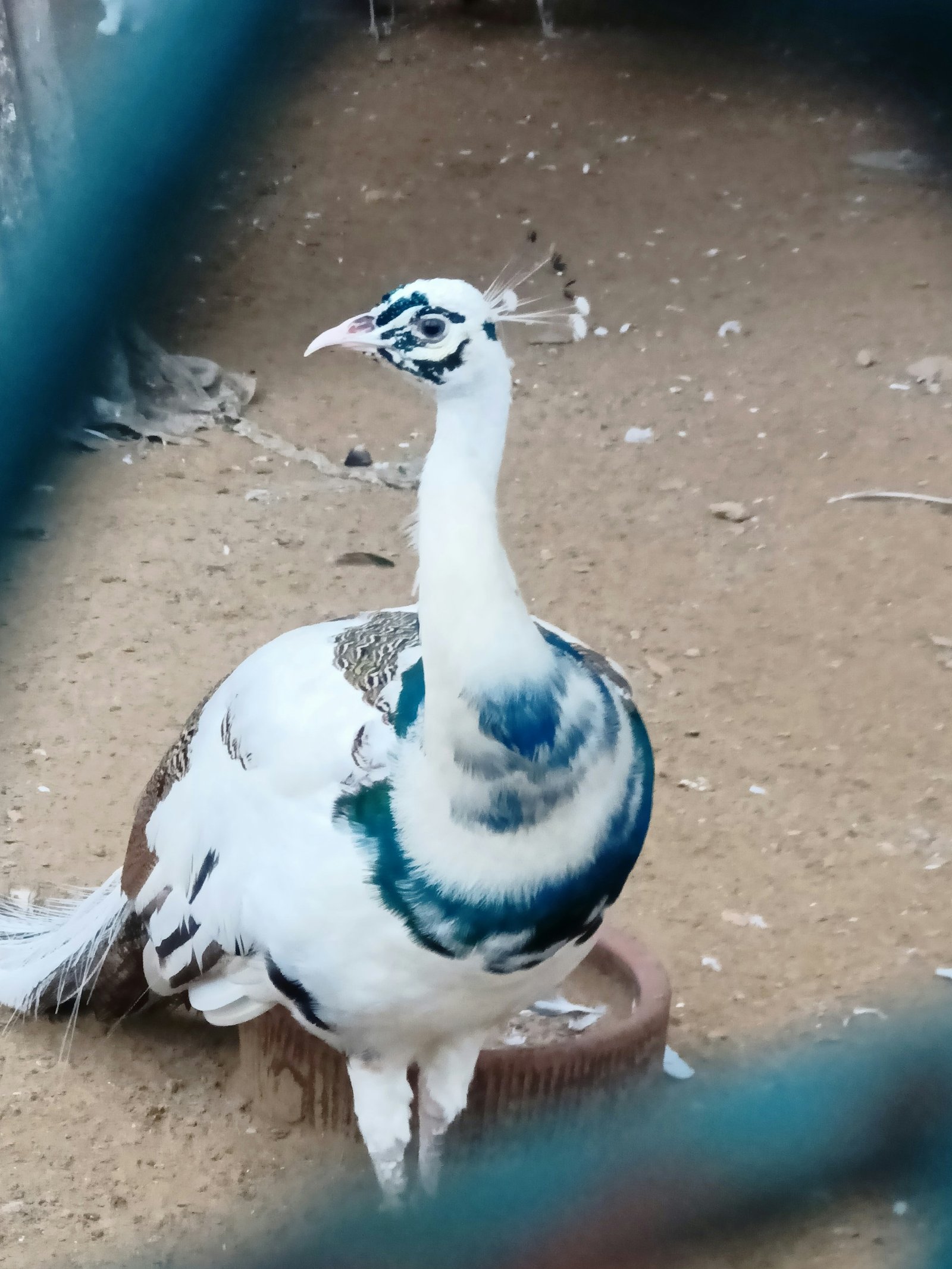
When breeding pied to pied peafowls, you can get 50 percent pied chicks, 25 percent white, and 25 percent colored birds.
Or they can show a 1:2:1 ratio in breeding. 25 percent white, 50 percent silver pied, 25 percent dark pied, and white-eyed peachicks.
The popular breed is the Silver Pied peafowl, which has 80 percent white feathers and 20 percent colored feathers in peacocks. The colored feathers are on the neck, upper breast, and train.
They have a blue or green shade around the neck.
Though Silver Pied Peahens look similar to peahens, they are white and dark grey with a grey neck.
You can identify peachicks by a dark spot on the head and back, and grey on the neck. Sometimes they also have a grey shade on their backs or wings.
9. Bronze Peafowl
Bronze peafowls are known for their beautiful metallic bronze sheen.
Males boast a dark olive-green neck and a dark bronze train. And the Ocelli in their train have various shades of dark brown.
When sunlight falls on the train, it highlights its copper or bronze tones.
If you compare with others, peahens are darker than Purple and Cameo peahens in color. They hatch darker peachicks than those of the Indian Blue.
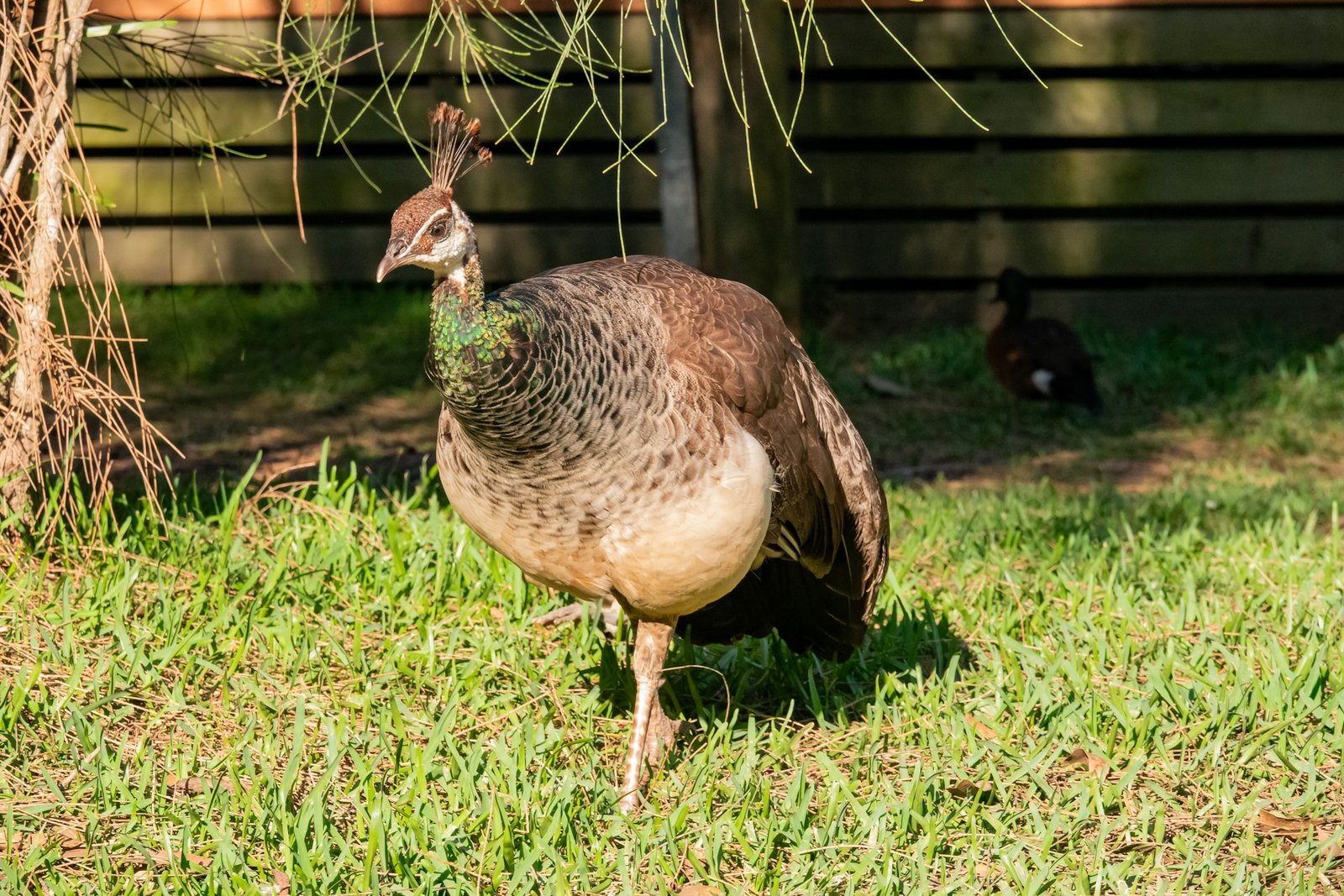
The adult birds are darker and develop shimmering tones. Also, the birds are hardy and resilient.
10. Congo Peafowl (Afropavo congensis)
As the name suggests, these birds hail from the Congo Basin.
Congo peafowls are the only African breed with a smaller body and less dramatic tail than other breeds.
Congo peacocks are deep blue birds with a metallic green and violet hue. They are blue-black underneath with a beautiful white crest.
The males also have a red neck, grey feet, and a black tail.
On the other hand, peahens are chestnut-brown birds with black underparts. They also have a short, chestnut-brown crest and a metallic green back.
These peafowls are unique, rare, and shy.
Final Thoughts
There are only three species of peafowl, and their types and varieties are based on coloration and mutations.
I think Asian peafowls are found worldwide, hardy, and come in various shades. They are also easy to raise and can be used for multiple purposes.
But rare peafowls demand more care and are reared for show and preservation purposes.




Leave a Reply