
If you own a multi-acre homestead or farm, you can grow your own firewood to heat your house, cook food, and make greenery around you.
Growing trees for firewood is a long game and requires years of patience.
So, you need the right firewood trees that best suit your land, so choose them wisely by comparing the following options.
1. Oak Tree
If you live in North America, you must be very familiar with oak trees. You can find white and red oaks.
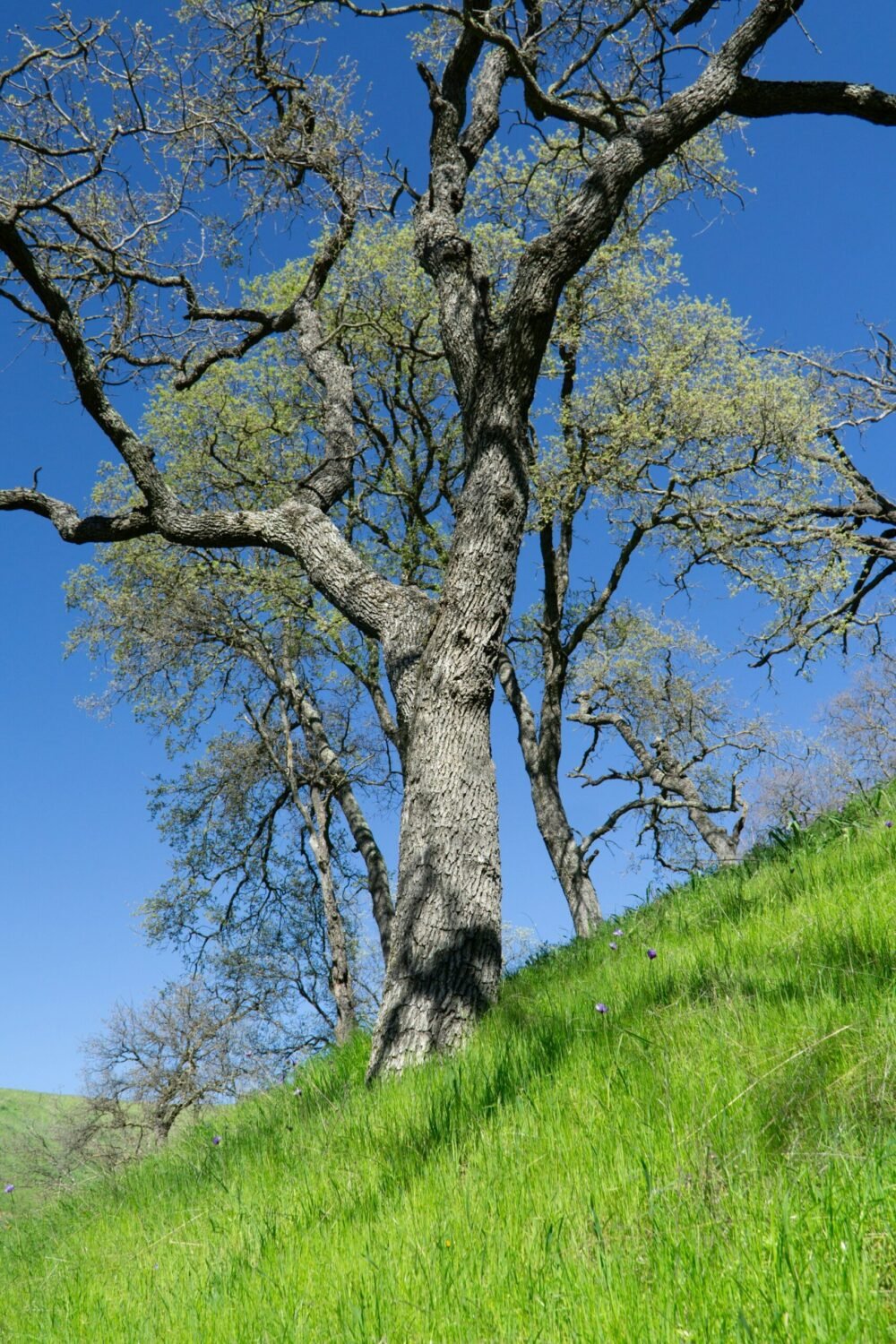
These are slow-growing trees that may take 5-10 years to reach a height of 10 feet.
Then, they become young or shade-providing trees in 15-30 years and mature and turn gigantic in 50 years.
So, you need to wait 15-20 years to harvest, but the yield is low during that period.
Anyway, oaks require deep, well-drained soil and full sun to thrive. Also, oak is a dense hardwood that burns slowly and lasts for hours.
For this reason, you need to work harder on splitting the wood. The oak trees also require long seasoning, at least 2 years.
Both have a 25-million-BTU output per cord, meaning they produce elite firewood for the fire.
But I prefer white oaks as they burn for 8 to 10 hours overnight in the firebox and produce better coal than that of red trees.
I think oak trees are best for cold climates and wood stove heating. You can guess it as the best overall tree for firewood.
2. Sugar Maple
Maples are favorites among homesteaders for various purposes, let alone firewood. They are known for their beautiful fall foliage (vibrant red, bright yellow, and burnt orange, oh wow).
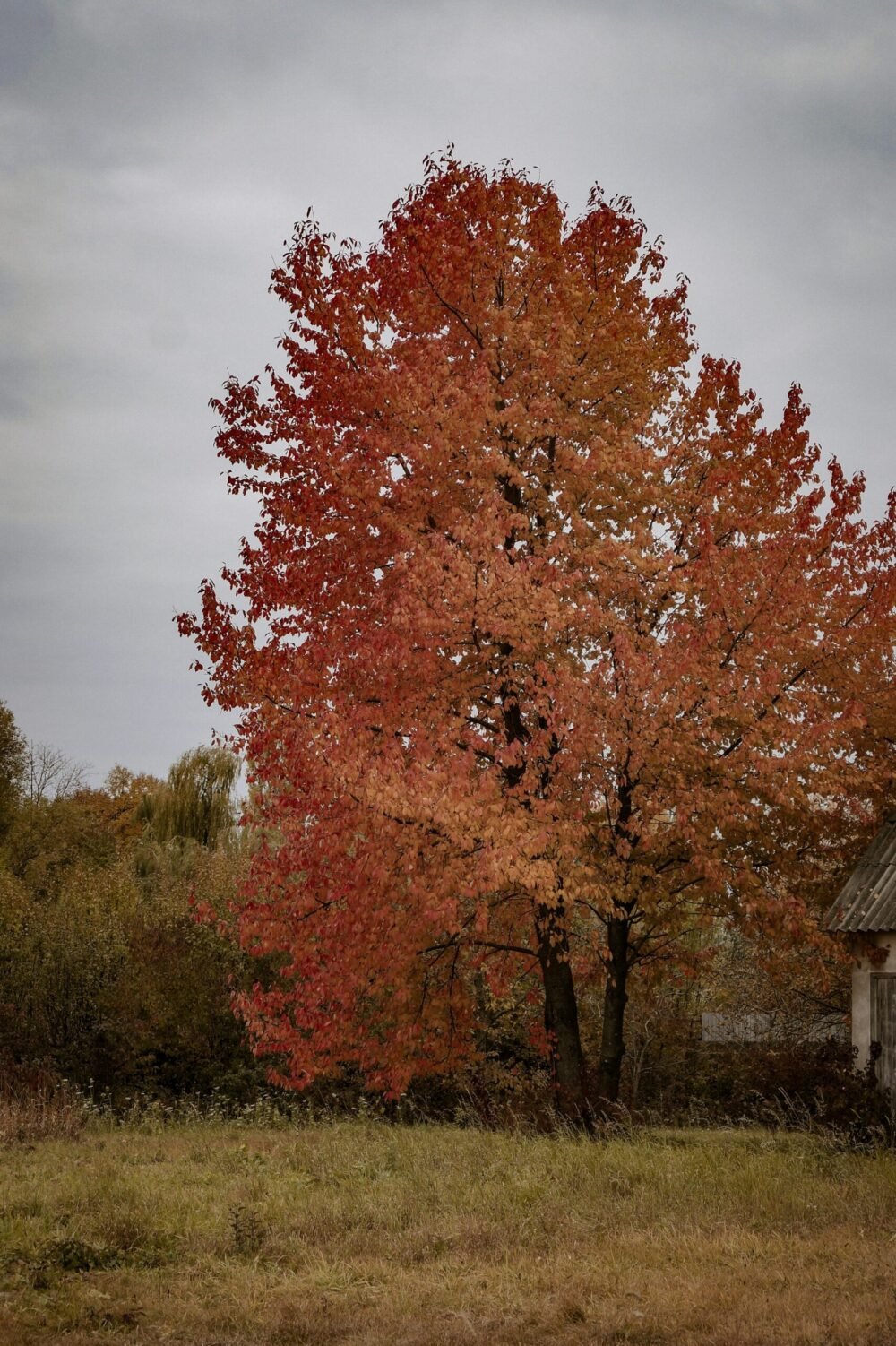
Besides, farm owners and homesteaders also make maple syrup.
Normally, you won’t find maples growing for firewood like other trees, such as oak or ash.
Anyway, maples grow well in various soil types and conditions.
Sweet maples prefer moist, rich, well-drained loamy soils on wooded slopes and in ravines, so they are most common on cool northern or eastern hillsides.
You can expect them to reach up to 60-80 feet in height.
Maples grow from 12 to 36 inches every year and take 20-30 years to reach mature size.
Their wood is steady, dense, and burns for a long time with minimal smoke. You can easily use them in stoves to maintain a consistent heat output. Sugar maples produce 24 million BTUs per cord.
While dry leaves produce a sweet, warm, and earthy scent, the burning wood gives a mild, savory scent with subtle sweet notes. Something like cedar and pine.
Unlike oaks, maples are easy to split and require 6-12 months of seasoning.
If you are from the Northeast or Great Lakes region, sugar maples will be a great choice.
3. Black Locust
Black Locusts are mainly found in Arkansas, Missouri, and the Appalachian Mountains.
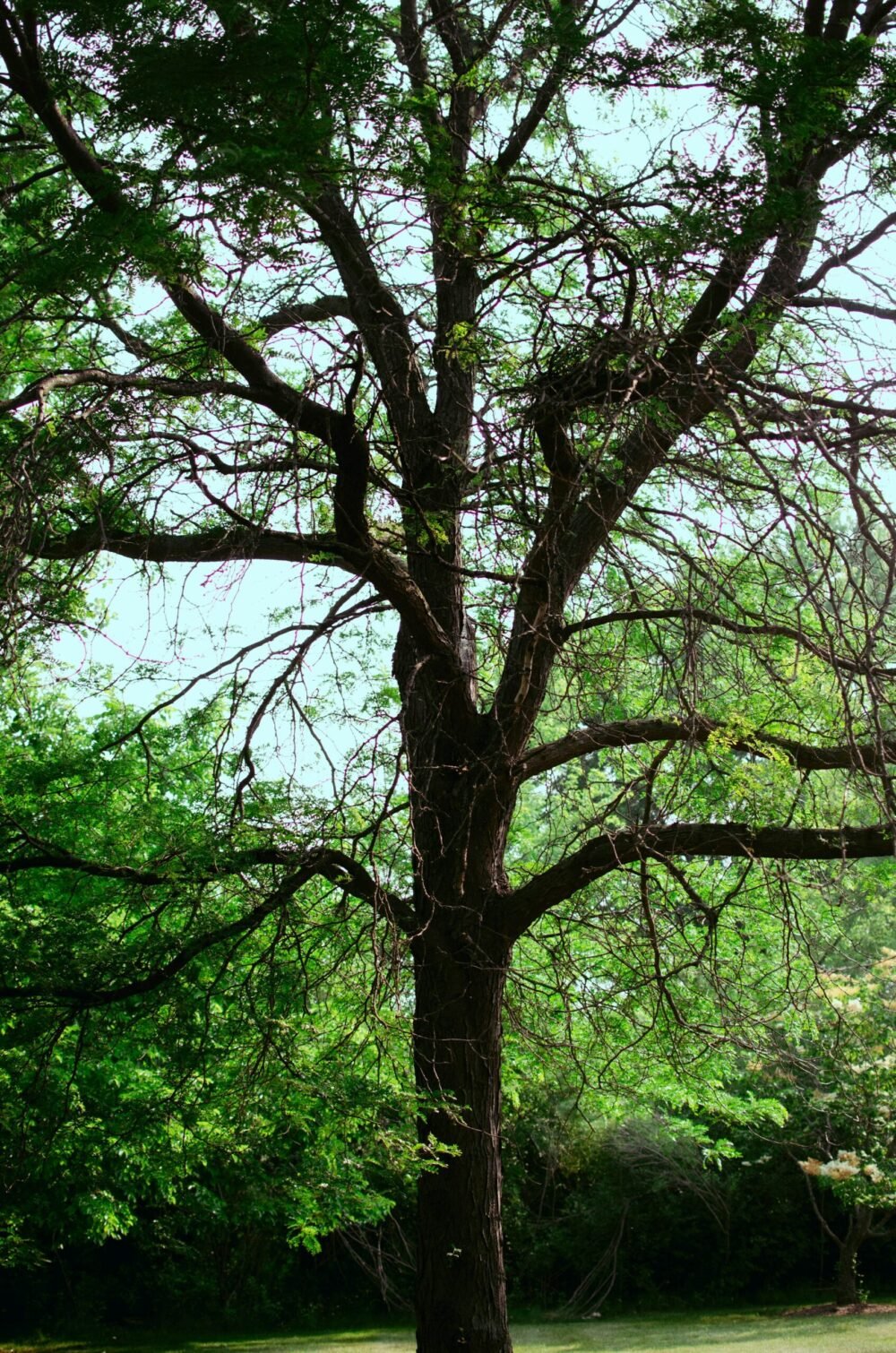
People use these trees to make fence posts and for old homesteads, thanks to their strong, dense wood.
They grow in rich, fairly moist, and well-drained soils, and you often see them near limestone.
I’m happy that they grow faster than the other species mentioned above, at 2-4 feet per year, and reach 50-80 feet at full maturity.
Anyway, black locusts take 20-40 years to reach 30-50 feet tall. But you can harvest black locust for timber and fence posts within 10-20 years. Wow!
And let me tell you, these are nitrogen-fixing trees and yield rot-resistant wood.
Do you know black locust generates 26.8 million BTUs per cord, making it one of the hottest-burning woods available?
It burns longer with very little smoke.
Also, it seasons faster within 8 to 10 months and is excellent for coppicing.
Due to its dense hardwood, you may need a hydraulic splitter or a sharp maul to split the black locust. They are very tough, and thorns make it a bit worse.
4. Ash Tree
Do you know ash trees are known for having low-moisture wood, which still burns when slightly green?
But dry wood is best for performance, and seasoning would take only 6-9 months.
Though not as dense as oak, ash can still produce 23.6 million BTUs per cord. I find it burns faster than oak or hickory, and its coal is average.
Also, you want it to split, as it’s easier than any other hardwood tree.
Anyway, if you want to grow ashes, prepare moist, fertile, and well-drained land. They grow naturally in the land near the stream.
You can expect the tree to have moderate growth of 1-3 feet per year and can take 15-25 years to harvest the wood.
When fully mature, ash trees grow to 60-80 feet, sometimes around 100 feet.
One thing I worry about with ash trees is that they are susceptible to pests.
5. Hickory Tree
I think hickory is among the highest-quality firewoods thanks to extremely dense wood. This generates exceptional heat with 27.7 million BTUs per cord.
But it’s difficult to split and requires a longer seasoning period, around 12 to 24 months.
Its coaling quality is exceptional. Long-lasting coals.
And let me tell you, hickory makes excellent cooking wood. Not only does it burn for a long time, but it also gives a pleasant, slightly sweet smell.
When burned, its dry leaves and bark smell spicy or citrusy, similar to orange rind.
Many prefer to use this wood for smoking meat when cooking over a fireplace.
But the problem is that hickory trees don’t grow everywhere. They’re mainly found in the eastern and central United States.
However, they can adapt to USDA hardiness zones 4-9.
Besides, Hickory trees are slow growers and only get height of 12 inches or less per year. They require 20-40 years to reach a mature height of 50 to 80 feet.
But they start producing nuts at around 10-20 years old.
6. Hybrid Poplar
If you want a fast-growing firewood tree, plant hybrid poplar. It grows 5-6 feet per year and gives you harvestable firewood within 5-7 years. The mature tree reaches 40-50 feet.
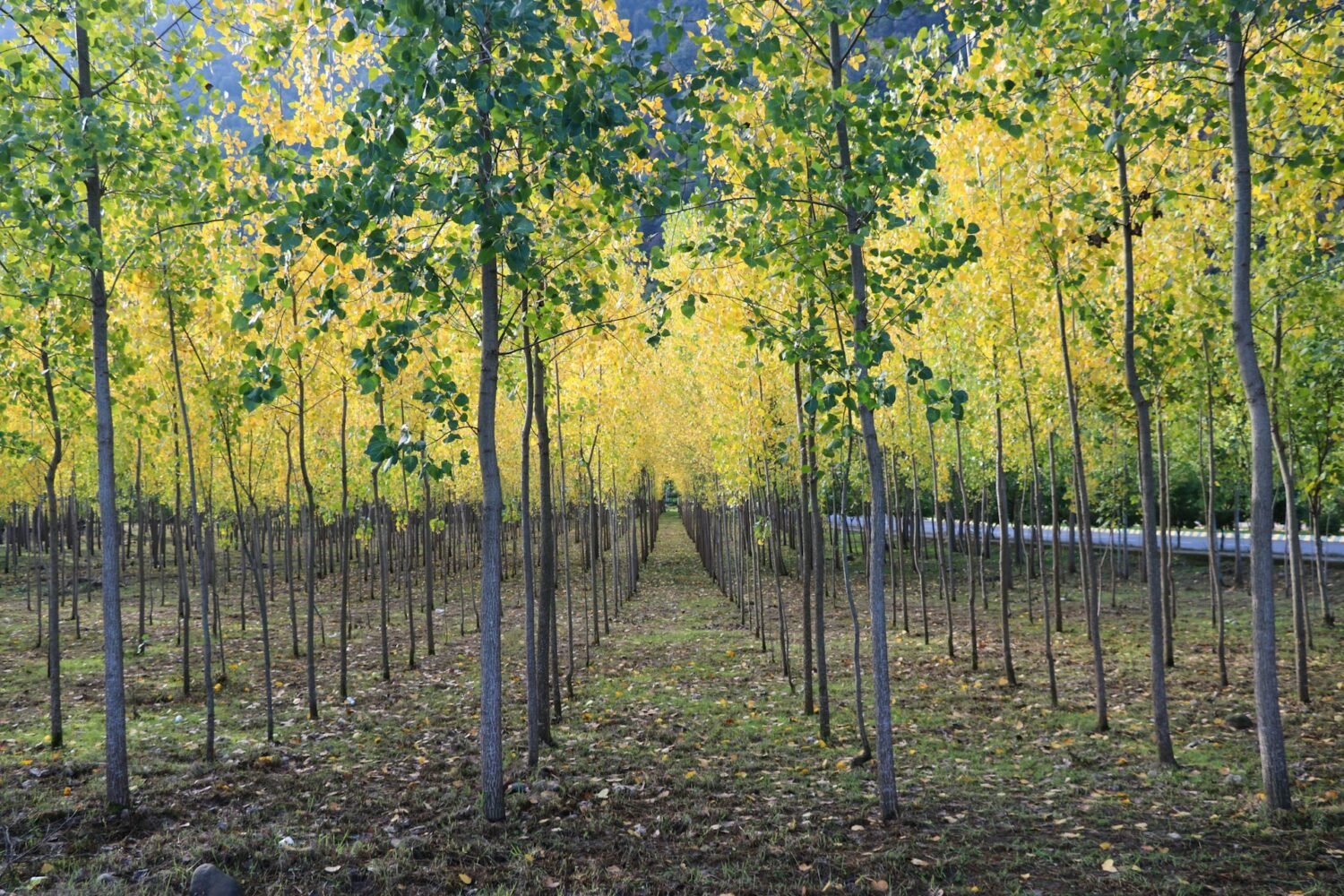
That’s quick.
Also, it’s easy to plant or propagate through stem cuttings. Don’t worry; it can adapt to a wide pH range from 5 to over 8.
Hybrid poplar wood is soft, so it has lower heat output with 15 million BTUs per cord. They burn quickly.
So, I suggest you mix it with other hardwoods to achieve consistent heat. I don’t think you would ask for coals from poplars after this.
As tree wood isn’t dense, you can split it easily. Also, a small woodpile only takes 4-6 months to season and to be ready to use.
Besides, you can grow poplar trees for windbreak protection and paper making at a sustainable homestead.
7. Red Alder
I use alder and fir for fire starting at my woodstove.
Red alders grow faster, with annual growth of 3-4 feet. And they are harvestable in a 10-year span. They get 30-50 feet in 10 to 20 years.
As they are softwood, they are easy to split and season quickly. 4-8 months in hot or dry weather, but it can also take 6-12 months in mild temperatures.
Though alder burns quickly, it’s still good for shoulder-season fires. It’s easy to handle, and you can use it all seasons if you don’t live in a subzero climate.
And I will tell you that alder can be a practical option to grow in wetter regions.
It thrives in waterlogged, soggy soils with a strong root system and water-resistant qualities. So, they are more suitable for the Pacific Northwest or similar climates.
8. Beech Tree
Beech is another option as a high-density hardwood, with 24 million BTUs per cord. That’s why the wood burns longer, with bright flames and good heat output.
You can also expect long-lasting coals.
But you need to toil a lot to split the wood when it’s old. It would take 2 years to season completely.
If you want to plant beech, choose land areas with moist soil, as they grow near the land along creeks and streams.
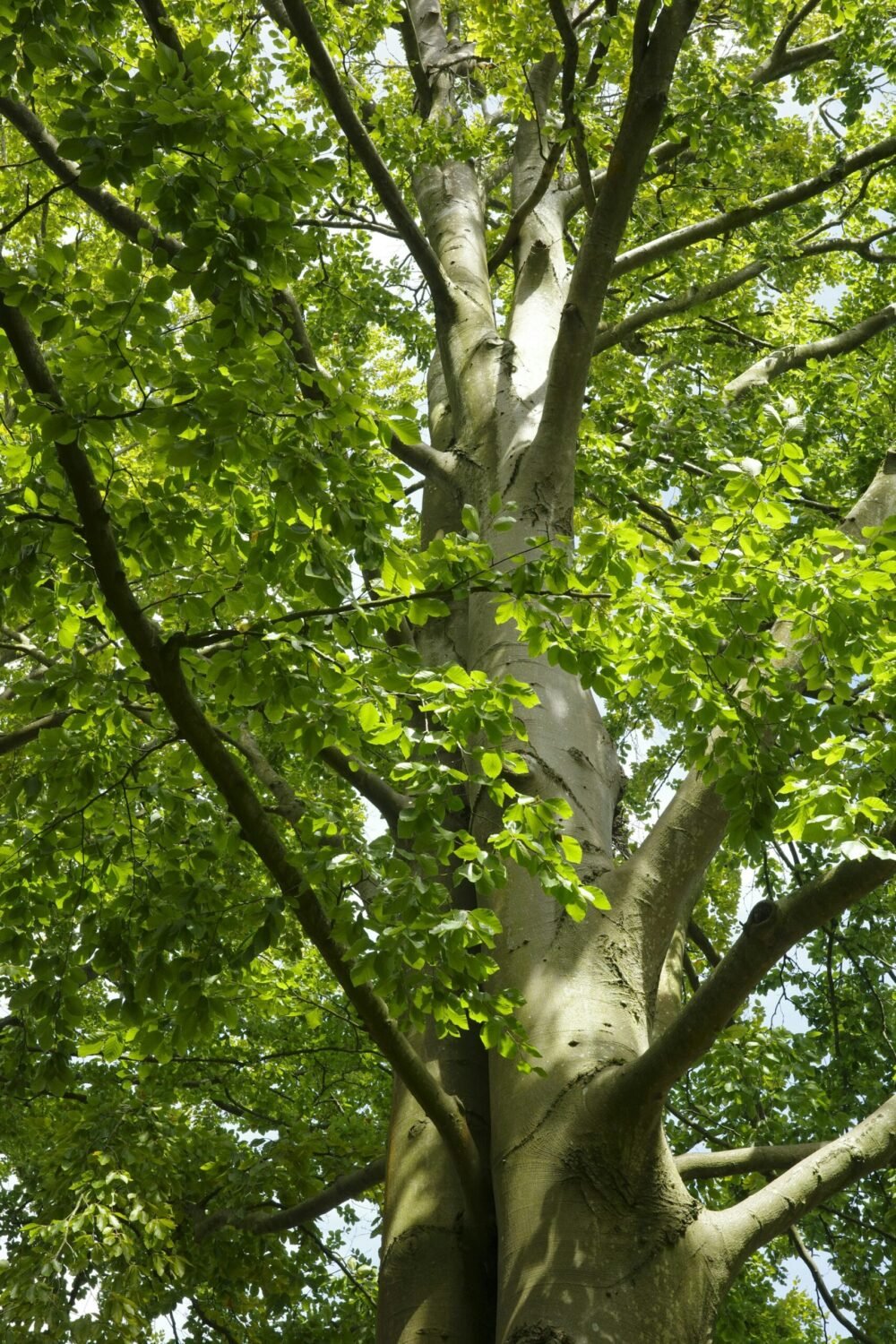
They grow 1-2 feet per year and require 30 to 40 years to reach maturity height of 50-70 feet.
I also like beech for its attractive bark and dense canopy. When burning, the wood also produces a pleasant, mild scent that fills your indoor fireplace.
9. Mulberry Tree
Well, I have mulberries on my homestead for fruit and forage for my goats. Also, I leave some fruits for backyard birds.
But it is also an underrated firewood tree.
Mulberries produce heavy, yellow wood that also has great heat. 25 million BTUs per cord. I want to tell you that this wood has pops and sparks.
So, I recommend you use this in enclosed wood stoves instead of open fireplaces.
It’s moderately tough to split, but after chopping, the wood seasons well within 6-9 months.
Though this multi-purpose tree can grow anywhere, it thrives best in the tropical regions. And it has moderate growth of 2 to 5 feet per year.
Within 5-10 years, the tree starts fruiting, and you can harvest it for firewood.
But mulberries have lots of mess from fallen fruit, so this can be an issue to be around.
10. Osage Orange (Hedge Apple)
Do you know Osage orange is one of the hottest-burning woods available?
Thanks to its extremely dense wood, Osage orange generates 33 million BTUs per cord, which means it burns like coal.
Primarily, it is used for fence posts and firewood.
But the wood throws lots of sparks, so you need to use it in enclosed stoves.
Anyway, the wood also yields long-lasting coals, but it’s hard to process.
Osage orange has thorny branches, and its dense wood makes it difficult to split. No wonder it takes time to season, around 2 years.
Though it has a limited native range, the tree can grow in various soils, from sandy loam to heavier black soil.
You can expect this tree to grow 1 to 3 feet of height per year. And it starts maturing and fruiting around 10 years.
Final Thoughts
I grew up around alder, maple, and wild cherry woodland and burnt hardwood.
Find varieties that you can coppice for sustainable woodland. But it doesn’t matter if mother trees are seeding.
Try planting a mix of hardwood and softwood trees so you can use firewood quickly and sustainably.


Leave a Reply