
Woolly fleece gives you lots of fiber, but raising sheep with it is really difficult. You need to wash, clean, groom, and keep it free of parasites.
And inexperienced keepers might not see the benefits and instead feel overwhelmed by the extra chores.
So, if you’re a beginner and want to keep low-maintenance sheep or herds that don’t need shearing, I suggest you keep any of the following haired sheep breeds.
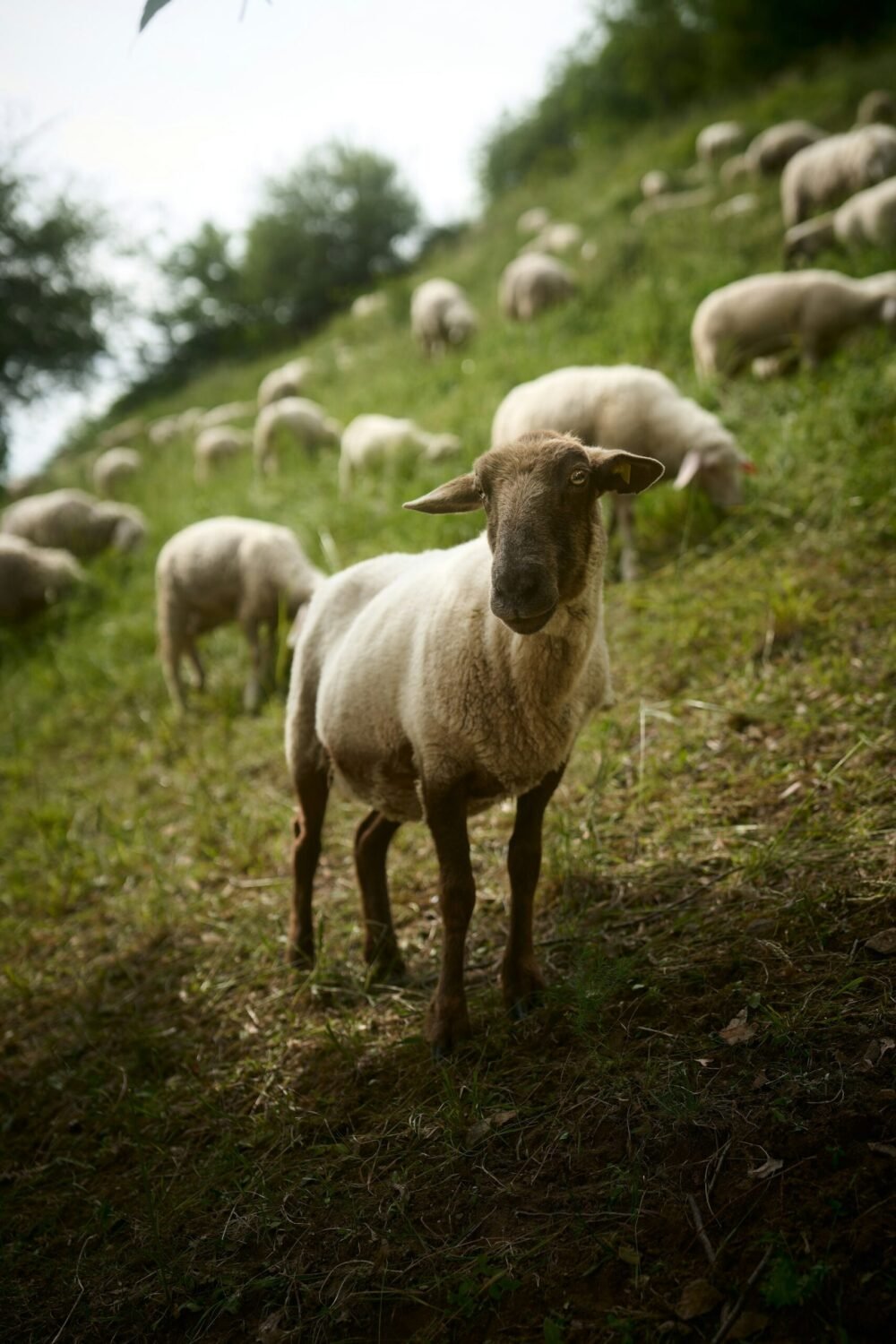
1. Dorper Sheep
Dorper sheep hail from South Africa and are a cross between the Dorset Horn and the Blackhead Persian sheep.
These sheep are large, broad, and muscular, with polled heads, and are mainly raised for meat. Adult rams weigh 200 to 275 lbs, while ewes are 110 to 210 lbs.
Weaning lambs can gain about 80 lbs in 3-4 months, so you can expect a quality carcass to be 35 to 40 lbs.
Anyway, they produce a short, light coat of wool, which self-sheds in late spring and summer.
You can tell Dorpers by their black head and white body, but some are entirely white.
Besides, Dorpers thrive in various grazing conditions and do well in areas ranging from arid and tropical regions to high-rainfall and cold, wet regions.
2. Katahdin Sheep
Katahdins are a crossbreed of St. Croix sheep and multiple other breeds, including the Suffolk, developed in the United States.
They weigh 160lbs to 250 lbs. Full-grown ewes can weigh 120 lbs to 160 lbs, while rams range from 180 lbs to 250 lbs.
As they are raised for meat production, wethers can be the best choice, producing 95 to 115 lbs.
These sheep can be any shade, but they are naturally polled. I like that mothers can give birth to twins.
Also, they shed their winter coat during hot days. And they do well in warm, humid climates.
3. St. Croix Sheep
As the name suggests, these sheep are Caribbean in origin, native to the island of St. Croix in the Virgin Islands.
St. Croix sheep are descendants of African sheep and come in white, black, and brown shades. They are naturally polled and parasite-resistant.
Besides, they are a small-to-medium-sized breed, with rams weighing 200 lbs and ewes 150 lbs.
Though they produce high-butterfat milk, sheep are raised for meat production. Their meat is lean, low in fat, and without the tallow taste.
St. Croix sheep do well in both humid and cold temperatures.
4. Barbados Blackbelly Sheep
Another Caribbean sheep is the Barbados Blackbelly. They have a brown, tan, or yellow coat with black facial and leg markings.
They are medium-sized sheep, with rams weighing 105 to 125 lbs and ewes 100 lbs.
Keepers should know that these are slow-maturing sheep that take around 2 years to reach mature weight.
Also, Barbados Blackbelly sheep are non-seasonal producers. This means they breed and lamb year-round.
They are polled herds, which makes them socially friendly.
5. American Blackbelly Sheep
American Blackbelly is a crossbreed between Barbados Blackbelly and Rambouillet sheep.
You can tell these sheep by their brown, hairy coat, black underbelly, and black inside legs and ears.
The difference between Barbados Blackbelly and American Blackbelly is that American Blackbelly sheep have horns, especially elongated, curved ones.
But ewes can be either polled or horned.
Also, American Blackbelly sheep are smaller, with rams weighing 140lbs and ewes 94 lbs. But they resist parasites well.
6. Royal White Sheep
This American breed has a unique, low-to-the-ground body shape. This helps the sheep retain maximum heat during cold or winter days.
They are pure white sheep with rams weighing 185-235 lbs and ewes 175-210 lbs.
Both are polled and hornless herds. Their lambs grow fast and are kept for high-quality meat.
7. Wiltshire Horn Sheep
As the name suggests, these sheep are from England, raised for meat.
Wiltshire Horn sheep are white-coated sheep with horns, with rams having one full spiral horn each year until they mature.
You can also see occasional black spots on their undercoat.
They grow thick, coarse hair to withstand winter and shed it in the summer.
While males weigh around 250 lbs, females are 150 lbs. And the lambs reach market weight as soon as they are 16 weeks.
Besides, Wiltshire Horn ewes have excellent fertility and make good mothers.
8. Maasai Sheep
Maasai are medium-to-large sheep with fat tails. Native to East Africa, they thrive in arid conditions and are also parasite-resistant.
You can tell them by their red-brown coat and shaggy hair. But they can also be pied.
Females are polled, while males can be both horned and polled.
9. Damara Sheep
Damaras are fat-tailed hair sheep native to Namibia. These look like sheep with one extra hanging leg.
They are large and long-horned herds. Ewes have typical horns, while rams grow spiral horns that stand out from afar.
You can tell them by their coat shades, such as solid black or white, brown, or brown-and-white pied, or black-and-white pied.
The herds are disease- and parasite-resistant, so you can raise them with less effort.
Besides, ewes have excellent mothering ability, so you can also plan them as breeders.
10. Africana Sheep
Native to Venezuela and Colombia, Africana sheep are brown, in shades ranging from tan to cherry-red to dark red.
They also look like goats with a short-haired coat and short ears.
This helps make them one of the most heat-tolerant breeds. They are also polled, so beginners can handle them easily.
11. Blackhead Persian Sheep
Do you know Blackhead Persian sheep have fat tails?
They originated in the Caribbean and Somalia and thrive well in the humid tropics.
You can tell them by their black head, black neck, and white body. They look like sheep with stocky, compact bodies and fat rumps.
You can expect the rams to weigh 150 lbs and ewes 115 lbs.
Though they produce excellent meat, they have lambing issues. So, I don’t recommend them to beginners if you plan to use these sheep as breeders.
Experienced keepers need to assist ewes during lambing.
12. Touabire Sheep
Touabires are native to Senegal, Mali, and Mauritania, where they are also known as Laudom and White Arab sheep.
They are either white or white-and-black pied. They look like a goat with a woolless coat.
Besides, these also have lop ears. Rams have horns, while ewes are polled. And you can raise Touabires for dairy and meat production.
Final Thoughts
Haired sheep breeds are hardy in various grazing conditions and different climates, and can resist parasites.
They thrive in dry climates easily, but they also do well in winter thanks to their thick coat of hair.
You don’t need to shed their hairy coats, as they self-shed their hair in late summer. Beginners can easily plan these animals for meat.




Leave a Reply