
My grandma would help her peahens hatch their eggs and then raise their peachicks. Every summer in my childhood, I had nothing to do but chase after them whenever the mom birds were free-range.
Peafowls, especially males, make the fancy birds in the free range on the homestead. They come on your call for snacks.
If you plan to add a pair of peafowls or a few more, you’re going to read this blog post.
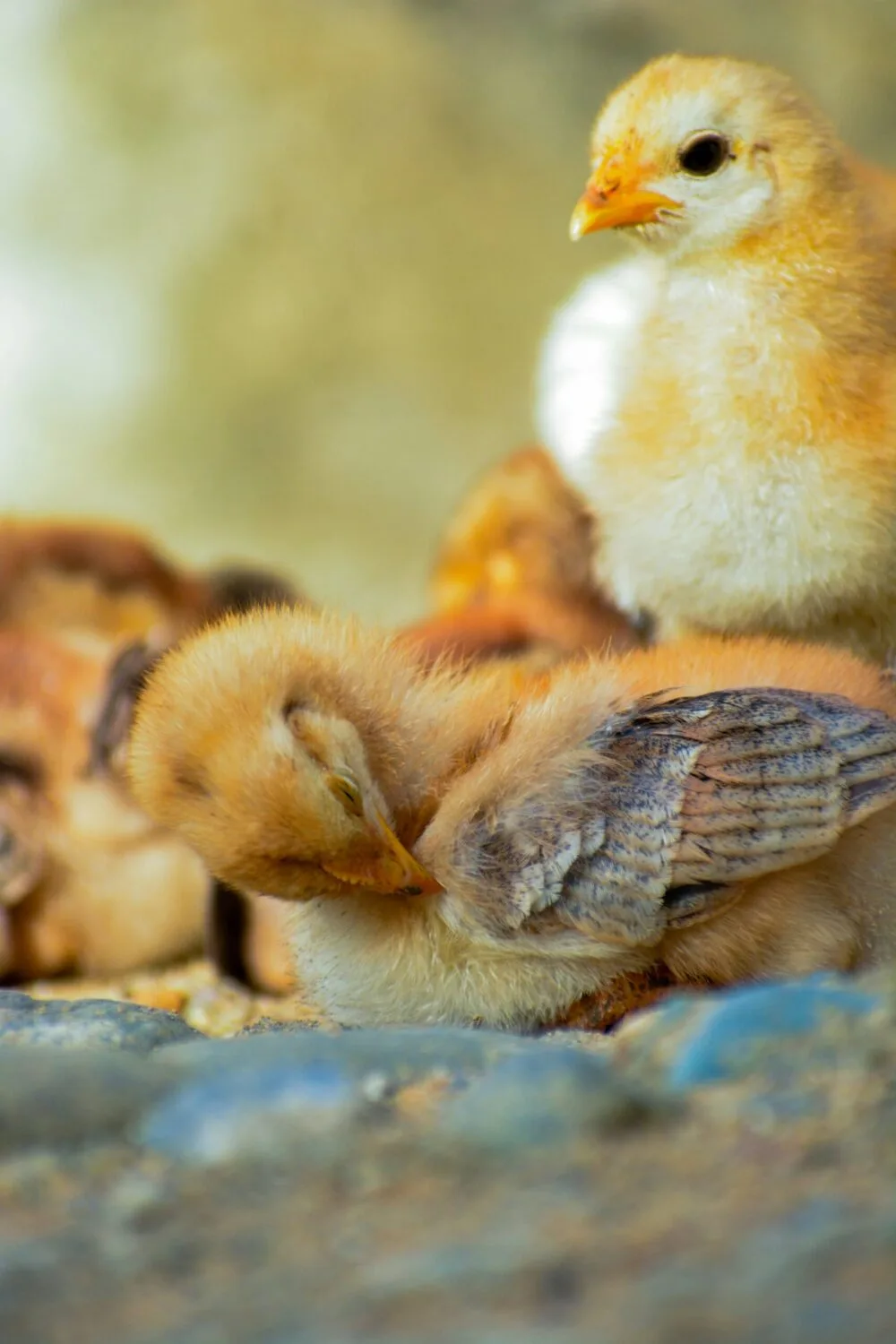
Getting Started with Peachicks
If you have already raised chickens from chicks, you won’t have any difficulty with peachicks.
It’s your first time adding peachicks, so you need to order them from your local hatchery. I suggest you get at least 2 or 5 peachicks.
Before that, you need to decide which types of peafowl to keep on your property.
It would be easier if you had a mom peahen to raise her chicks.
Since there is no one, you need to put them in the brooder and keep the temperature at 95 degrees Fahrenheit in their first week.
The chicks needn’t touch the ground for at least 6-8 weeks. They don’t have a protection mechanism against protozoa.
Once they are fully feathered, you can add to the flock, but keep them in the barn or pen. Keep them away from adults for the first 8-2 weeks.
Also, lock the peachicks in the enclosure for some months, maybe 4-5 months.
If you have already mom hen, you need not do anything about chicks. Put the moms and chicks in the same pen or private chicken tractor. Chicken tractor?
You want them to graze on the grass. Don’t worry, it won’t put pressure on the grass. Only take them out every couple of weeks.
Don’t leave the chicks with their mom hens in the pasture or in the free-range setup. Wait for chicks to be at least a year old to voluntarily come out forage.
Housing & Fencing
You have two ways to keep adult peafowls on your property. Either you want them to free range or keep them in the pen.
While keeping the peafowls in the free range, they have plenty of space to roam, roost, and forage. They may also come under the target of predators.
Predators such as foxes, raccoons, coyotes, eagles, and hawks can steal your birds. Even farm or stray dogs, and barn cats chase them until they are accompanied.
If you want to raise them in the enclosure, you need to build a spacious shelter. The birds make loud calls, honks, and crying sounds.
Expect their noise even at night. Also, you need to consider their roosting habit.
It’s easy to keep peahens providing enclosure enrichment, including a nest. But you need to provide peacocks with a tall perch as their train extends around 6 feet.
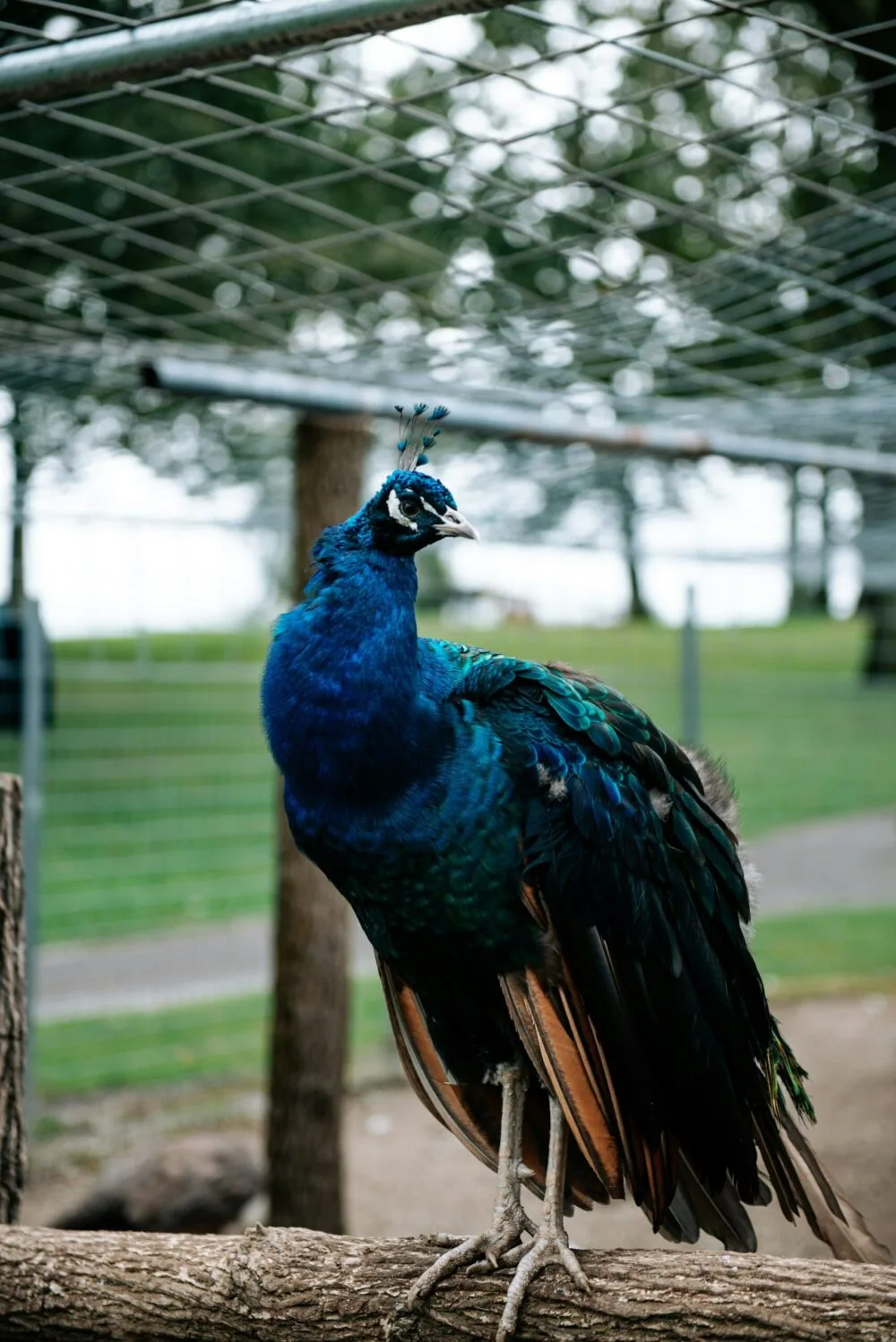
So you need to build a roosting bar 6-12 feet off the ground. Make sure you provide a roosting space of 18-24 inches per bird.
Also, the roosting bar must be placed at least 1.5 to 2 feet away from walls or the ceiling. This helps the train remain untouched from anywhere.
That’s all you put in the aviary or pen, where peafowls eat, perch, and nest, other than free ranging.
Their pen is similar to that of chickens and quails, but larger.
I suggest you build a 10X20 sq ft enclosure for a pair of birds, or 100 sq ft of space per bird. While it’s enough to keep peahens under the height of 7 feet, peafowls require 12-16 feet of ceiling height.
This allows peafowls to fly around and peacocks to perch comfortably.
Make sure you cover the ceiling with the heavy-duty netting or wire. The fencing options include hardware cloth, 2×4 welded wire, knotted nylon gamebird netting, and chain link.
Besides, I have several ways to keep peacocks from flying away.
Feeding Peafowl
The peachicks require higher protein to grow faster, so give them Game bird or turkey starter, which contains around 28% protein. Continue it for 3 months.
Then, you can switch starter feed to pellets with 20-22% protein. But avoid chicken layer feed, as it has a low protein level.
Peafowls are omnivores and are not considered picky eaters. You can give them supplemental foods such as cracked corn, leafy greens, mealworms, kitchen scraps, berries, and fruits.
They also feed on dog and rabbit food, as well as kitchen edibles such as cooked meats, fish, oats, pasta, rice, eggs, and bread.
Make sure you give them these in moderation.
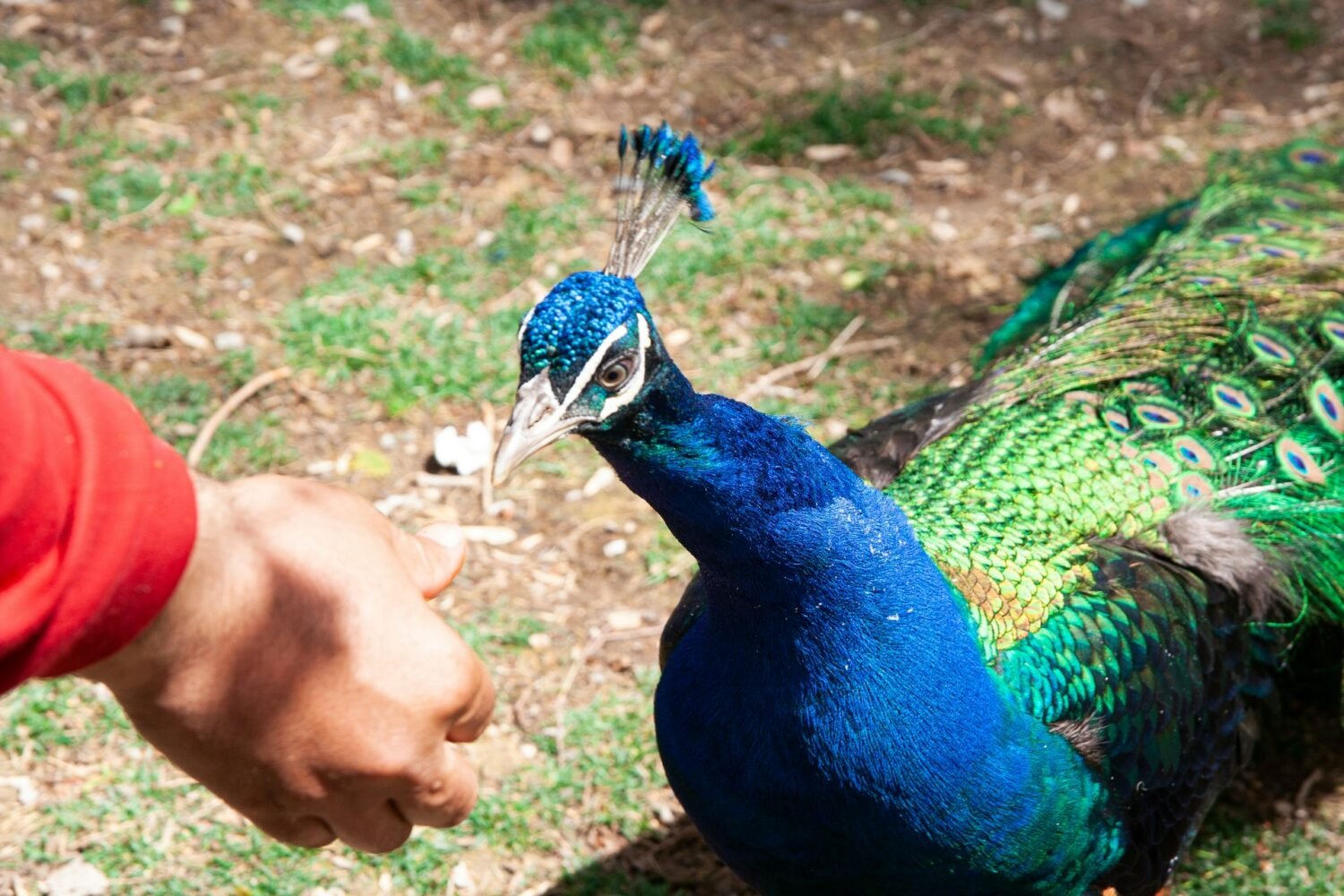
But you need to avoid avocado, onion, chocolate, and salty processed foods.
Anyway, peafowls are ground eaters, so you need to keep their feeder and waterer on the ground, not on an elevated place.
If you allow your birds to free range, it will help you manage their feed. They forage seeds, grass, insects, ticks, fruit, and veggies.
Mostly, they prefer foraging in the morning and evening.
Do you know peafowl can eat snakes?
Also, make sure your bird has fresh, clean water daily. They drink 2-3 cups of water per bird.
So, keep water in the poultry founts, large dog bowls, tubs, and large waterers.
Breeding Peafowls
The breeding season is spring through early summer. During this time, peacocks display their trains (which is called dancing) to attract peahens.
The males keep their trains upright and shake their feathers. At the same time, they also scream.
While peacocks mature and only show their full-grown feathers until the third spring, peafowls can lay eggs in their first year.
But they don’t hatch their eggs for 2 years.
When forming a healthy flock, keep 3-5 peahens per peacock. This helps keep peacocks out of scuffles if you have many.
Anyway, peahens lay 4-12 eggs per clutch and 20-30 eggs per breeding season. You can expect the hen to take breaks of 10-14 days between clutches.
Also, they need 28 days to incubate and hatch their eggs. You can also hatch their eggs in the incubator.
Sustainable breeding helps you get many benefits from peafowls on farms.
Peafowl Care Requirement
Peafowls are social birds, so you need to raise at least a pair on your property. The single bird can be bored and disappear soon.
They require cool water and shade during hot days.
In the breeding season, peacocks boast beautiful feathers with an eye-like pattern (often called ocelli). They have 150-175 elongated tail feathers that cover the shorter tail feathers.
After mating, they undergo molting, in which the birds shed their beautiful feathers in late summer or early fall.
You will notice their train vanished within a week. But some birds have stubborn tail feathers, which don’t fall until September and cling for about a month.
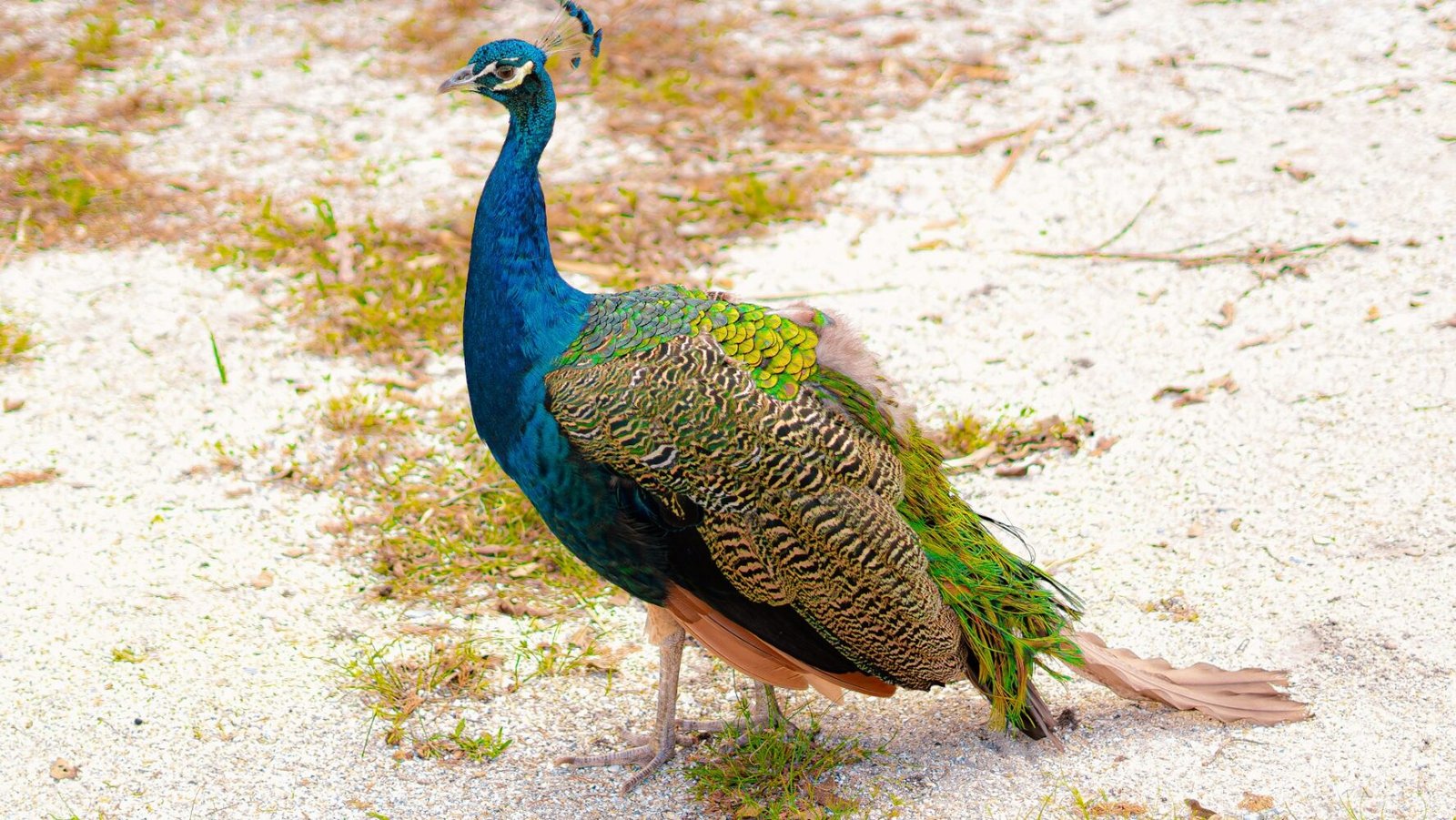
But don’t worry, they regrow their train within 6 months. You can feed them a protein-rich diet to help them grow their tail feathers faster.
Besides, these birds do not demand fancy bedding but require something dry, absorbent, cozy, and insulating in the winter.
I think large-flake pine wood shavings, dust-free wood chips, and hemp bedding can be good options.
If possible, avoid straw and hay.
Though peafowls can survive at 0 degrees Fahrenheit, they don’t like cold and damp weather. So, don’t leave your birds perched outdoors in the winter.
I believe in raising my birds without store-bought medication. But I don’t forget to take care of them with homemade remedies made of garlic, ginger, and herbs.
In poultry, worms or parasites, respiratory infections, and coccidiosis are common in peachicks.
Most keepers deworm their birds every 3-6 months. You can also do it if you want to.
But I mostly take care of the living environment. I deep-clean their pen, waterer, feeder, and shelter every few weeks.
You need to keep their house dry and clean.
Besides, I allow my birds to clean themselves in the dust baths.
You can check your bird’s condition over time. The healthy peafowls should have bright eyes, clean feathers, firm droppings, and upright posture.
They also seem to be foraging actively.
Final Thoughts
Peafowls are happy to free-range and stay on the property in small groups. So, you can raise a pair or a flock of 3-5 birds for your homestead.
You can also raise peafowls with other poultry birds. It shows a dynamic flock, but don’t group them if possible.
Also, don’t leave mom peahens foraging with their chicks in the free range. The predators can be all around them to grasp.


Leave a Reply