
Years ago, I kept the hay stack in the shed at 10-15 feet high. It wasn’t as balanced as I expected and fell to the left.
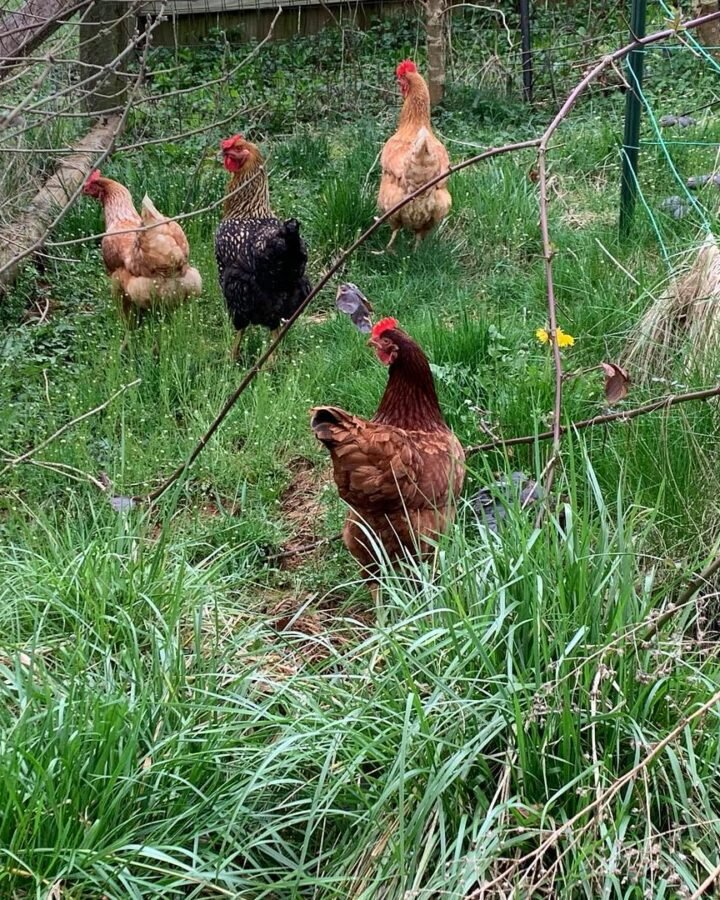
Many free-range hens got under it, and I had to cull them. Other times, if hay isn’t properly stored, it won’t last long for your livestock.
And you don’t have an expensive barn to store the hay for winter. Let me share with you practical hay storage ideas.
1. Build a Traditional Hay Storage Barn
If you have a traditional hay barn, you don’t need to do anything. Just keep the barn fully functional and well-ventilated.
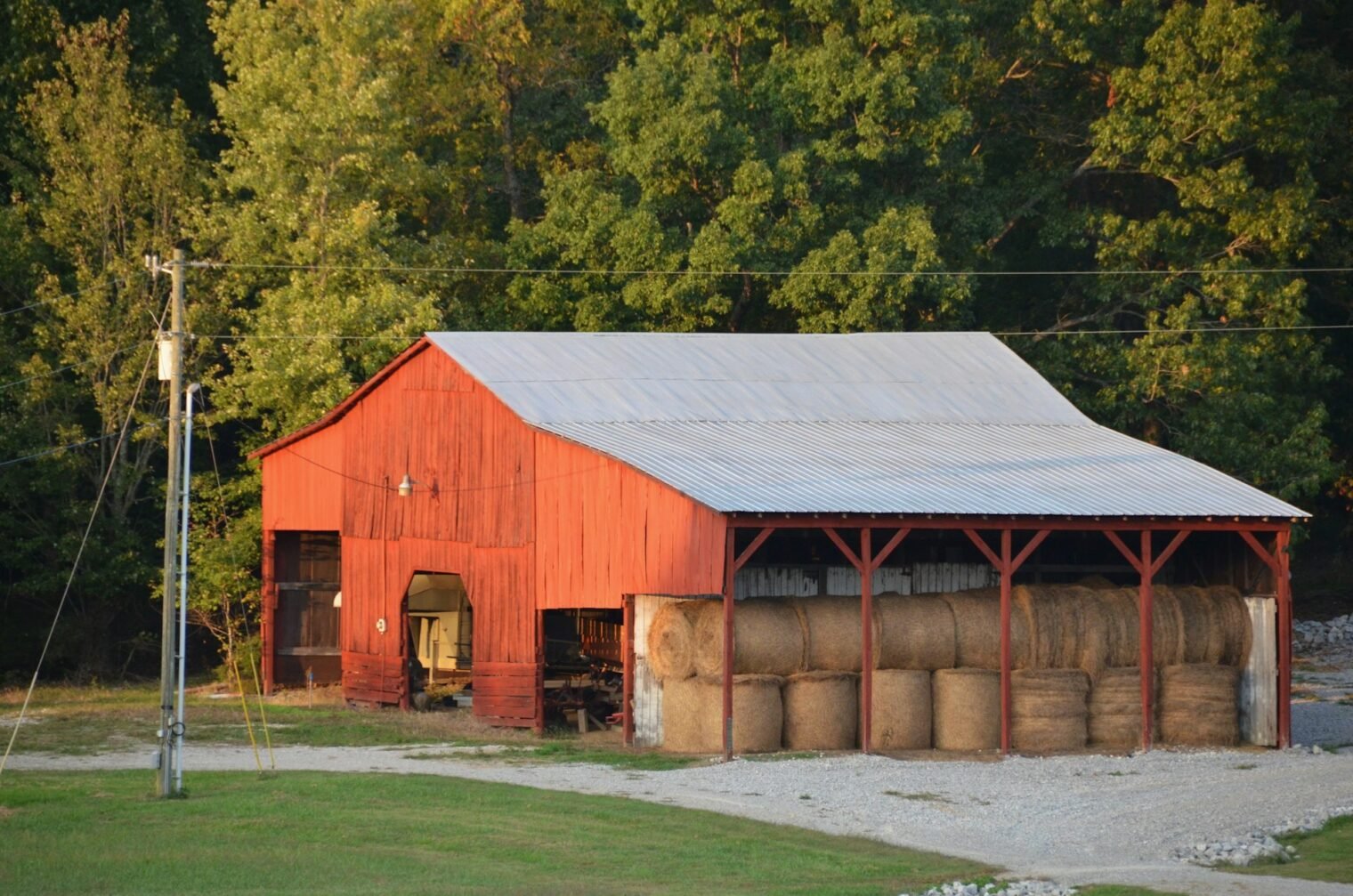
When kept indoors, the barn protects hay from rain, snow, excessive moisture, direct sunlight, and storms.
Though it’s quite reliable, your barn should have a strong roof, wide doors, a dry floor, and proper ventilation.
Patch the roof or ceiling to avoid leaks and wetness. You can also put gravel, concrete, or reclaimed wooden pallets on the floor before stacking hay.
This should avoid ground moisture.
Besides, the barn should have enough room to load, unload, and move easily.
Also, I suggest keeping the hay storage room separate from livestock living areas and other heat and fire sources.
2. Build an Open-air Pole Barn
This is made of vertical posts or columns and covered with a strong, high roof, with no side walls.
The structure provides protection from overhead direct sunlight and rain while allowing ventilation from all directions.
It’s very useful for storing hay, feed, and dry materials.
Besides, you can make it a shelter for parking tractors or vehicles, farm machines, or equipment.
Sometimes, your cattle or livestock can relax under the shade of this shelter in the pasture during warm seasons.
I think you need to stack the hay in the center or toward the center of the barn, leaving a little room around the post from the inside to avoid driving rain or storms.
3. Use a Three-Sided Hay Storage Shelter
With one side open and three sides walled, you can make a three-sided hay storage shelter.
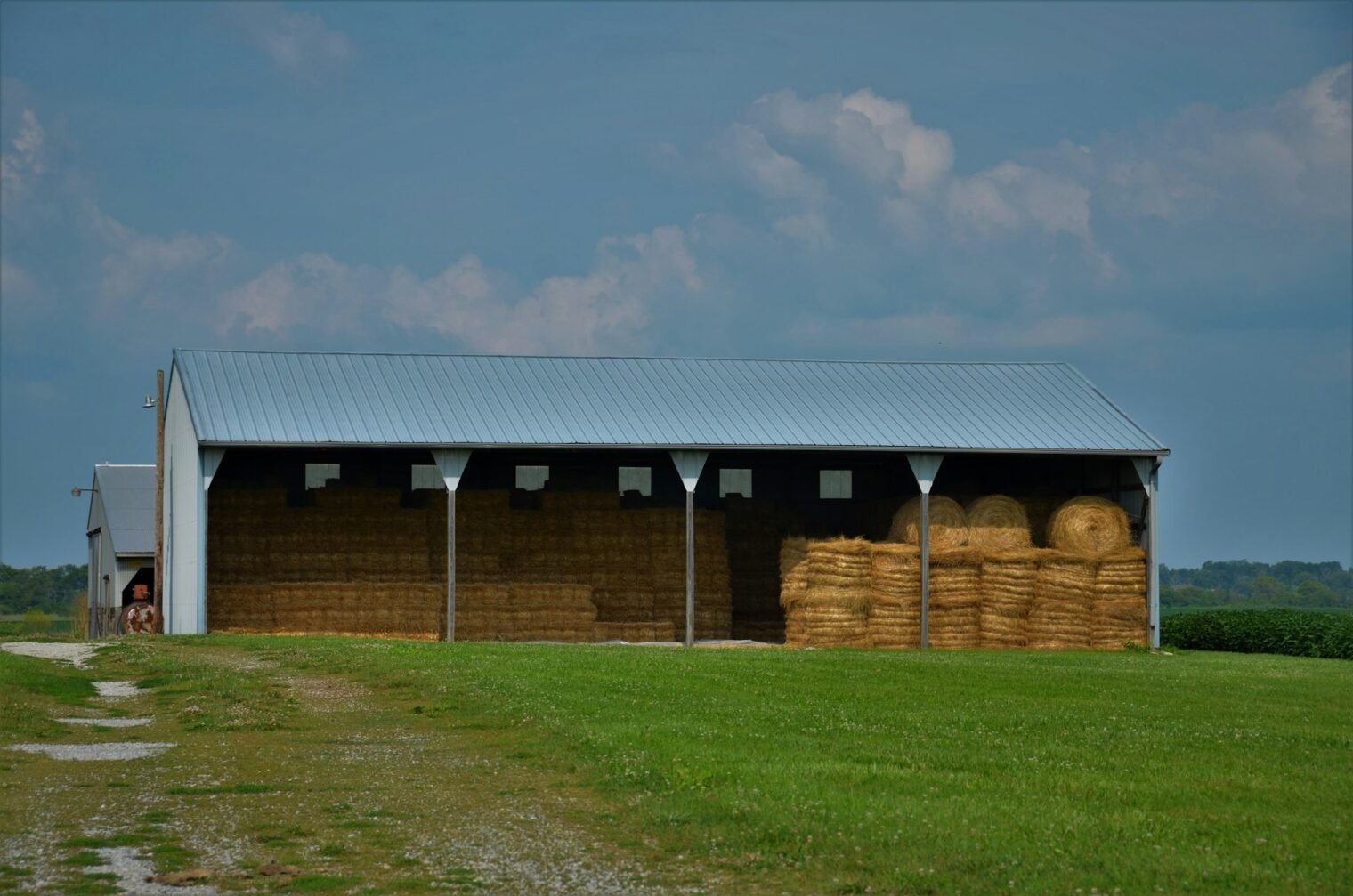
I find it looks the same as a shed, where you can store firewood outside in winter.
This not only helps you store hay but also works as a garage for your farm tractor. It protects hay from rain, snow, and strong winds.
But avoid the open side facing the airstream and driving rain.
Position the open side toward the sheltered direction so that storms and rain don’t enter the structure.
Besides, I recommend you keep the hay stack away from areas or places where rainwater collects.
You can build a single-room or 2-room shelter. The structure also supports 4 or 5 compartments or rooms based on your needs.
4. Hoop Barns or Tunnels
It’s like a semi-circle structure or arched shelter. These are perfect for storing round bales outdoors.
The hoop house in dome design is made of a steel or PVC frame and capped with a high-duty fabric tarp or plastic film.
I find it very budget-friendly if you don’t have a concrete or wooden barn. But make sure you use a tensioned, UV-resistant tarp designed for outdoor use.
This helps protect hay from rain, snow, and other outdoor weather conditions. The rainwater easily rolls over the cover and drops onto the ground.
Also, the two side ends provide easy airflow for stored hay.
5. Ancient Hay Storage
During my travel to East Asia, I saw farmers in hilly areas storing hay outside, in trees or around tall poles.
They had small bundles of hay stacked on the tall structure. It was a cylindrical pile with a conical top.
This is only useful for a homestead or barn house with only a couple of livestock in the shorter winters.
Pitch the pole in the ground and stack the bundles of hay from the center as much as the pile is strong and supportive.
When you finish piling the hay, make an umbrella roof on top. Make sure it is wide enough and can protect the hay from sun and rain.
Square Bales Vs. Round Bales
Square or rectangular hay bales are small in size, so they are easy to store and transport. Also, they require only a small area.
You can arrange or stack them in a pyramid shape and in large quantities due to their high-friction edges.
This helps create a gentle slope for rain and snow to run off.
But round hay bales are large and heavy, require large machines, and need a separate building for proper storage.
These bales need to be placed end to end, tight to each other in small stacks to avoid collapse. 3 or 5 bales are enough to make a small stack.
Their round shape makes it hard to keep the stack upright.
But I find it really good that you can group the bales close to the livestock feeding areas so you don’t have to move them frequently.
8 Essential Tips for Storing Hay Properly
- Choose a well-drained area: If you’re storing hay bales outdoors, make sure you get a location where water doesn’t collect or pool on a rainy day. Elevated locations or hilly areas are the best.
- Store completely cured hay only: Before storing, check the hay’s moisture content and keep it in the sun until it is completely dry. A moisture content of 15% or less in hay helps prevent mold. This is essential to prevent mold and heating risks.

- Use a ground cover: I often prefer materials such as gravel, concrete blocks, pallets, or other moisture barriers. You can also place a base or a thick layer of straw or old hay.
- Keep your hay dry: Wet hay stinks because of bacteria, and it can decay quickly. Also, livestock don’t eat black or colored hay. So, you need to protect it from rain, snow, dew, and roof leaks.
- Provide proper ventilation: Arrange the bales so they are less likely to be exposed to the weather elements. Make sure you leave 3-4 feet between bale rows to allow enough airflow. Also, you can orient the rows to get as much sun as possible on the bales.
- Inspect hay regularly: I always inspect for mold, musty odors, pests, discoloration, and unusual heating. Also, if you find any other potential issues, remove the bales from the row to prevent the problem from spreading.
- Practice fire safety: When moisture is too high in the hay, it may feel warm because it can self-heat. A small ignition can burn the whole barn or the storage building. So, keep the hay away from fire and heating equipment.
- Organize older hay first: If you already have some older bales, remove and feed them to your livestock. Also, you can label the stacks by harvest date (which is from last year or which one is from this year). Also record the date of purchasing the hay. Use older but edible hay first.
Final Thoughts
Hay, from cutting grass to drying and storing, needs time and patience.
I enjoy it a bit because it makes feed for my cattle and herds during winter. Other days, I also put the hay in my duck nest boxes and use it as bedding for my other poultry.
Many also keep the hay bales outdoors, covering them only with a tarp or polythene sheet. It’s a temporary trick, but it requires an end solution when winter worsens.
Leave a Reply