
I’m always curious to raise new animals on my homestead. When I started with chukar partridges, I was afraid of their behavior, if I could make a flock out of them. They’re really skittish.
When you enter their pen to refill the feeder and waterer, they get frightened and scatter inside. So, close the door as soon as you sneak into their shelter.
If you’re only starting with these semi-wild birds, I can show you a way to keep them.
Getting Started
Chukar partridges are hardy gamebirds originally native to rocky, dry regions. They are calmer than fog broiler chickens but aren’t as docile as Faverolles.

You can raise these birds for their meat. They are great for breeding more flocks for releasing and training your hunting dogs, and make sports birds.
Though gamebirds are loud, chukars don’t crow like roosters and don’t make noise like guinea fowls.
Besides, they help earn a decent income from gourmet restaurants.
But you need to confirm that your local authorities allow homesteaders and farmers to raise gamebirds, including chukar partridges.
You may have to obtain a poultry license and permit for this.
Start with day-old chicks or eggs from local hatcheries. If not, online platforms such as eBay and Etsy already have them.
If you’ve already purchased the eggs, keep them at a temperature between 55° and 68°F before setting.
Though partridge eggs have hatchability of 3 weeks, it’s wise to hatch them after a week of laying.
Okay, set the eggs in the incubator at a temperature of 99.5- 100°F for 23 to 25 days.
When the chicks start popping out of eggshells, prepare a brooder, which is similar to that of chickens or other birds.
Warm, draft-free brooder with access to fresh water and gamebird feed.
I always say that the first week of chicks is critical, so you need to monitor and provide care for them frequently.
Set the temperature to 95˚F for the first week and decrease by 5˚F each week.
If the chicks huddle up in the corner, you can tell that they feel cold. Or they might feel suffocated when they squeeze together.
Also, the birds stretching out on the floor suggests that they are feeling hot. Your birds must be active, eating, and drinking in the brooder.
Housing or Shelter
You need to provide one square foot per 3 chicks in the brooder. When they grow into adults, they require 2 square feet per bird.
When keeping chukar chicks in the brooder, place paper towel on the floor as bedding for the first week.
When the bedding is soiled, put a layer of new paper towel on top. Make sure you do it once or twice a day.
After a week, they can stand on the mesh floor.
Chukar partridges are ground-dwelling birds, but they can fly. They learn to fly when they are 12 days old, so you need to cover your brooder.
And you can move the birds to the outdoor house when they are eight weeks old. During this time, they become fully feathered.
As partridges are not domesticated, they won’t come at night like chickens once freed. You cannot free-range them outdoors.
If released, partridges perch in the trees where they are vulnerable to owls, eagles, and other predators.
So, you need to raise them in captivity, but they don’t prefer a walled coop.
For them, you can build a spacious outdoor aviary or pen with lots of enrichment, such as brush, shrubs, stones, small trees, old, large logs, and grasses inside to hide.
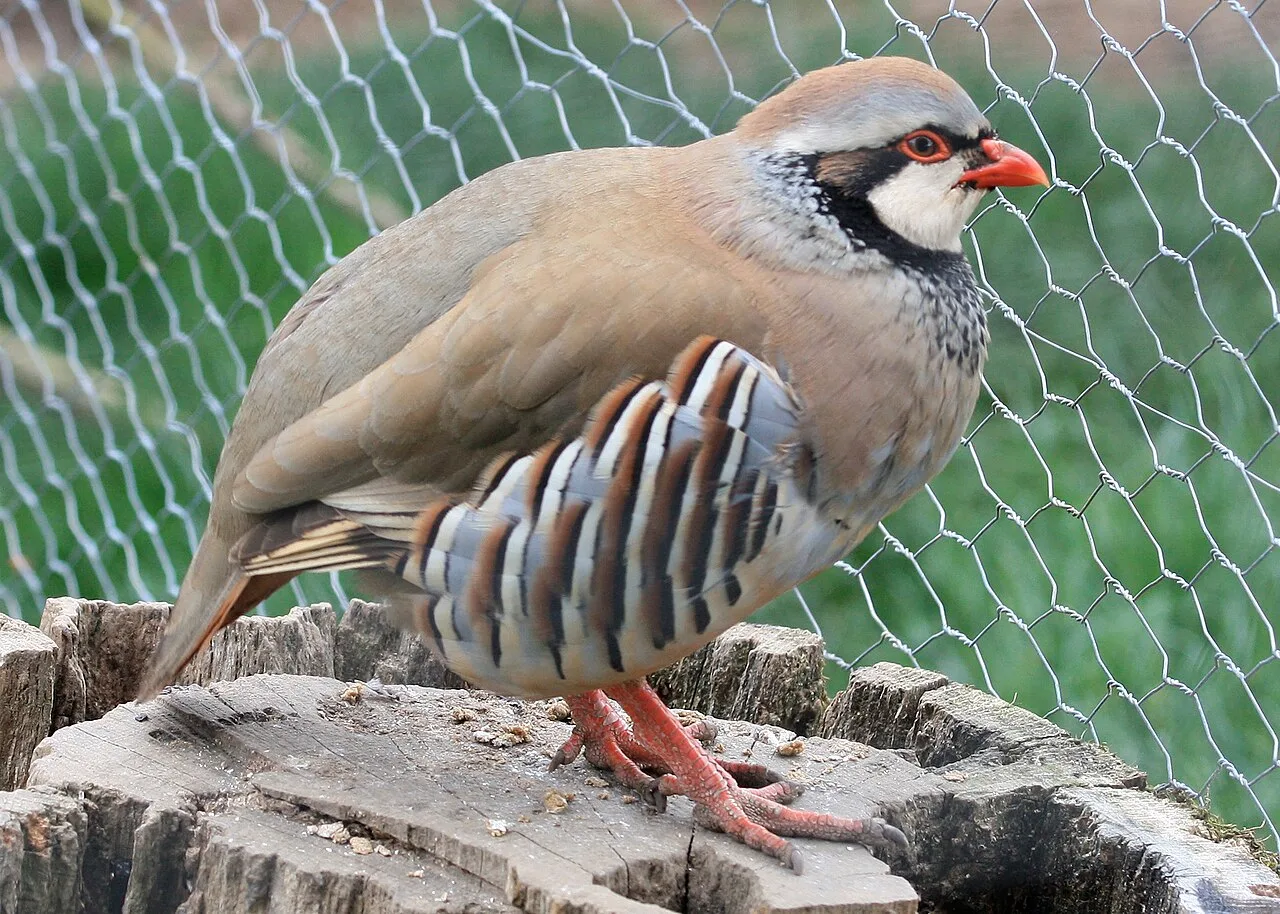
Besides, a quail cage is also an option.
The birds cannot do well in a wet environment, so make sure you build the enclosure that is protected from rain and predators.
I have put 11 chukar partridges and 8 Gambel quails in the 16×24 sq. feet setup.
Feeding & Caring
Like other gamebirds, chukar partridges require higher protein feed than chickens. So, give the chicks gamebird starter crumbles (which contain 28-30% protein) for 9 weeks.
After that, you can feed them gamebird grower, which has 26% protein.
If you cannot find gamebird feed, you can still gradually transition them to turkey starter and grower feed.
With the food, your birds should have access to fresh water all the time. Use a quail waterer or a chick waterer to avoid drowning.
When Male chukar partridges reach maturity, or you put lots of males in the flock, they become aggressive to each other. Also, you can notice this behavior in the mating season.
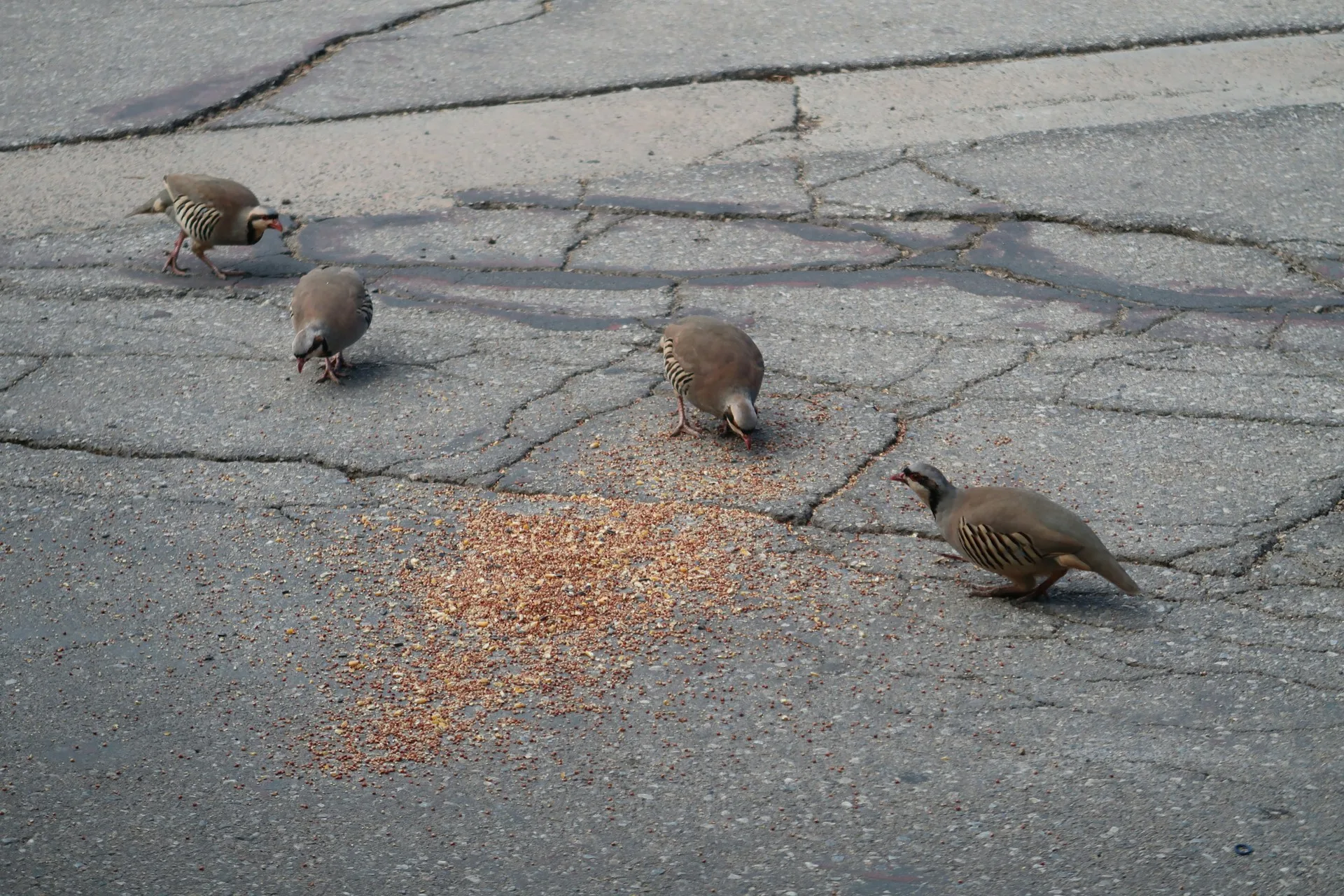
You can breed these birds in pairs, trios, and colonies.
So, provide them with lots of space and ventilation, and put 3-5 female birds per male bird.
Though males and hens look identical, you can still tell the difference. Males are larger, have broader or wider heads, and develop spurs on the legs.
Once they start cannibalism, you may risk losing the entire flock. So, identify this sign early and cover the pen or darken their shelter until they become calm.
Also, use red heat lamps to prevent cannibalism during bird growth.
Meat & Eggs
Chukar partridges are very much comparable to quails, especially jumbo brown Coturnix quails in size. But they are twice the size of standard quails.
These red-legged birds weigh around 1 lbs. While adult males are 1.1 to 1.7 lbs, females weigh 0.8 to 1.2 lbs.
Roosters can attain 1 lbs of weight in 9 weeks, but hens would take 12 weeks to reach that weight.
The chukars mature by the age of 16 weeks, but you need to wait for 26-30 weeks for females to lay eggs.
Chukar hens are prolific seasonal layers between April and July. They have eggs of a similar size to bantam chicken eggs.
You can expect them to lay 40-60 eggs per hen each season. Their eggs are pale white, cream, or beige in color, marked with brown or purplish speckles.
If you raise chukars for meat, you can process the birds between 14 and 16 days.
Besides, chukar partridges are a plump little meat bird that grows quickly and has a good feed-to-meat ratio of 3:1. They are also easy to harvest and clean.
These birds produce white meat with a mild taste and a subtle sweet flavor. Many call it sweet chicken.
Expect 7-10 ounces of meat when deboned from one pound of a bird.
If you want to preserve it for later use, put the processed bird in the plastic bag, vacuum it, and seal it. And finally, put the bag in the freezer.
Final Thoughts
It’s not a bad experience, but I cannot get enough out of chukar partridges. My small quail colony outproduces them with eggs and breeding.
But you can make some profit selling them to hunting dog clubs or recreational hunters for the spots.
If you have a plan for raising chukar partridges, start in spring and summer.



Leave a Reply